
After spending the better part of 2016 collaborating with my new colleagues from DELL Technologies, I’ve been blogging my way through a technical vision for the new company.
I’ve described the industry benefits of this vision in two ways:
- Economic benefits: decades of technology expertise results in reduced costs and improved efficiencies.
- Innovation benefits: a portfolio positioned to support new business models in the face of digital disruption.
These benefits are enabled via the combination of two organizations: Dell Client (endpoint technologies) and Dell EMC (cloud infrastructure technologies).
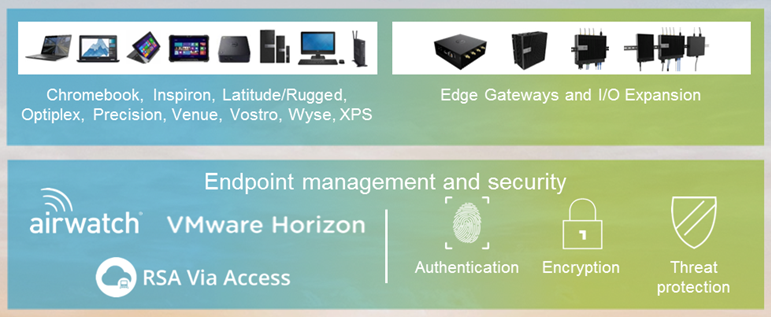
Take a look at the broad set of endpoint technologies and capabilities that are produced by the DELL Client organization.
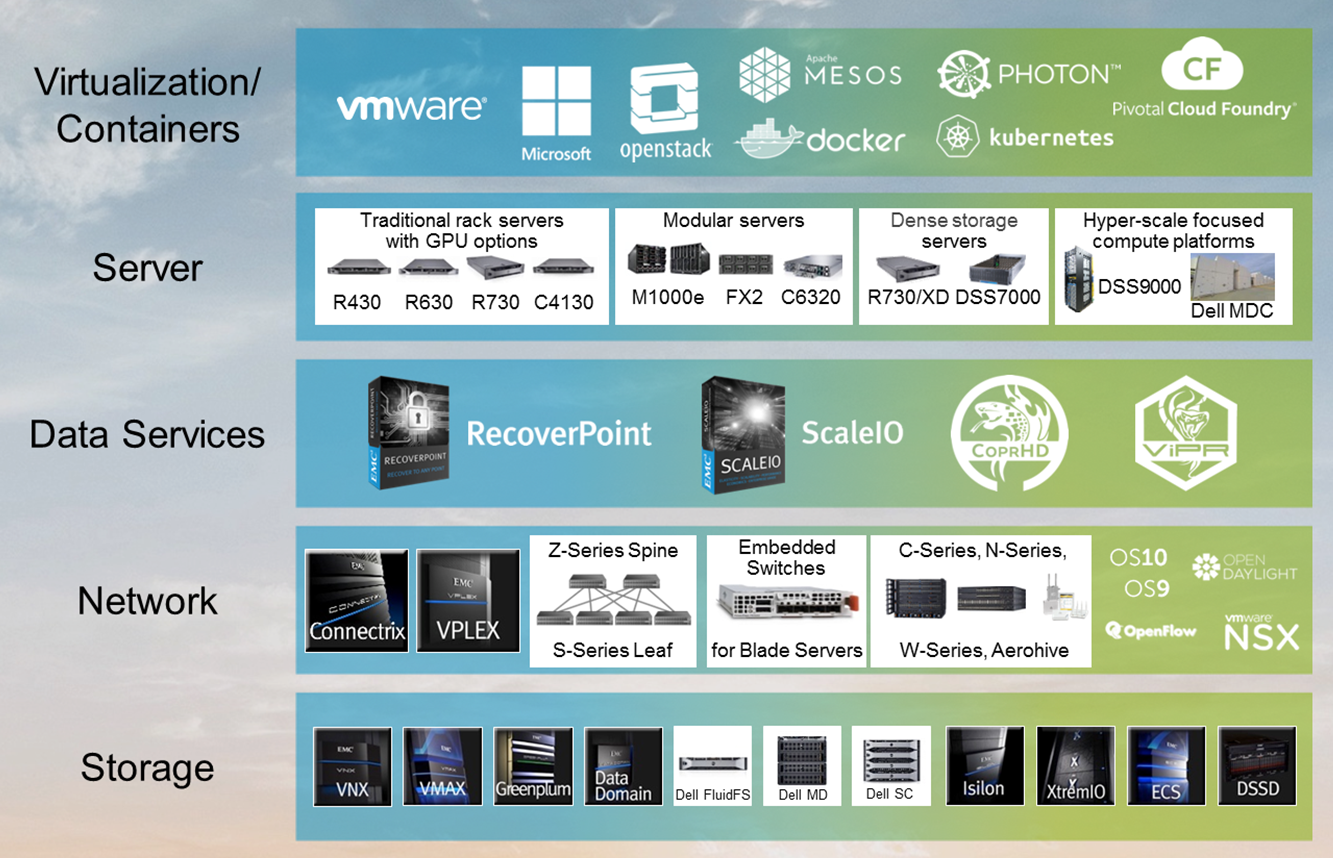
Also notice the broad set of cloud infrastructure technologies and capabilities coming from the DELL EMC organization.
The combination of these technologies creates a Digital Business Platform (DBP) that leverages data as a capital asset to drive and actuate immediate business decisions. In order to build a DBP, however, the two organizations will need a layer in between. The Dell Client layer will serve as a gateway to hundreds, thousands, and millions of people and things. This layer will need to interconnect with multiple edge solutions, which in turn will interconnect with multiple underlying cloud infrastructures (including the Dell EMC cloud infrastructure layer).
The permutation of network flows between the endpoint layer and the cloud infrastructure will be numerous and varied. The diagram below conveys a subset of these network flows:
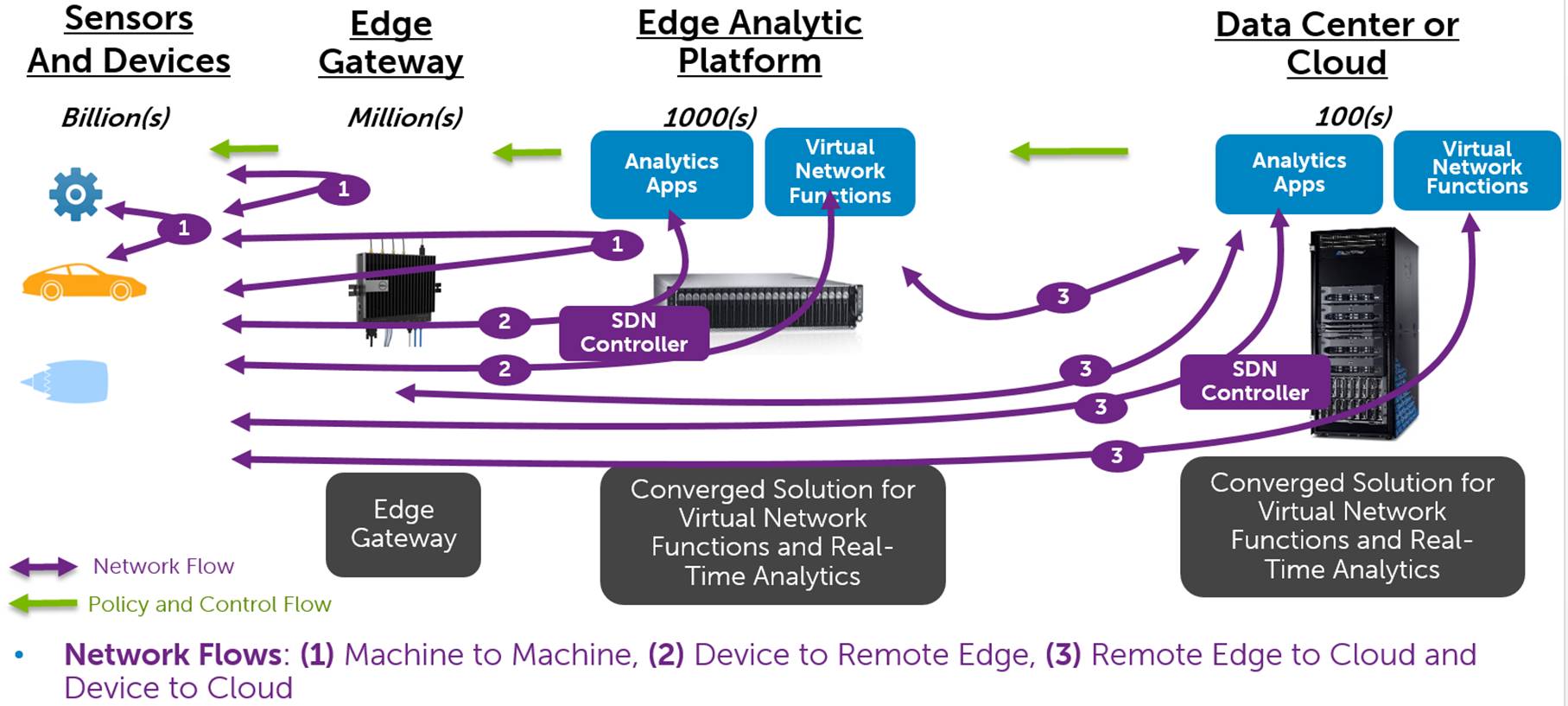
This diagram enumerates the high number of potential edge gateway layers (millions), edge analytic platforms (thousands), and cloud infrastructures (hundreds). If we were to re-draw the diagram above and actually scale it out to these actual numbers, we would see an incredibly complex mesh of connections.
This complex mesh between the endpoints and the cloud infrastructure highlights the need for a layer in-between that abstracts away the complexity. This can be accomplished through the availability of cloud service APIs. Fortunately, both companies already possess a significant number of inter-networking software services that can serve this purpose. No matter what enterprise-class function is needed, from data protection and security to network provisioning, from data management to edge analytics, or to disaster recovery, the diagram below lists a subset of cloud services that can be invoked by the endpoint layer, by the cloud infrastructure layer, or anywhere in between.
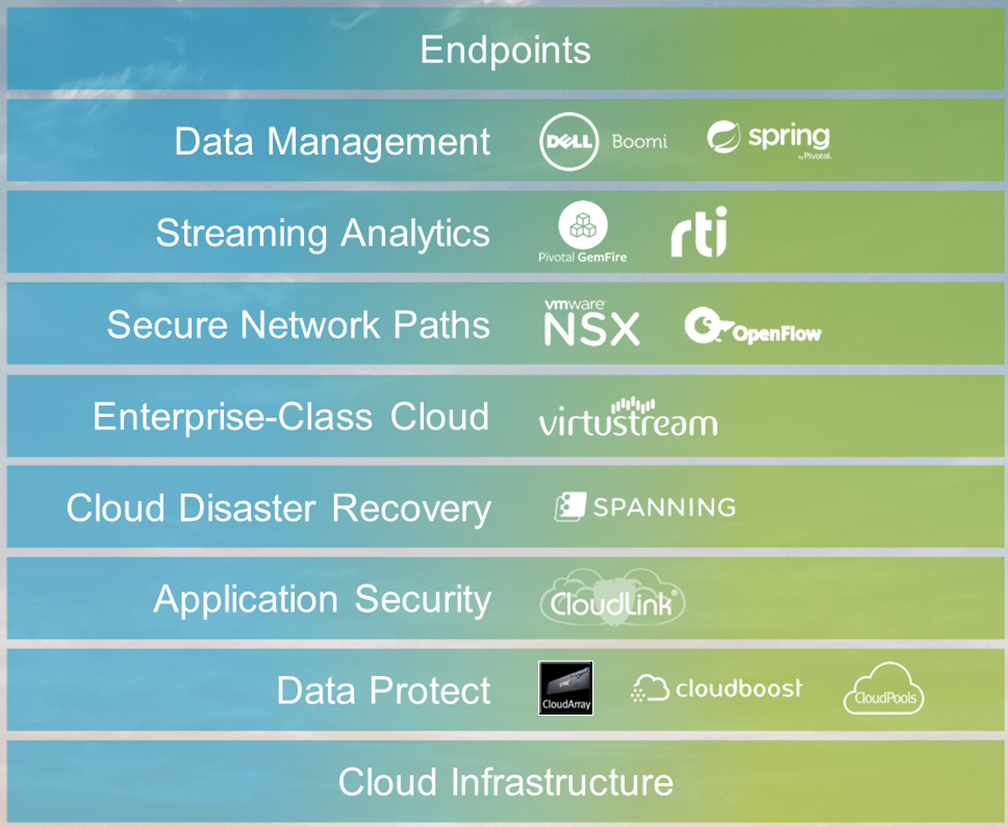
In future posts I will dive down into many of these different layers to describe how they can be invoked in the context of a mesh of business logic existing between endpoints and clouds.
The main point is that these services exist as the third leg of the stool (along with endpoints and cloud infrastructure). These three legs enable the creation of a next generation digital business platform that supports forward-looking, innovative business logic and applications.
In an upcoming post I will describe the capstone seat that sits atop the three-legged stool: cloud-native applications. I will also describe how these applications can be deployed at any layer of the portfolio: on the endpoints, on the edge, or in the cloud.
Steve
Dell Technologies Fellow



Interesting to see Spanning as cloud dr.
It is certainly one way to describe the benefits of a Spanning deployment. Are there other ways that you think are helpful?