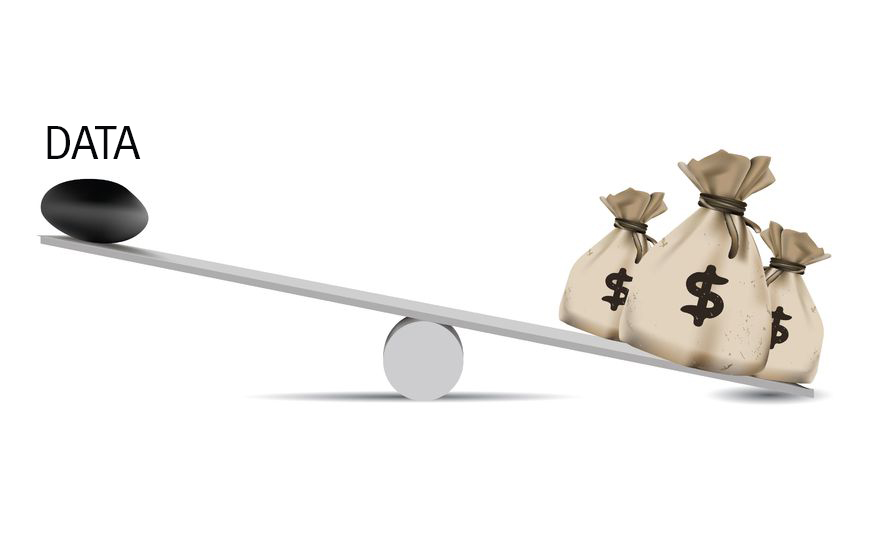

The Chief Data Officer and Information Quality Symposium held at MIT last week was a valuable experience to meet and greet the growing community of corporate Chief Data Officers. I was motivated to attend the Symposium for the purpose of exploring any potential CDO need for Data Valuation toolsets, services, and products. Over the past year and a half Dr. Jim Short and myself have conducted dozens of interviews, discovered numerous industry use cases, and held a Data Value workshop to research the topic of Architecting for Value. The MIT symposium offered an opportunity for Jim and myself to validate our research findings and gauge the importance of Data Value to the CDO community. As I mentioned in a previous post, we have found that the topic of value extraction from data resonates with all CDOs.
I was also keen to explore the importance of IT infrastructure to the Chief Data Officer. My impression before the symposium was that the average CDO would rather be abstracted away from the infrastructure. I found that this is not necessarily the case. One of the best sessions I attended was a dialogue between GlaxoSmithKline (GSK) CIO Daniel Lebeau and GSK CDO Mark Ramsey. I learned that when Mark was hired into the CDO position at GSK, he inherited over 300 years worth of data! In order to effectively extract business value from GSK’s data sets Mark embarked on two different initiatives that required a strong working relationship with the CIO:
- The introduction of a new data platform.
- Hiring employees who were passionate about data.
Daniel and Mark appeared together on the Cube to share a bit more about the relationship between the CIO and CDO role. Silicon Angle covered their discussion in a blog post, and the video is embedded below.
After one year in the newly-created CDO position at GSK, both Mark and Daniel had created an IT infrastructure and culture that was much more conducive to extracting value from data.
During their session at the conference I jotted down some notes containing some of the aspects that I felt were most insightful:
- Importing external data sets is a key activity at GSK, and ontology normalization is essential during the import process
- A driving purpose at GSK is transforming drug discovery and saving lives in the process. This purpose brings passion to IT and data efforts.
- Fragmented data sets have been centralized in this new platform, rationalized, and made available to the scientists.
- Scientists then try and extract the value from the data
- IT processes and data are “two sides of the moon” that are both important. In years past, IT processes overshadowed data. This over-rotation is now correcting back towards an equal amount of importance placed on data.
- The GSK data falls into three important categories: R&D, Manufacturing, and Commercial. Each of these three have various levels of data intensity and processing intensity.
- There is an important balance between speed (for achieving fast analytic insight) and quality (for achieving correct analytic insight). Both Daniel and Mark keep these oft-competing approaches in mind when figuring out how much time is spent between analyzing data and cleaning data.
In future posts I will document additional Data Value use cases and insights that were gleaned from the MIT CDOIQ Symposium.
Steve
EMC Fellow