
In my last post I summarized EMC CTO John Roese’s key message from EMC World:
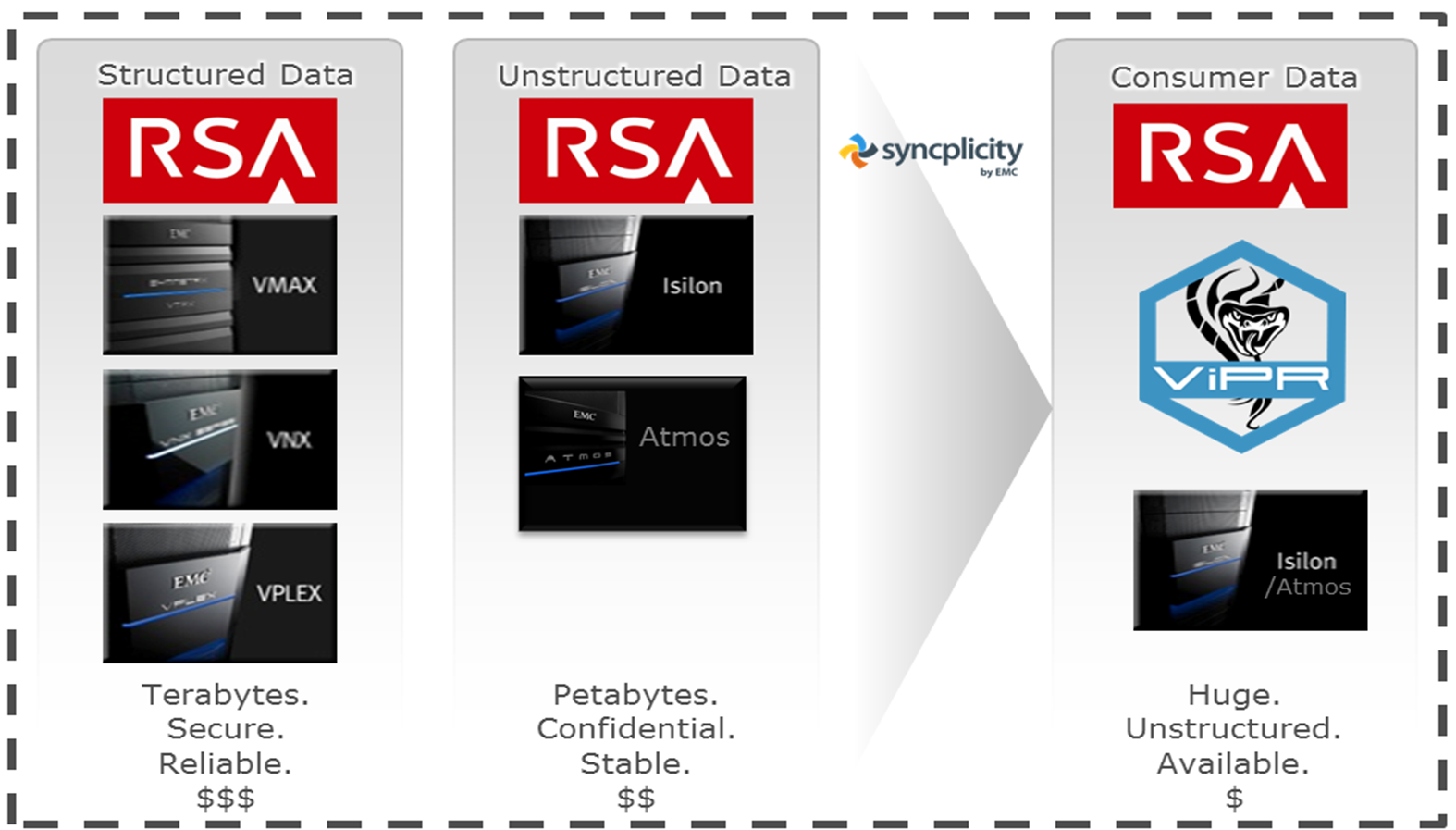
Many of the new products announced at EMC World allow existing enterprise customers to extend their data centers to support IDC’s definition of the third platform (mobile, social, cloud, big data).
I used the diagram below to highlight some of these new products and how they bridge the gap between consumer data and existing enterprise assets:
John also mentioned a critical aspect that doesn’t receive much attention: new application workloads that must run on the third platform. Workloads for storage are often characterized based on service levels (low to high) and storage characteristics (high capacity or high performance). David Goulden described workloads in more detail in his recent blog post. The diagram below considers several different workload types that map onto four quadrants:
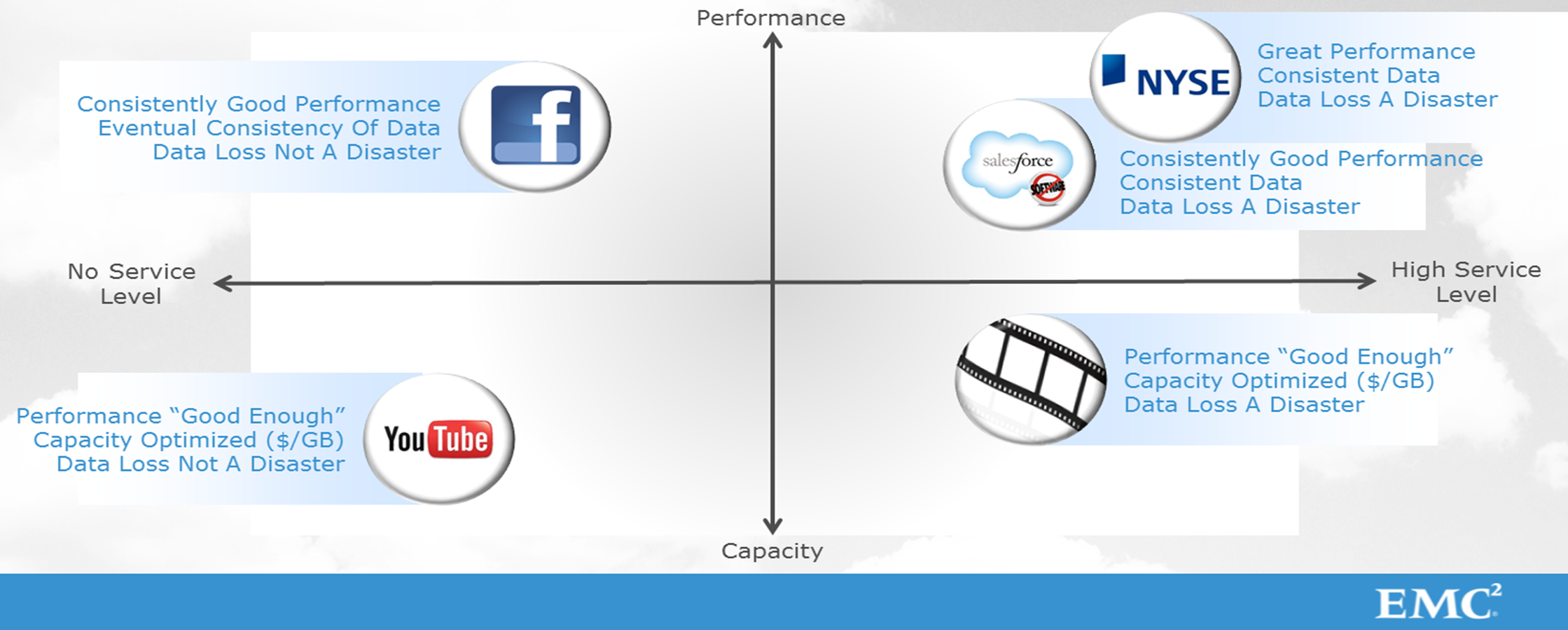
This picture highlights, for example, a “higher-performance, higher service level” application (NYSE) along with a “lower-service level, higher-capacity” application (YouTube). YouTube, for example, requires high-capacity, but users will settle for internet response times when it comes to performance. (e.g. the user may have to wait). In addition, losing a video is not necessarily a disaster, which further explains the “low service level” classification for YouTube.
I’d like to focus on the top part of the Y-axis (performance) and discuss how this axis continues to extend higher and higher. EMC’s customers are beginning to bring a large set of newer applications into their data centers. They often have I/O response-time characteristics just beyond the capabilities of the disk arrays currently installed. These new workloads expect millions of I/Os to average sub-millisecond response times. The diagram below highlights some typical applications that fall into this category.
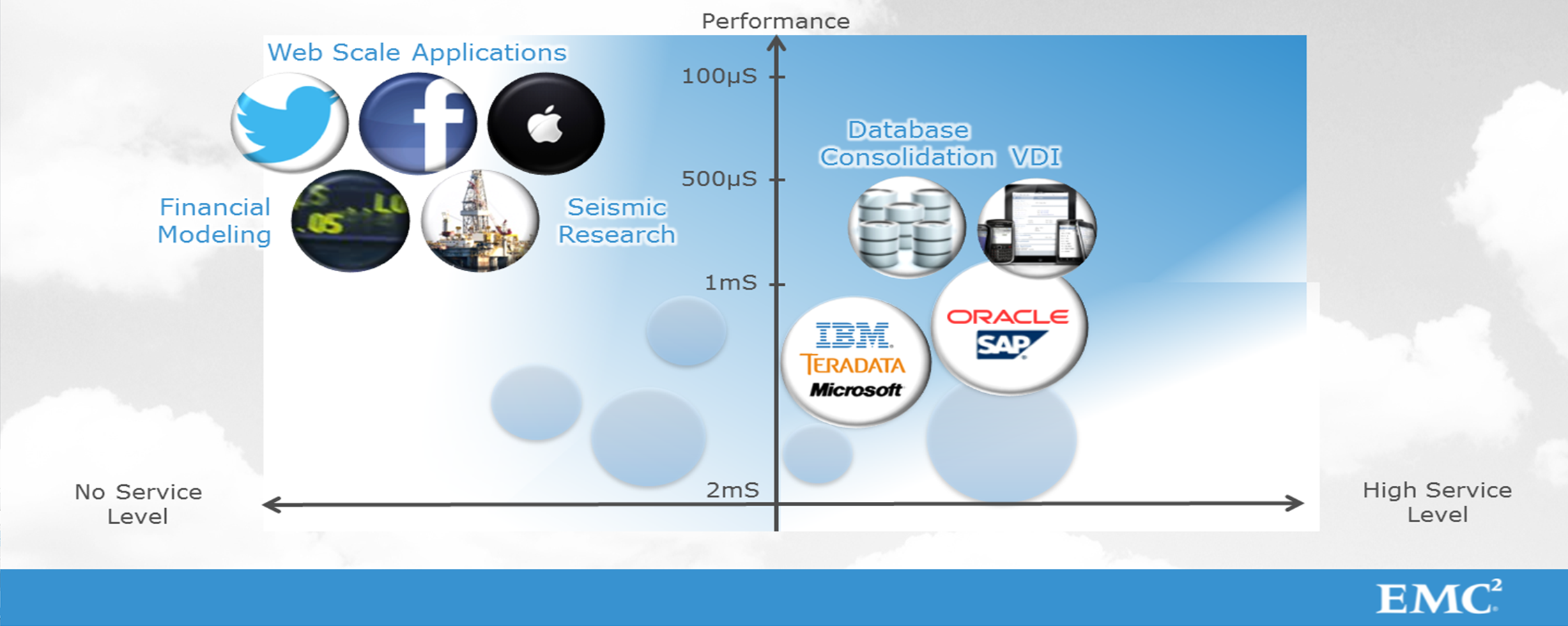
On the left-hand side “data consistency” is low, but the performance (sub-millisecond response time) is high. On the right-hand side, VDI requires lightning-fast response times, but also expects that the storage infrastructure is rock-solid (a high service level).
And herein lies the challenge of implementing a third platform architecture: existing data centers not only have to handle the explosion of mobile consumer data, but they must also satisfy challenging new performance requirements.
In other words, the Y-axis will grow higher across more and more workloads.
John’s explanation of this phenomena is quite interesting:
Transactional characteristics in the past have been bounded by the number of employees of the enterprise. In the 3rd platform, transaction response times must scale to the number of customers of the enterprise.
As I’ve mentioned previously, the third platform must support billions of customers.
Most people think of EMC’s flash portfolio as a set of “products”. John refers to flash technology as a third platform “strategy” that cuts across all of EMC’s products:
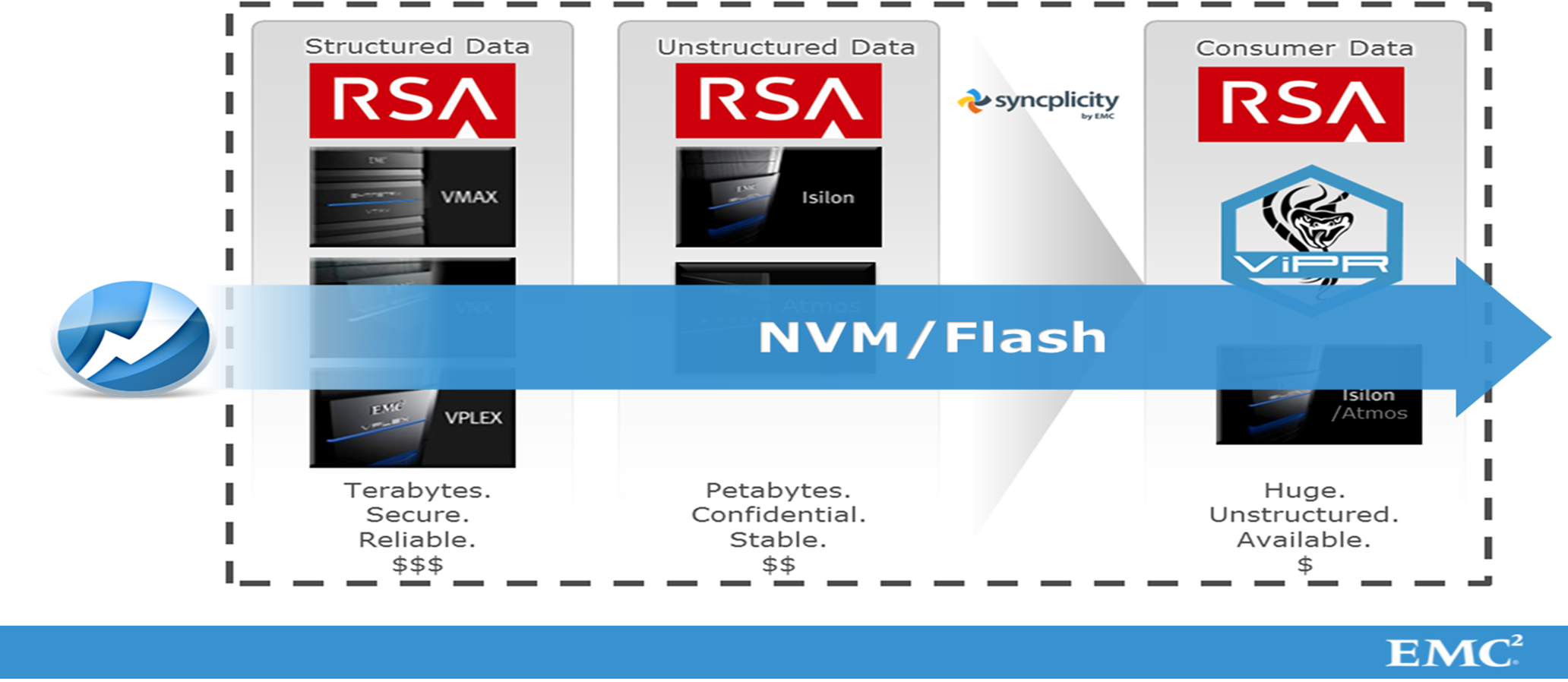
One of the expectations of a next generation platform is that it doesn’t just have more diversity of workloads, but it has increased performance characteristics for any and all of those workloads. In future posts I’ll dive down into more detail about how the EMC Flash Strategy cuts across workloads horizontally, allowing for a third platform architecture that satisfies the performance needs of emerging workloads.
Steve
Twitter: @SteveTodd
EMC Fellow