
 Over the last few posts I’ve highlighted some of the building blocks for building a new form of IT infrastructure, often referred to as the 3rd platform. One of the stated reasons for building a new platform was to enable new applications running on mobile devices.
In this post I’ll examine mobile applications and their relation to the infrastructure I’ve introduced in previous posts.
I’d like to discuss two key aspects related to mobile:
- The need for newer, fluid user interfaces on mobile devices
- The shift away from block/storage APIs towards object APIs.
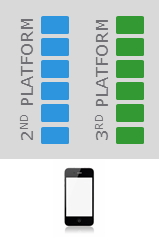
When reading and writing content from a mobile device, the two items above are equally relevant (and realizable) on both traditional and 3rd platform infrastructures. This point can be highlighted in the context of traditional file management (depicted below).
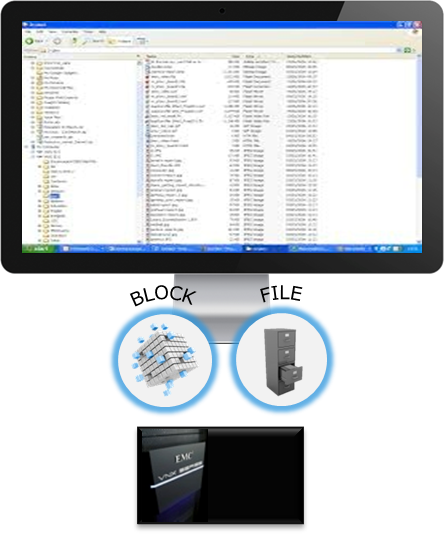
Traditional content-generating applications would mount on top of a storage device located in a well-known location. This storage device was typically accessed via block and/or file APIs, and applications would use an E: drive or a home directory as the location into which files would be stored and retrieved.
For use cases where there are millions of files being created and accessed from thousands of mobile devices, this infrastructure model doesn’t scale.
One of the (many) reasons for this is that often times the mobile content is generated using the internet-based “put” and “get” HTTP method. This approach often maps more naturally to an object-based API approach rather than a file-based approach.
An object-based approach also offers another advantage: there is no longer a need to specifically mount a directory off of a static target storage system. Roaming mobile users are therefore abstracted away from a specific mount point in a specific geographic data center. Object-based APIs are much more friendly to globally-distributed (cloud) storage architectures (e.g. Atmos).
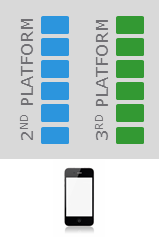
The diagram below highlights this approach (with a blue “object” icon representing an object API):
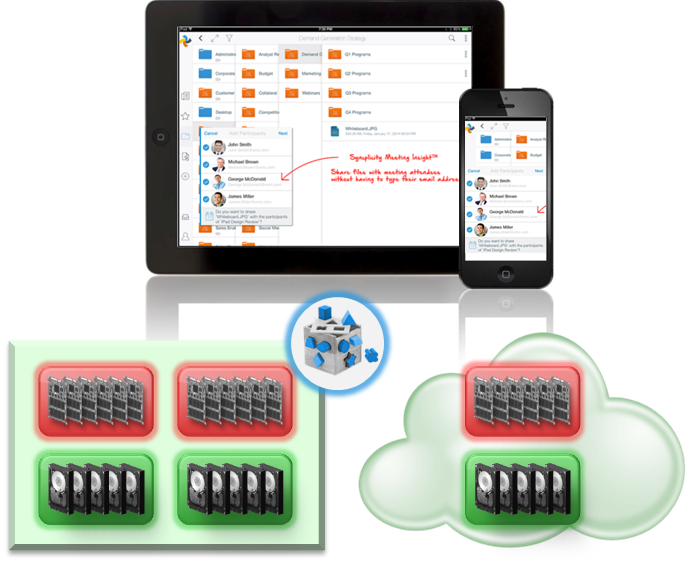
As data center operators begin deploying new infrastructure for new forms of applications, presentation of object services becomes a key piece of the architecture. The provisioning and presentation of object services should be fluid and on-demand (e.g. the storage catalogue approach).
In addition, there is no reason not to implement object services within traditional IT architectures, e.g. re-using the devices that are already in the data center. For example, no matter what type of infrastructure already exists in a data center, EMC’s ViPR data services was designed as a translation layer to the underlying storage (ViPR of course can also surface existing object-based systems like Atmos).
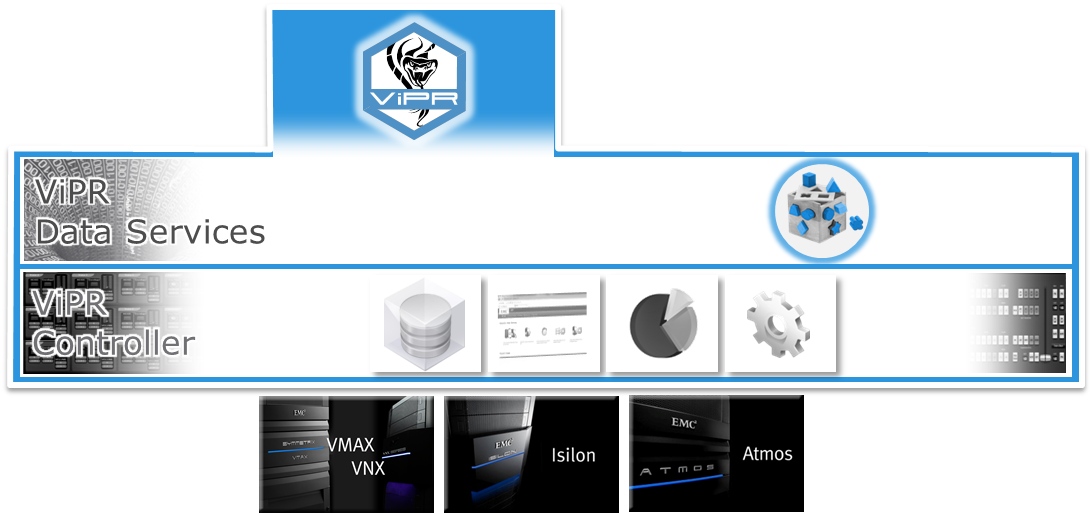
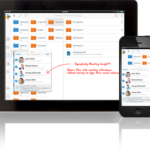
Once object services have been architected for mobile content, the next consideration for mobile is the design of new interfaces that can facilitate fluid and social engagement with the consumer (which drives content access to the object service layer).
I will discuss design considerations for these interfaces in an upcoming post.
Steve
Twitter: @SteveTodd
EMC Fellow