
 In a recent post I wrote about mobile connectivity and the need for a robust object storage layer in a data center architecture. This allows thousands of global users to create and access content via technologies such as Syncplicity.
A next logical topic for mobile devices would be the need for fluid user interfaces that reflect two realities:
- Users have very little real estate to navigate on their tablets and mobile devices.
- The use of social networking paradigms facilitates global collaboration on content.
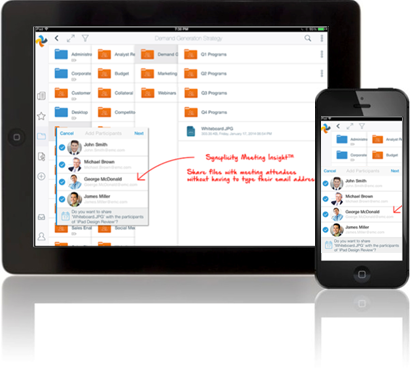
It’s worthwhile to give a close-up screen shot of some Syncplicityscreens that highlight these two features. The first screen shot shows how Synplicity can use finger swipe on folder navigation to filter through massive amounts of shared content in multiple layers of folders.
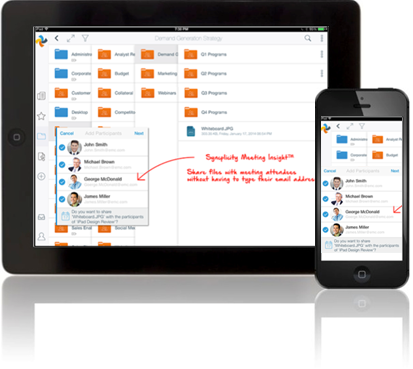
The diagram above not only highlights folder navigation but it also shows how easy it is to visualize the people you want to enable content sharing with (e.g. share it with the people from my last meeting).
Syncplicity also has the ability to highlight (on a map) the geographic location of users who either have or have not accessed the content you just shared with them:
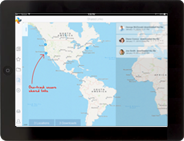
The user interface has indeed become so critical that many large data center operators have hired user interface innovation teams to come up with novel ways to provide services to users.
Several months ago I described the consulting service that ExtremeLabs provides to customers. They consult with customers that wish to create compelling and fluid user interfaces that analyze massive amounts of data.
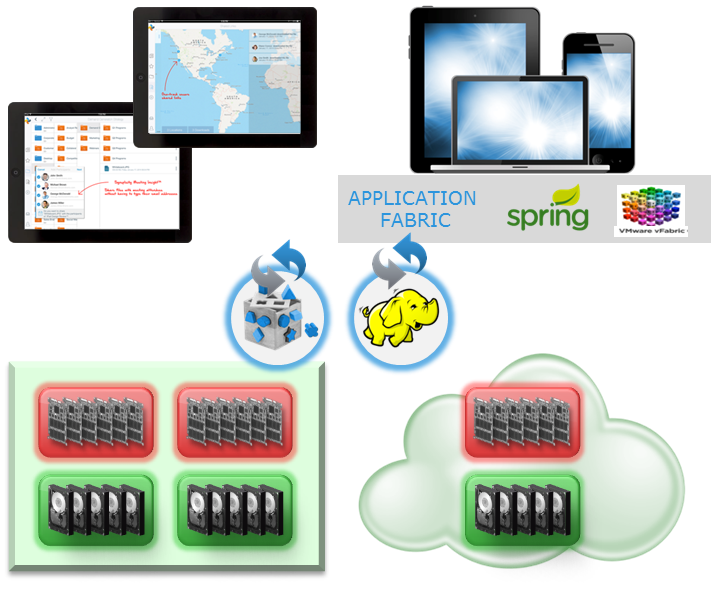
One common question about mobile analytic applications is their relation to the analysis of content being generated by mobile content applications such as Syncplicity. The simple answer is “minimize data movement by keeping it in-place”. In the context of Syncplicity, if the data is ingested using one protocol (object) the infrastructure should also provide a separate mechanism (e.g. HDFS) to analyze it without having to move it.
The diagram below highlights EMC’s approach to solve this problem, which is to use ViPR’s capability to ingest data with one protocol and analyze it with another. The mobile devices on the right leverage the mobile and analytic capabilities within the Spring framework to analyze the data via HDFS.
This concludes a series of articles I’ve written on how to build a third platform infrastructure that is supportive of mobile, social, and analytic applications, from the storage layer all the way up to the pixels on a mobile device.
In upcoming posts I plan a deeper dive into the Spring framework to highlight the usage of Spring to quickly build new applications to run on top of this infrastructure.
Steve
Twitter: @SteveTodd
EMC Fellow