
I’ve previously written that during my career I (a) limited myself to forty hours a week and (b) controlled my visibility. These two decisions helped me focus on what I loved to do: be on a team building cool software.
But these two strategies go against the grain; corporate cultures often reward staying late and getting executive attention.
So there’s a third decision that guards against getting swept up in the corporate tide: staying hyper-productive in the 40-hour window.
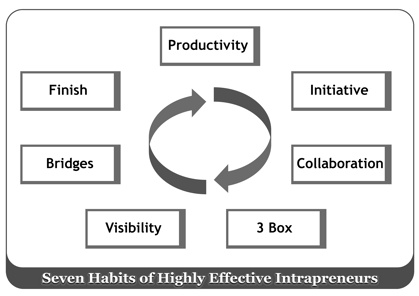
I wrote a series of articles about corporate innovation and declared productivity as a foundation for innovation. Some of the highlights of productivity include:
- Corporations love technologists that deliver high-quality results ahead of schedule.
- This early delivery results in managers giving more freedom to the employee over time.
- The employee can use this “free time” to begin taking innovation initiative and practicing collaboration. This occurs outside of the employee’s “day job.”
- There are innovation equations that describe this approach.
- An innovation flowchart shows this technique as code.
As a result of staying hyper-productive, my managers always gave me increasing levels of freedom over the years. They trusted I would get the job done and allowed me to block my calendar and avoid corporate meetings. This provided me with time to listen, think, and create.
In addition to creating software, I could also focus on creating other written assets that helped communicate value and innovation to co-workers, customers, and partners:
- 400+ patent applications
- 600+ external blog posts
- 200+ internal blog posts
- Technical white papers
I was active and therefore appeared busy. However, I had such fine-grained control over my calendar and productivity that I always had the flexibility to meet, brainstorm with, and mentor many of my colleagues.
There is a price for hyper-productivity: it leaves little time for socializing. I would have loved to get to know many of my colleagues better outside of the work environment. I did play basketball at lunch for about 20 years of my career, making great friends in the process.
Hyper-productivity can also be tiring! One of my reasons for retirement was the amount of energy it would have taken to dive into the creation and delivery of a new invention.
In general, however, I took the innovation fuel from my personal life and brought that energy into my daily work routine. My colleagues and I practiced hyper-productivity, created, and sold a long list of products that ultimately funded our continued innovation.