
“So I decided there is nothing better than to enjoy food and drink and to find satisfaction in work.” Ecclesiastes 2:24
On my first-ever day at work (June 23 1986), I resolved to work a forty-hour work week. I held to that resolution for nearly 38 years.
Believe it or not, it was fairly easy; I had a rich, vibrant life outside of work.
And the excellence of my home life energized me for the work day. My life outside work motivated me to walk out the door at 5PM so I could get back to it. It also really helped that my wife is gorgeous.
Indeed, the enthusiasm, enjoyment, and productivity I experienced regularly at work was due in large part to the fact that I couldn’t wait to get out of there.
I had a great deal of interest in and passion for the software inventions that I worked on. When you come up with an idea from scratch, it is a thrill to work daily with a team to bring it to life.
But those inventions were far down the list of priority items in my life. When I walked out the door at the end of the day I always tried to forget about them. In retirement, I wouldn’t be surprised if I never thought about them again. They meant very little compared to the innovation fuel that was my life outside work.
I was fortunate to adopt the forty-hour mentality early on.
In June of ’86, software engineering careers were growing. The image of software engineering cave trolls was prevalent. According to legend, they worked in corporate basements, never seeing the sun.
In college (the University of New Hampshire) I had seen many of my computer science classmates turn into pasty-faced zombies working endless hours at the Kingsbury Hall Computer Science lab.
The industry reputation for software engineers working all hours of the day was due, in no small part, to my first employer, Data General. The Data General-based book Soul of a New Machine had just come out, and the software engineers in that (true) story indeed worked long hours in a basement!
Within a year, my resolve was challenged during my first performance review. My boss told me I was doing an excellent job and gave me a great raise. But he added, “Your peers work later than you do. You’ll be missing out on recognition and rewards that they’ll receive and you won’t.”
He mentioned that on a quarterly basis their extra work often earned them an additional $500. I resisted the urge to ask (after some quick math) whether they knew they were working for less than minimum wage.
So I nodded my head, said nothing, and enjoyed the raise.
Little did I know that the resolve to limit myself to 40 hours would actually become an important factor in regular and continual innovation. The best way to keep that boss happy was to be so hyper-productive during those 40 hours that he would give me the leeway to start working on the ideas that I felt would best serve the industry.
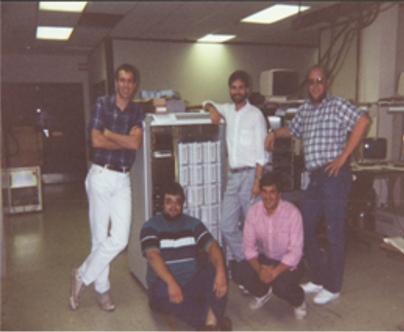
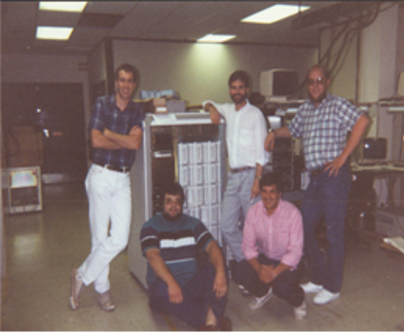
And that first invention was RAID-5 software running inside a machine called HADA (High Availability Disk Array). The software we built became a foundation of the Dell Technologies ISG business unit.
This picture was taken in our lab in Durham, NH (sometime before 5 PM).