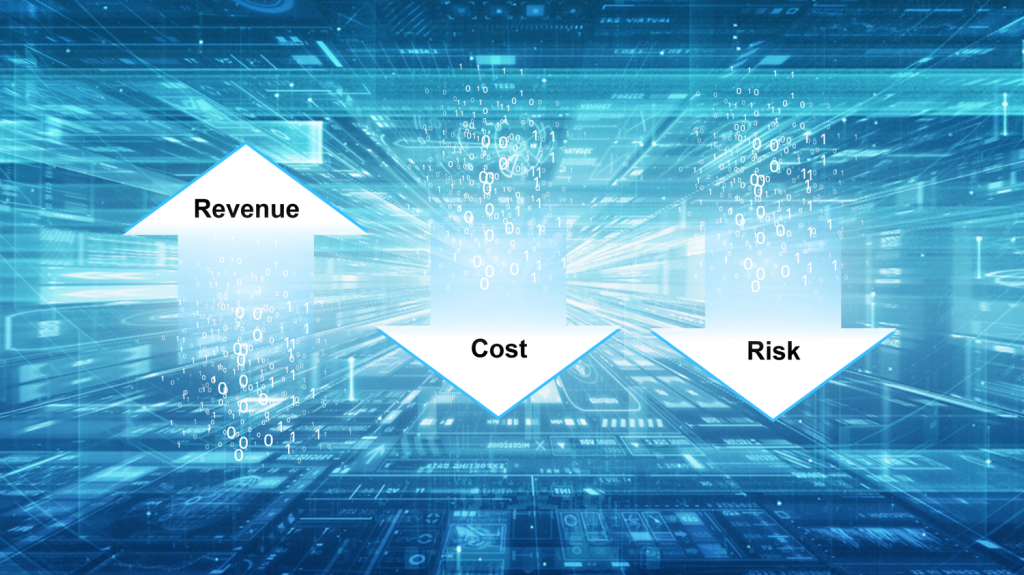

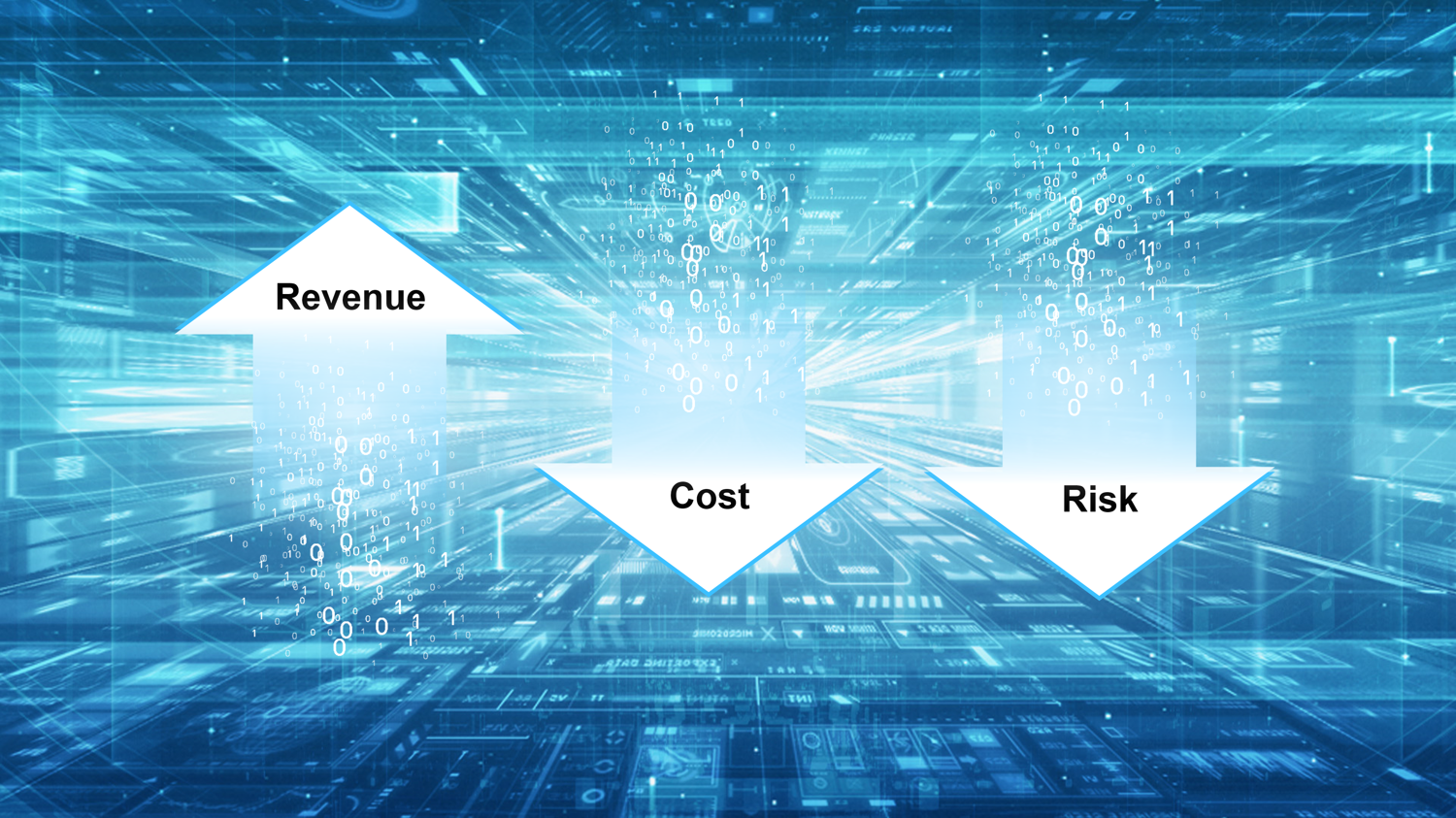
I used the graphic above in a Data Value presentation at Dell’s Field Readiness Summit several weeks ago. The presentation focused on using data to fuel business transformation. I like this picture because it highlights the flow of bits to business processes that impact the bottom line: increasing revenue, reducing costs, and minimizing risks.
My industry colleague Ryan Peterson and I have had frequent discussions on this topic, and our recent dialogue on a LinkedIn post had me thinking about how best to reduce the friction that prevents data from being quickly valued and converted to business results.
There are four categories of friction worth considering:
- Infrastructure friction. The simultaneous need for compute intensity and data intensity requires new architectures that facilitate fast processing of vast amounts of data.
- Orchestration friction. The management and movement of data require intelligent software that places data in the right place at the right (most valuable) time.
- Application friction. Software development and deployment need to happen as fast as possible to extract new business opportunities from ever-expanding data stores.
- Business process friction. Many companies have not yet created new business processes that focus on data valuation.
While the first three categories require innovation in the IT (technology) domain, the fourth category requires creative thinking in the area of people and processes.
Ryan mentioned (in his comment) that there’s currently a lot of friction:
- Legal
- Consumer consent
- Identity
- Risk management
- Sovereignty
- Etc.
When it comes to the topic of removing friction from data valuation, it can be helpful to highlight someone who is doing it well. Tom Davenport and Randy Bean published an article recently describing a company (ADP) that has addressed aspects of friction (anonymization and aggregation). ADP has created a revenue-increasing DataCloud by transforming their data into paid services. Before they could do that, however, they had to transform the data (remove friction) in a way that enabled revenue:
Unfortunately, all that data requires substantial massaging before it can be made available across ADP clients. It needs to be anonymized, of course, so that individual clients or employees can’t be identified. A more challenging data transformation is to aggregate data across different job titles for the same job.
This type of success in extracting value from data is just one of many; I’m hoping to spend more time writing on this topic in the weeks to come. I’m looking for examples in which the four areas of friction are countered with specific forms of innovation:
- Infrastructure innovation: new IT paradigms
- Orchestration innovation: new data management constructs
- Application innovation: the shift to agile
- Business process innovation: a data-centric business mindset
More to come in future posts,
Steve