
In my last post I mentioned that idea contest analytics can assist the spread of local university research being conducted in a
country like China. Social network
graphs that model idea submission amongst distributed teams can actually build
“knowledge pathways” that are ripe for the transferring of university research
knowledge. The odds of knowledge transfer coming out of China increase with the
decision by Chinese researchers to collaborate across borders with their
international counterparts.
In this post I’d like to flip the example and describe how
university research can assist any global employee in the process of idea
generation and improvement.
Earlier this year I wrote a post announcing the kickoff of
Innovation Roadmap 2013 (EMC’s yearly idea contest). I
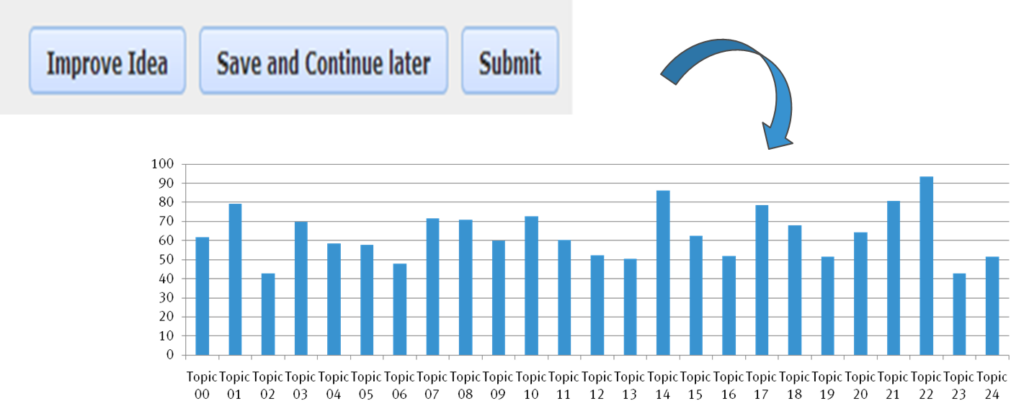
mentioned that an “Improve Idea” button had been added to our internal idea
submission portal. This button allows idea submitters to correlate their
still-forming ideas against thousands of previous ideas submitted by employees.
The improve button is show below.

Consider this process in the context of university
research. Does an employee idea overlap with relevant university
research? Can they find and locate the
global EMC employee that is in contact with that university? Can they discover
the names of relevant faculty and students and read their publications? Answering yes to any and all of these
questions can increase the quality of idea submission (which is the goal).
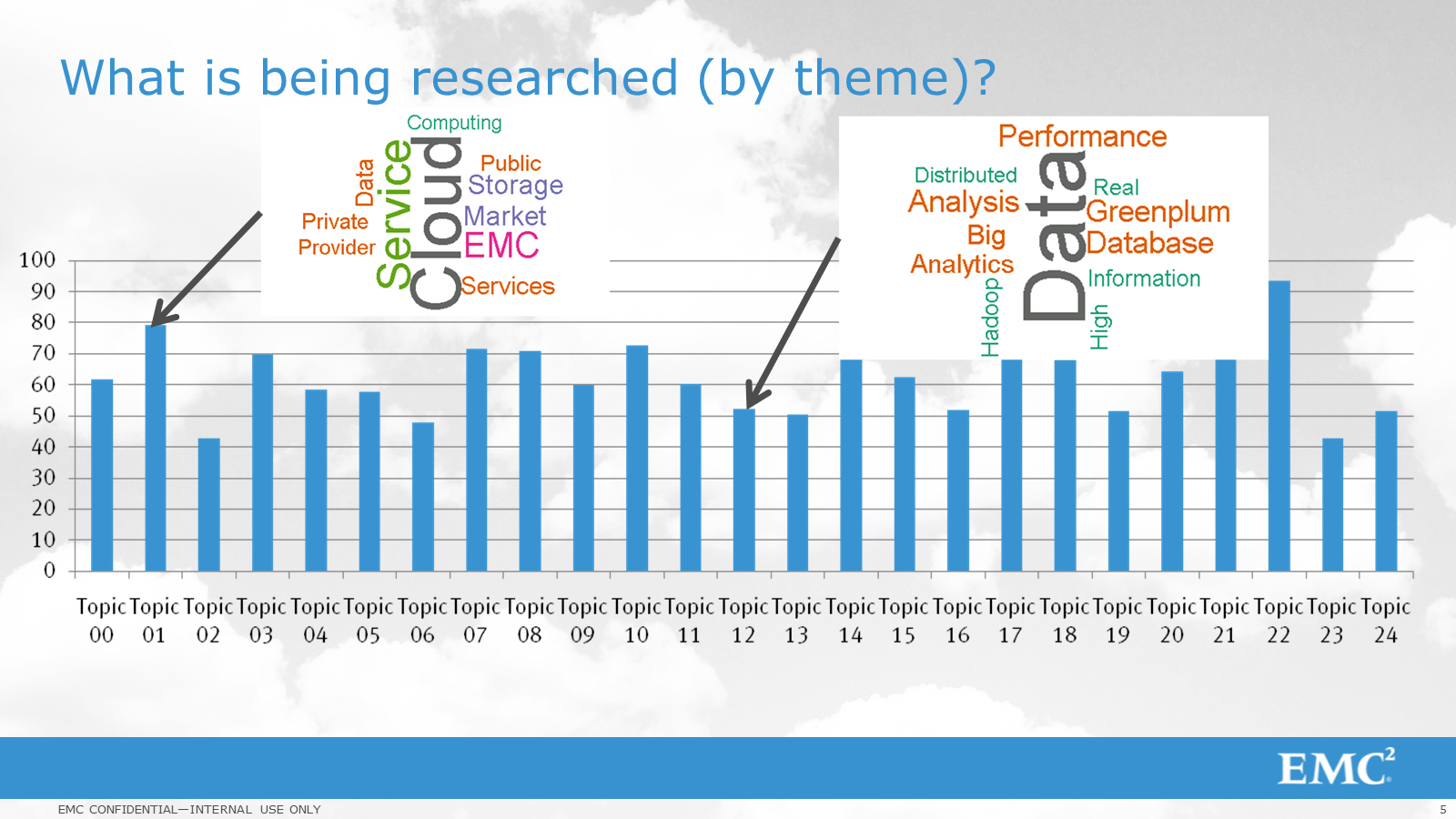
Consider the topic model presented in a
previous post. Topic modeling provides
the ability to process the entirety of a university research portfolio and
“bucketize” it into themes like “Cloud” and “Big Data”. The output of a topic
modeling exercise is shown below.
It’s
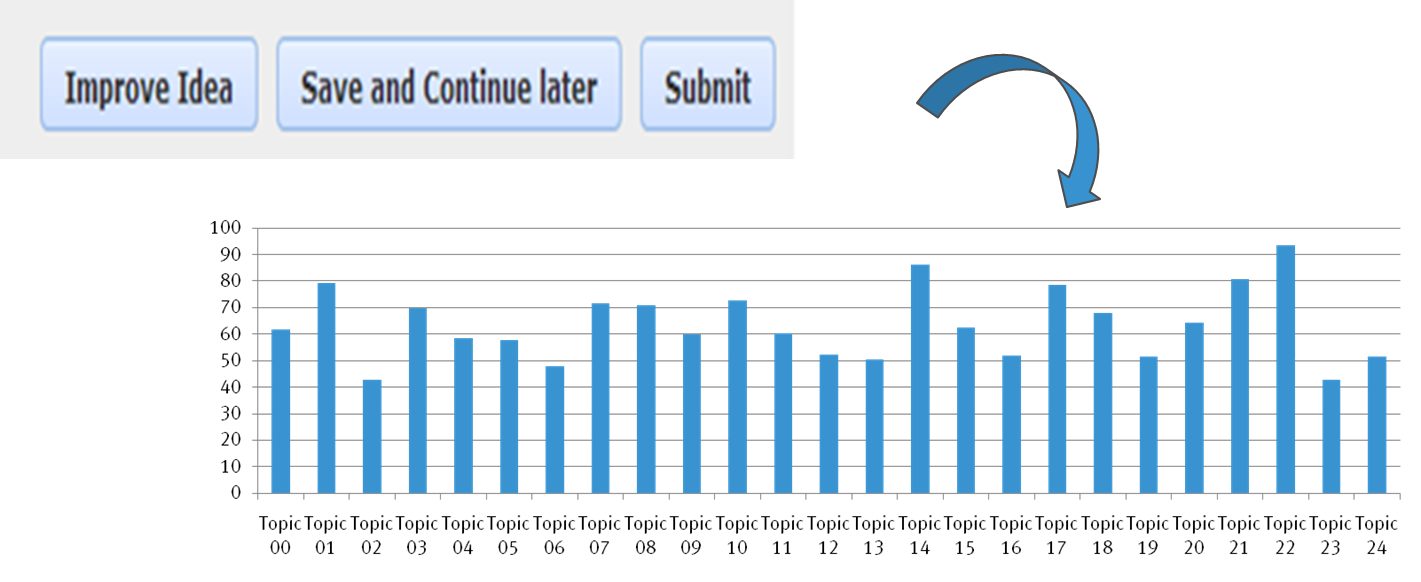
entirely possible for an employee to type in the text of their
idea, and have the Topic Modeling Toolbox analyze the idea and correlate it to
the most appropriate bucket. Within this
bucket, the toolbox will also highlight which university research initiatives
are likely “most relevant”. The diagram below symbolically represents this
process.
It
is common to envision a university research program in which a specific set of
engineers is targeted for knowledge transfer. For example, within EMC it makes
perfect sense for the research we conduct with the University of Limerick
(Flash technology) gets “pushed” to EMC internal groups that might benefit from
the results (e.g. the XtremIO all-Flash disk array team, or XtremSF server flash team).
How does the knowledge transfer turn into a corporate asset? How can the research and the result be tied together? The approach that EMC is considering is lineage-based. Read my previous blog post on this topic for more detail.
Steve
EMC Fellow