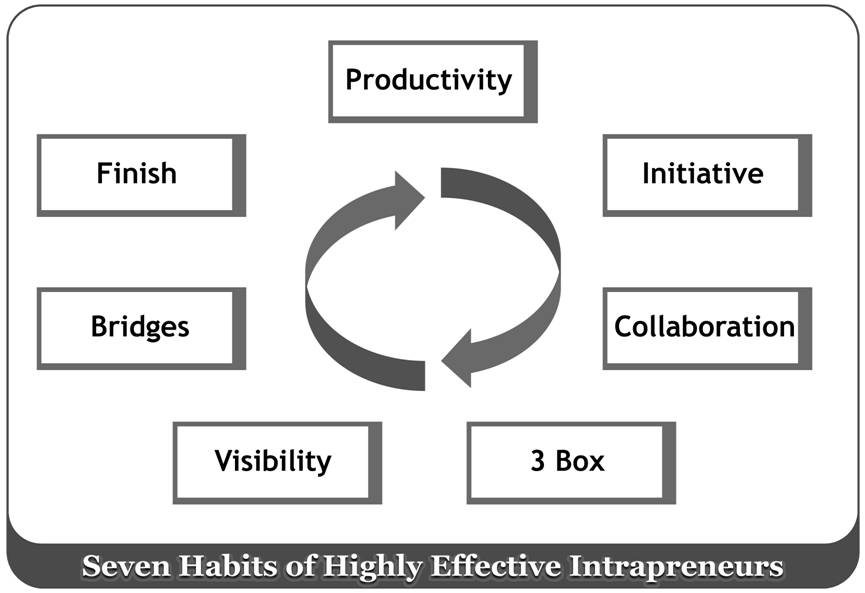

This is the sixth in a series of articles that describe the unique traits of a corporate intrapreneur.
The previous habit (3-box time management) described the first step required to deliver upon an idea in a large corporation.
The next habit is an unusual and counter-intuitive technique that enables an intrapreneur to continue the delivery of their idea. Visibility management (often referred to as visibility avoidance) is depicted below as the next step in the cycle.
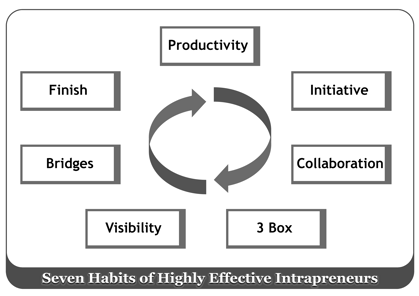
Visibility avoidance – not actively publicizing one’s talents – seems to be incongruent with climbing the corporate ladder. Doesn’t everybody want to be recognized for their great ideas and promoted to higher levels of responsibility?
Intrapreneurs, quite simply, need not. Their intrinsic passion for the generation and delivery of ideas is their main reason for coming to work every day. They fill their time with trips to the lab to debug alongside their teammates. They close themselves inside remote conferences rooms and collaborate on whiteboards. They spend hours on their laptops, searching high and low for new sources of learning on the latest technologies. They visit local customers to check on their configurations.
They are not motivated by rewards and recognition from others. They are rewarded by the process that they have created for themselves.
This sort of self-motivation does not leave a lot of time for the bureaucratic meetings that are so common at large corporations. Intrapreneurs who find themselves lassoed in these types of meetings recognize they are jeopardizing the core value that is the hallmark of any intrapreneur: productivity. They understand that certain forms of recognition by executive management are accompanied by the unwelcome trappings of inefficient assignments and endless, countless meetings.
While they eschew recognition by executives, they strive for visibility with the builders in the trenches.
As a result of maintaining the delicate balance between maximizing trench visibility and minimizing corporate visibility, many intrapreneurs have adopted a “plus 2” approach to recognition within the corporation. They create extremely strong bonds of trust with their direct manager, reinforced by their consistently exceeding performance expectations, and strive for an equally strong bond with their manager’s manager.
Any regular interaction with managers and executives higher than two levels above their current position is generally avoided. Building trust with the first two higher links in the management chain can accomplish two things:
- It allows the management chain to run interference for the intrapreneur, which keeps the intrapreneur out of inefficient meetings.
- It allows the management chain to advocate on behalf of the intrapreneur, which can advance those causes that require resource allocation outside of the business unit.
Why would the links on the plus-2 management chain go to these lengths to advance the cause of an intrapreneur? It comes down, once again, to the core trait of an intrapreneur: productivity. Corporate intrapreneurs have a track record of success. Their previous inventions became products that continue to generate revenue. People like to work with them, and they raise morale. Their management chain wants to keep them happy, and will typically do their best to eliminate corporate obstacles (or raise them to protect the intrapreneur’s time).
By adding plus-2 management to the practice of 3-Box time management, the intrapreneur can make great progress on the delivery of their idea. Eventually they will reach the stage where they are ready to request formal recognition and funding for their idea. This phase is referred to as “Bridge Building”, and will be described in a subsequent post.
Steve
Twitter: @SteveTodd
Director, EMC Innovation Network

Steve, I have an anecdote that shows the opportunity inherent in the exceptions to the plus-2 rule.
I had the opportunity to attend a round table held by my VP 8 months into my first position here at EMC. We had 4 layers of management between us at the time. Discussions had in that conversation lead to an opportunity to start a grassroots investigation within the division sponsored by him directly. If I hadn’t addressed my manager’s manager’s manager’s manager those cultural shifts in the department would not have happened in that fashion.
Now I’m not saying its a regular happening, but these types of speak-your-mind-to-those-who-can-make-big-change moments require a respectful disregard for rank or file.
Maybe the _type_ of productivity is a factor here – my example is one of cultural shift while your work is most frequently development. What do you think?
I’m loving this series. Looking forward to its continuation.
Matt – I’m all in favor of occasional respectful disregard!
Yes my “type” of productivity is more about delivering technical ideas than facilitating cultural shifts, which is still a form of innovation.
There are certainly one-off encounters (such as yours) that can be impactful. My main point, however, is this: if you make a habit of those encounters you may find yourself in the lab a lot less often.