

Last week I wrote a post describing my interest in learning about VMWARE's
SpringSource acquisition. I signed up for the
CloudFoundry beta program. Cloud Foundry allows developers to run applications in the Amazon EC2 compute cloud.
 My particular CloudFoundry application would play "cloud football": the throwing of a football from one cloud to another and back again.The football would be a "football.jpg" (displayed here on the left). Of course this exercise is motivated by the impending start of National Football League (Go Pats: Brady's back).
The quarterback of this play is a storage cloud: Atmos On-line. The football shown here is initially stored as an object in an Atmos storage system. When this file was stored on to Atmos it was tagged with a metadata value of "Football.jpg".
The flea-flicker starts by flipping the ball from a storage cloud (Atmos) to a compute cloud (Amazon EC2) . A GRAILS application contains the logic to make this happen. This GRAILS application accepts the name of a file (e.g. Football.jpg) and then queries the Atmos cloud for an object containing this name as a metadata attribute. If found, the object is read as a stream of bytes, and then thrown BACK to Atmos as a different object.
I used CloudFoundry to load this application up to Amazon EC2. Once the application started, I connected to it using a browser. The browser displayed this screen:
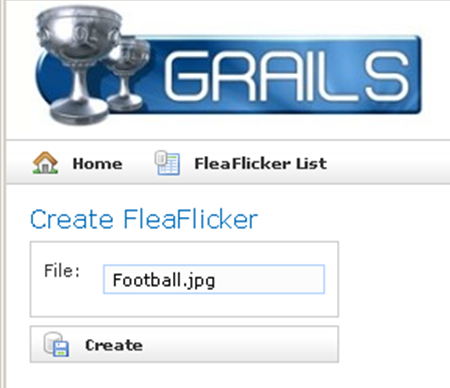
When I clicked the "create" button, the flea-flicker occurred. The code I had uploaded to EC2 queried Atmos objects until it found "football.jpg", loaded the bytes from that file, then threw them back as a different object.
Storage cloud -> Compute Cloud -> Storage Cloud.
As a side note, this is the first time I've had to pay money to test my software. Amazon charges me ten cents an hour to run this play! (I have no plans to file an expense report at this time). I kept worrying I was going to leave my software running on EC2 all weekend.
Any flea flicker play needs a wide receiver running a deep route. My wide receiver was Gladinet. If my play works correctly, then I should be able to start up Gladinet, mount my Atmos-based, REST-ful storage drive, and see the new object sitting in Gladinet's file system. In summary, here's how I drew up the play:
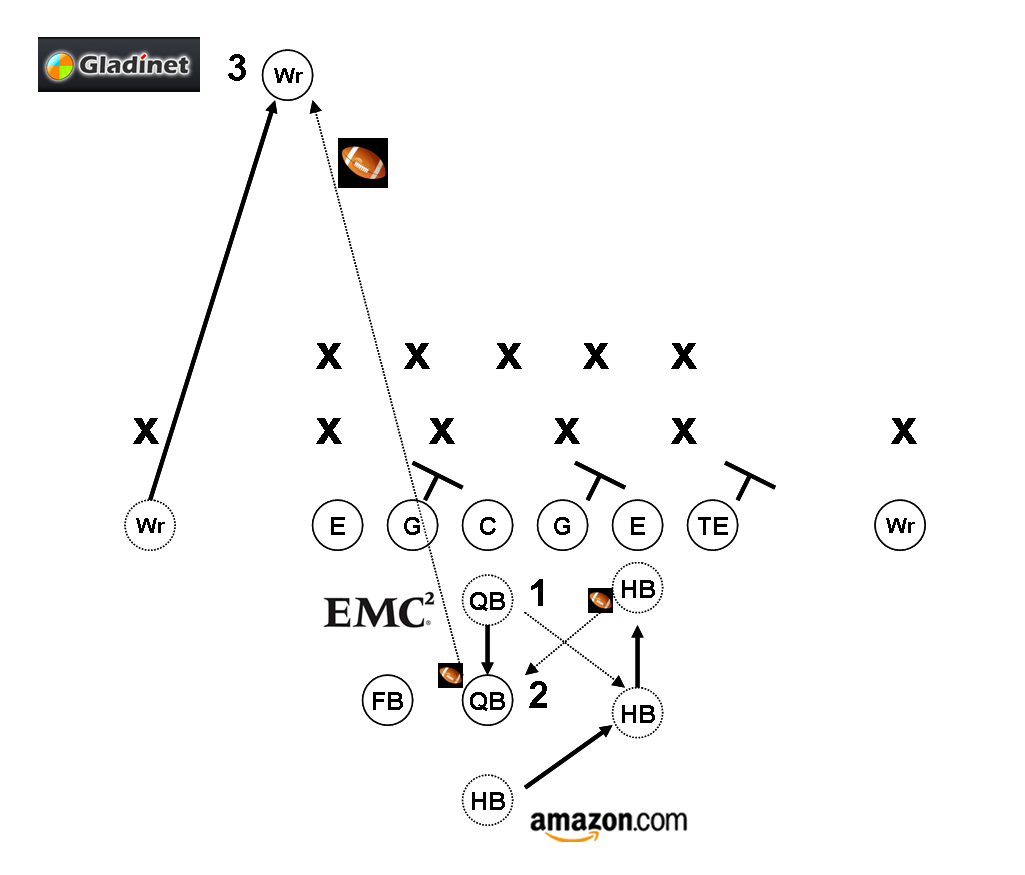
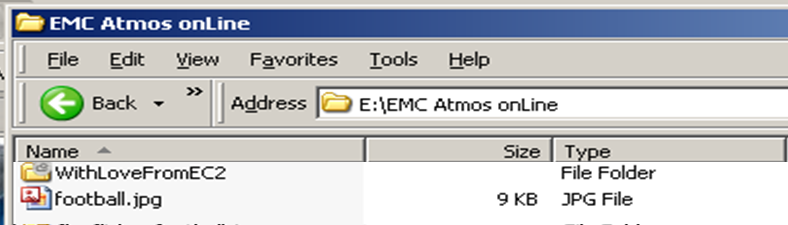
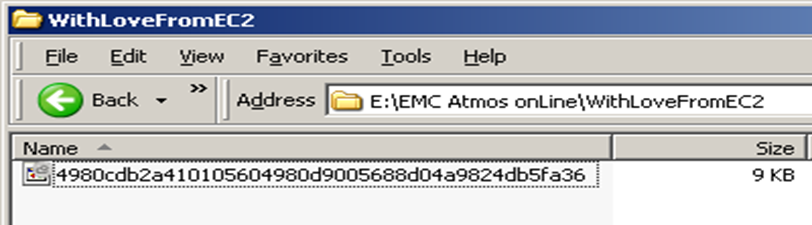
What was the end result? In a word: touchdown. A display of the Gladinet mounted file system shows a new object (with a long object ID) sitting inside a new directory. When I opened up the new object the football was indeed displayed. Here are two screen shots showing the Gladinet reception of the new object (sitting in a new directory).
I love it when a play comes together.
What does it all mean? Well, the technologies available for application development in the cloud (for both compute and storage) are very nimble. It's a new programming paradigm: Nimbus Development. For a company like EMC, nimbus development fits right in as the toolkit being used to build out the developing architecture of private cloud.
Now it's time to figure out how FastScale will fit in.
Steve
http://stevetodd.typepad.com
Twitter: @SteveTodd