
Over the last few weeks I’ve been summarizing some of the preliminary findings from the Data Valuation research being conducted by Dr. Jim Short of UC San Diego. In particular I’ve written three blog posts describing:
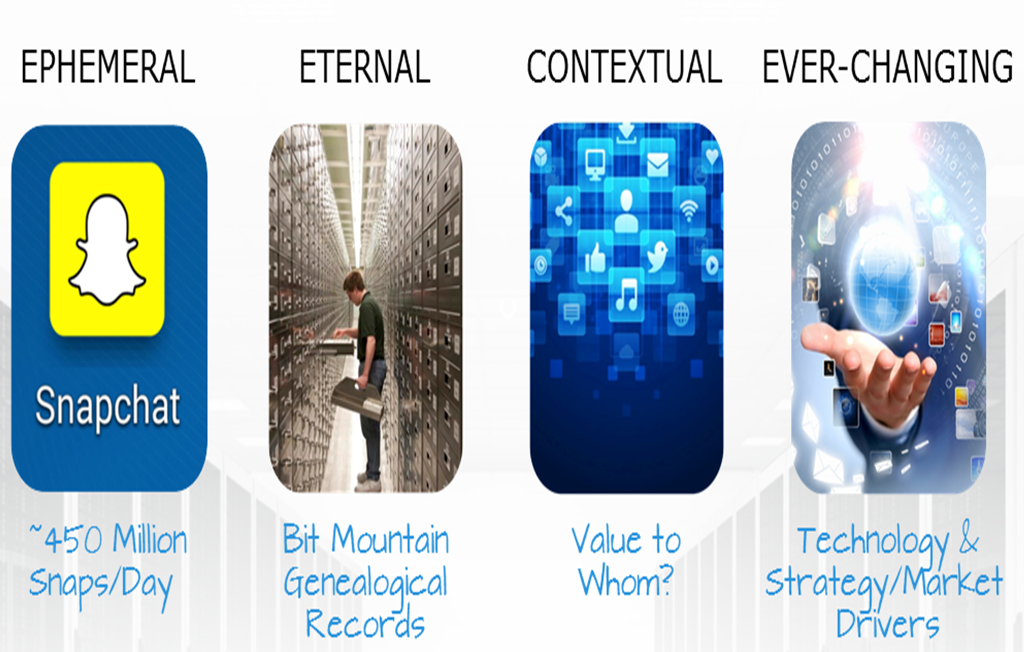
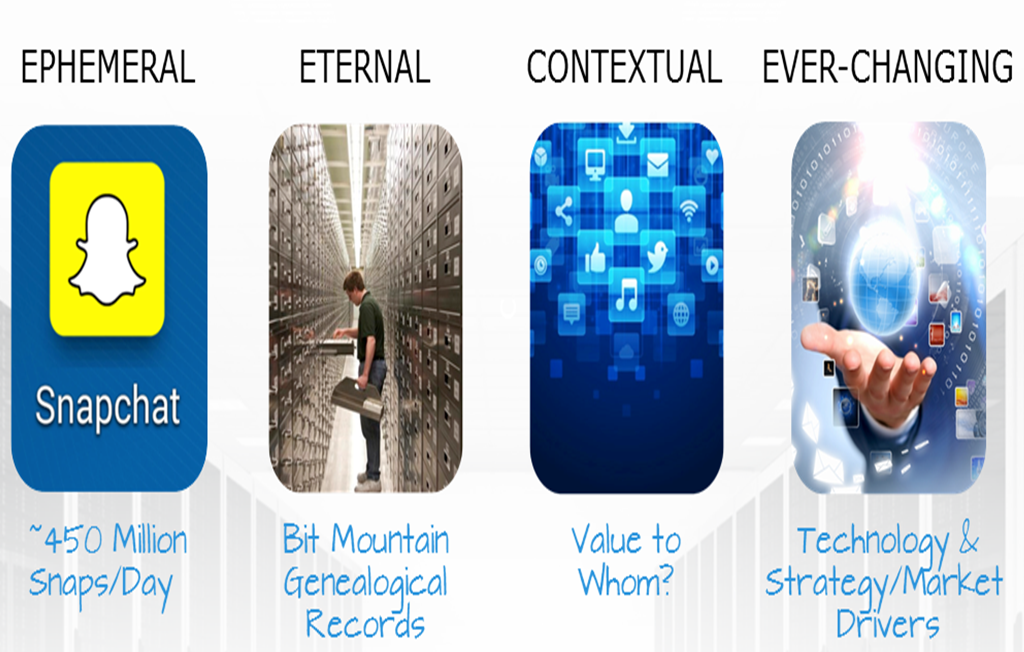
- Data value can be ephemeral. Instead of holding on to data and attempting to mine it over time (e.g. a “refinery” model), some corporations extract value from data that is temporal or fleeting (e.g. Snapchat data).
- Data value can be eternal. Examples of data having eternal value would be genealogical records, or documents related to the history of a nation (or a presidency, as in the case of the John F Kennedy LIbrary and Museum).
- Data value can be contextual. It may represent different value to different organizations within a business, such as manufacturing, product line, security and IT team, etc.
In this post I’d like to highlight Jim’s final point: data value can be ever-changing. I understood this to mean ever-fluctuating. Insurance companies depreciate automobile value over time, and in many of the traditional “data life-cycle management” models there was an assumption that data loses value as it ages. While this may be true for some percentage of the time, Dr. Short’s research is searching to uncover use cases where the value of specific corporate data assets rises as well as falls.
My EMC colleague David Dietrich sent me an interesting Wall Street Journal article the other day that emphasized how the industry’s struggle with data valuation. The title of the article was “The Big Mystery: What’s Big Data Worth?” The sub-title was also telling: A Lack of Standards for Valuing Information Confounds Accountants, Economists. The beginning of the article paints a good picture:
The problem is that no one really knows what all that information is worth. Data isn’t a physical asset like a factory or cash, and there aren’t any official guidelines for assessing its value.
“It’s flummoxing that companies have better accounting for their office furniture than their information assets,” said Douglas Laney,an analyst at technology research and consulting firm Gartner Inc.“You can’t manage what you don’t measure.”
After listening to Dr. Short and his description of the Four Principles of Data Value, it’s clear to me why the industry is struggling with how to approach this problem. Some data is temporal and some is eternal, and its value is not only fluctuating but it is fluctuating conditionally based on who is asking (e.g. data value is contextual).
The article certainly touches on the difficulties of temporal versus external as it refers to the “shelf-life” of data:
“Companies also would have to estimate the shelf-life of their data, figure out its future worth and track and report any changes in its value. Crunching those numbers would be relatively easy for a physical asset like a factory. But in the squishy world of intangibles, there’s little precedent for such calculations.”
However, as I read the article it became clear that there are existing data valuation processes, including:
- Intellectual property
- Selling consumer data
- Search algorithms
- Data acquired during mergers
One area that the article fails to mention is a trend that Dr. Short has noticed occurring outside of the enterprise: data valuation processes in the insurance industry. As part of the research I’ve begun exploring the intersection of insurance industry valuation processes and IT infrastructure.
These processes take into account extremely ephemeral data (e.g. packet-level insurance on in-flight data via companies like CloudCover) as well as more traditional corporate data (e.g. data subject to breach).
In future posts I plan on diving into more of Dr. Short’s research and highlight several use cases of note that hint at new standards and methods in the data valuation area.
Steve
EMC Fellow