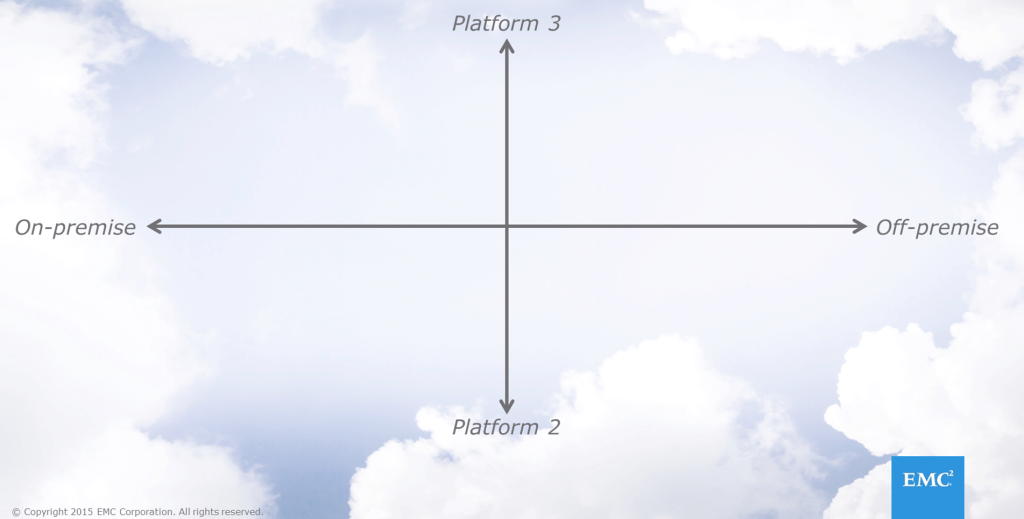

In a recent post I mentioned that EMC CTO John Roese had met with an advisory team in Ireland to get their opinion on future cloud topologies. In order to make a complex topic simple, John focused on two areas:
- Traditional Platform 2 applications (e.g. existing mission critical apps running in a data center) versus next-generation Platform 3 applications (e.g. 12-factor apps).
- Hosting the applications on-premise versus off-premise.
These two variables result in the following quadrants:
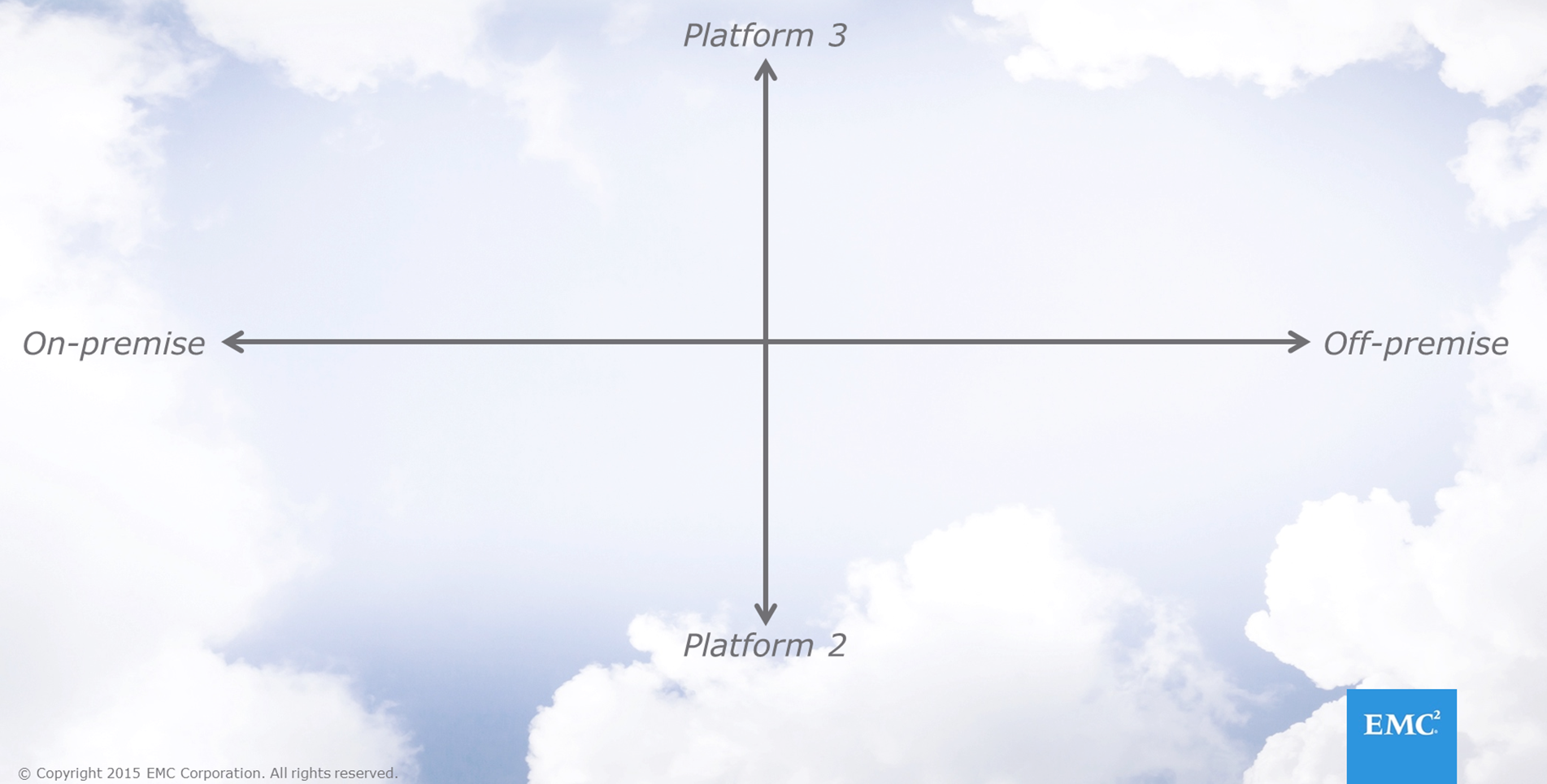
The bottom left-hand quadrant represents a starting point for a large number of enterprise configurations. Each deployment must consider how to move and/or place some subset of their applications and data (legacy or new) to some combination of the other three quadrants.
The strategy for choosing a new quadrant is often based on the task of application rationalization. In many cases enterprise technologists are marching through thousands of applications and figuring out where to place them.
Once a path has been chosen for each application, the hurdle of seamlessness presents itself. What is the best way to seamlessly and securely move or place applications and data between quadrants? Indeed the hardest problem to solve is seamless and secure data movement.
Over the last few years EMC has invested in cloud inter-networking technologies for data movement that span these quadrants. These technologies sit at the intersection of the four quadrants and in the weeks ahead I’d like to spend some time explaining how the coordinated management of these data movement technologies is a critical part of an overall hybrid cloud strategy.
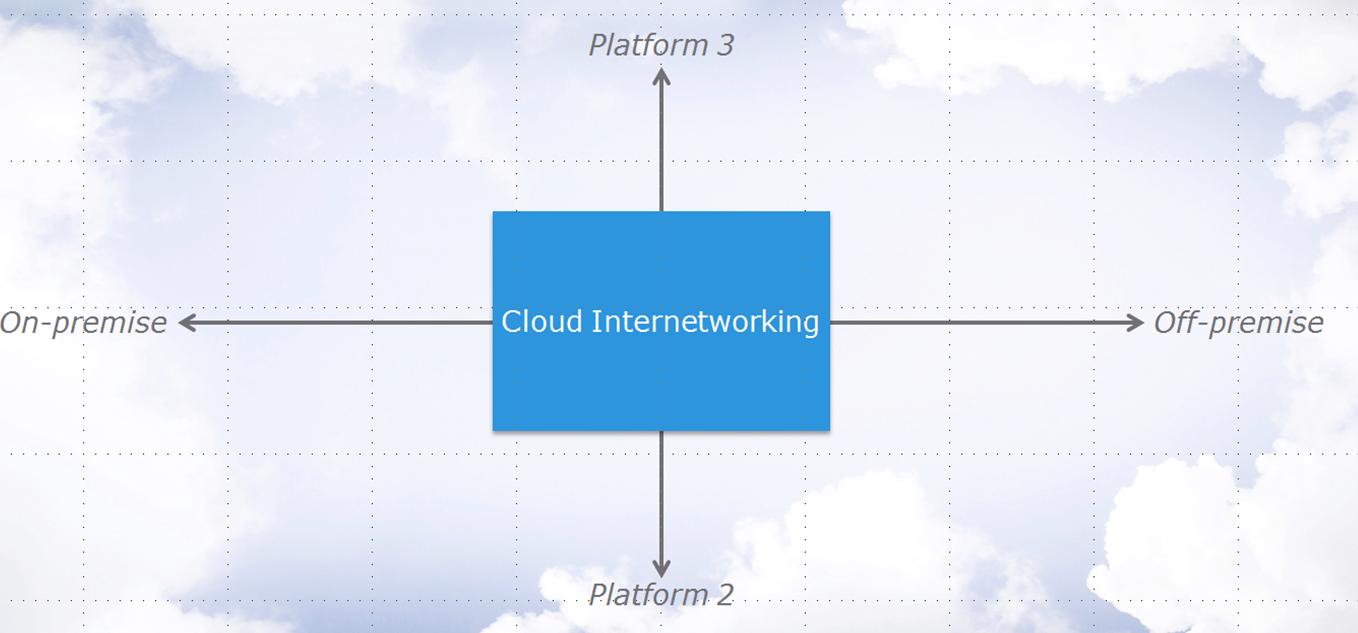
EMC’s portfolio, for many years, has already possessed a large number of technologies that fall into the cloud internetworking box depicted above. Over the last few years this portfolio has been augmented with a number of different technologies, including:
- The TwinStrata CloudArray platform, which allows enterprises to securely move their on-premise stored data into multiple public or private clouds.
- Maginatics possesses wan-acceleration and caching technologies that are specifically geared towards cloud object stores.
- Spanning provides enterprise-class backup and recovery for those enterprise customers that choose a SaaS cloud option.
- CloudLink provides the SecureVM technology, which encrypts, controls, and manages compute instances across multiple clouds.
What is the best way to combine these technologies, and others like them, to create a seamless, secure experience for moving workloads and data between the enterprise and multiple target clouds?
I will dive into this topic in future posts.
Steve
EMC Fellow