
As I was digging out from email upon my return from vacation, there was an EMC press release that caught my eye. Seattle’s King County District Court (KCDC, as opposed to the King County Superior Court) has gone paperless. They’ve chosen to create a digital archiving process that scans and enters all legal documents into a central digital archive.
When they arrest someone, they now use laptops to write out a ticket!
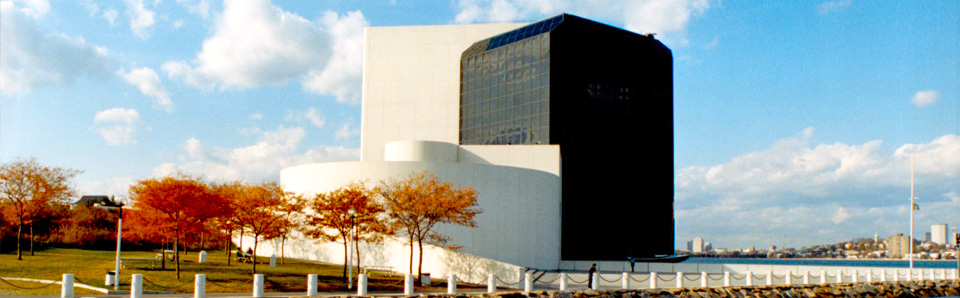
I was interested to read the details, mainly because I’ve spent so much time understanding and writing about the digital archiving process at the JFK Presidential Library and Museum. In particular I was wondering about the requirements for digital archiving of legal documents as compared to the museum’s desire to digitally preserve our nation’s history.
The KCDC chose Centera as their central storage platform for all of their legal documents.
Here’s why.
The KCDC was looking to build a paperless solution that enabled a secure, geographically distributed, web-enabled solution that included both previous court cases (which will take years to scan) and all new cases. All court paperwork would be digitized. The public would have web access to roughly 70% of these records, with KDCD employees and legal professionals having a firewalled view of the rest. Employees would no longer have to physically fetch the paperwork (after trying to find it), or experience a long delay waiting for the documents to be shipped via snail mail.
This solution had a wide set of requirements (all satisfied by Centera’s capabilities):
Tamperproof
One of the requirements of KCDC is that these court documents cannot be altered. Disallowing alteration, however, falls short. The court needs to be able to prove that documents have not been altered. This is where Centera’s digital fingerprinting feature is a big win. Every document stored on Centera is (a) immediately timestamped, and (b) protected by a digital fingerprint. This fingerprint is known as a content address (CA). Applications use this CA to fetch the documents, and Centera automatically confirms authenticity of the original content when retrieving the document from the system.
Digital fingerprinting is also inherently more secure in a paperless model; there’s no chance of “putting the wrong document(s) in the envelope”.
Chain of Evidence
There may be a need to modify or add to existing legal documents, while preserving (e.g. tamperproof) the original. Centera allows this. Documents can be opened, modified, and saved. This results in a new digital fingerprint, with the old document still preserved in original form. The history of these changes can be traced, resulting in a provable, documented workflow of “who touched the evidence”.
Retention
By law, the KCDC must keep this digital paperwork for a specified period of time. Therefore, when the document is initially stored on the Centera, the appropriate retention period (e.g. weeks, months, years) is associated with the content, and Centera will guarantee the document’s existence during that period.
Disaster Recovery / Continuous Access
The KCDC had requirements to replicate all records to a remote site (geographically located 70 miles away), so they chose Centera Replicator to mirror all documents to a remote Centera. As a result they are able to keep full copies of all records in case something happens to their primary (e.g. destroyed in a fire). Additionally, the remote Centera serves as a transparent failover target in case the primary goes off-line (e.g. maintenance event).
Capacity Upgrade
Given that the KCDC estimates it handles roughly 230,000 new cases each year, the amount of digital data stored to the system would be extensive, and they needed a solution which (a) provided daily automated capacity reports, and (b) allowed for a “low-touch, zero-configuration” capacity upgrade strategy. The Centera systems at KCDC currently send twice-daily reports on available capacity (they have already used 1/3 of their available 9.5 TB capacity). When the system does fill, more Centera nodes are ordered and plugged into the system, without the need for manually growing, modifying, or otherwise configuring the system via a management interface.
The Jury is IN
Centera satisfied the requirements, was purchased and installed, and is up and running. My key thought here is that the digital fingerprint capability is really a clincher for deploying Centera in a legal environment.
The list of use cases for Centera keeps growing. I’ve written about the country of Finland’s plan to deploy Centera as its central repository for Medical Records, the JFK library’s implementation of a digital archive for our country’s heritage, and now I’ve highlighted Centera’s applicability at King County.
I hope to give you more information about ways Centera is being deployed. Fixed content (such as court documents) has unique requirements that call for unique storage systems.
Sounds like a perfect storm……
Steve