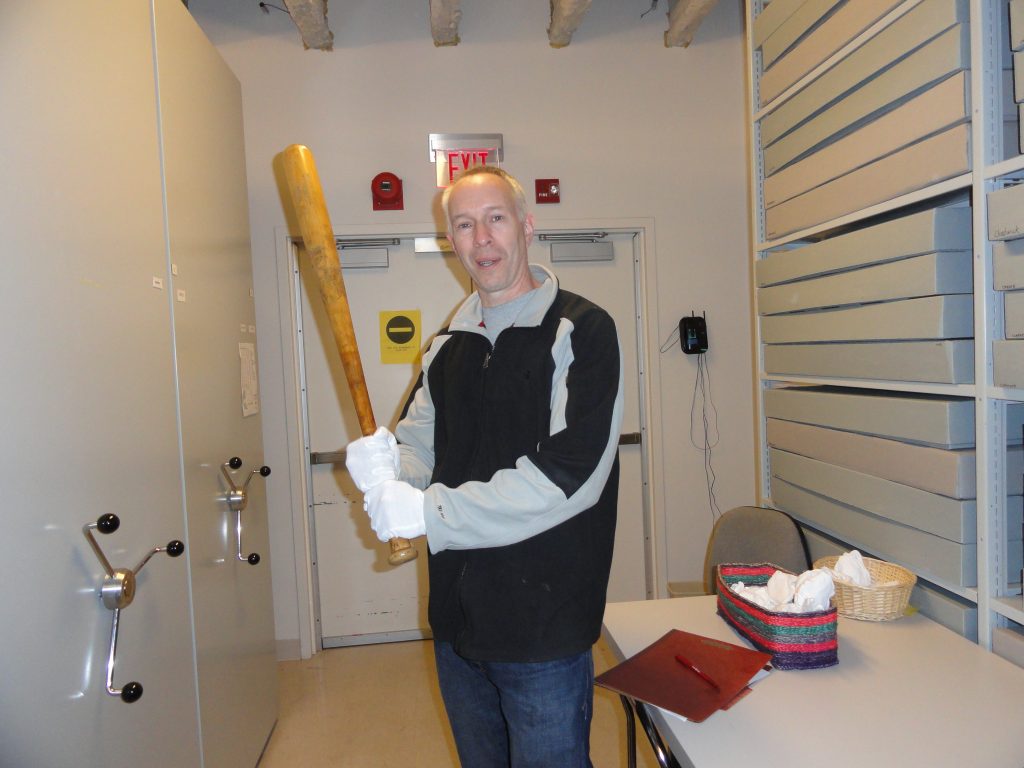

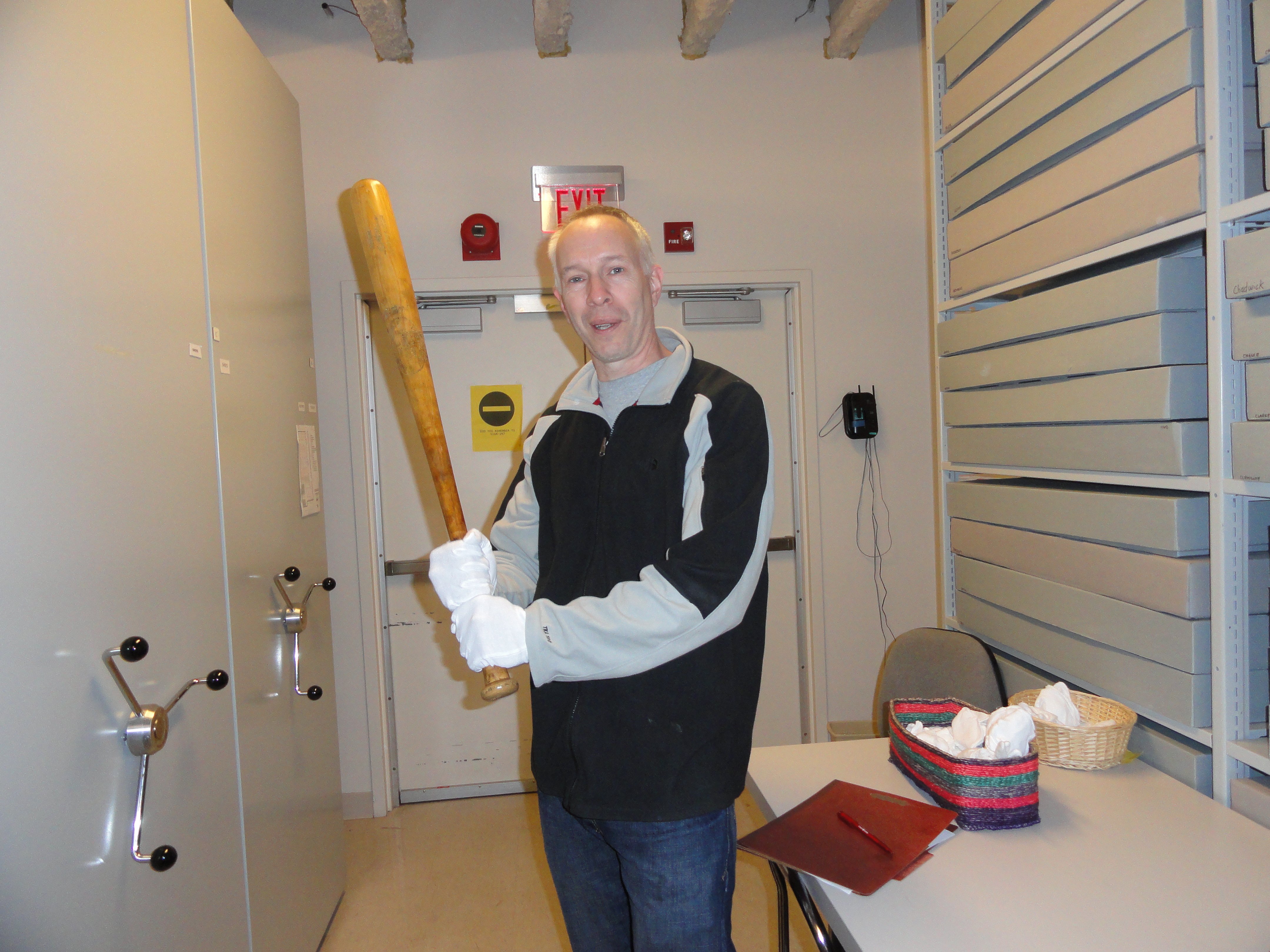
 When I scheduled my visit to the National Baseball Hall of Fame and Museum, I had no idea what I was in for. Ken Meifert brought my family and I down to the basement of the museum to see some of the items that are currently not on display. I stepped into the secure vault and was handed Ted William’s bat (you know, the one that he made his last swing with). I was speechless! I would continue to be blown away as Ken explained the collection of historical baseball artifacts, but I was even more amazed with the museum’s emphasis of how these artifacts tie into American history.
So I thought that I would display some of the pictures of what my family and I saw, and add my own comments about them. The context of my visit was that my company (EMC) had recently donated high-tech equipment to help the museum digitally preserve (and internationally display) many of the items in the museum. I’m a fan. My wife Katy and I had raised our kids in the bleachers of Fenway (season tickets for three years), took them on a cross-country tour of baseball stadiums, and watched them play for their town high school. We love the game.
Below is my first view of what I was in for as I walked into the vault. On a table in front of me was a set of white gloves that we all had to put on, a catcher’s chest protector, a bat, a shirt, and then a whole cart full of San Francisco Giant’s stuff.
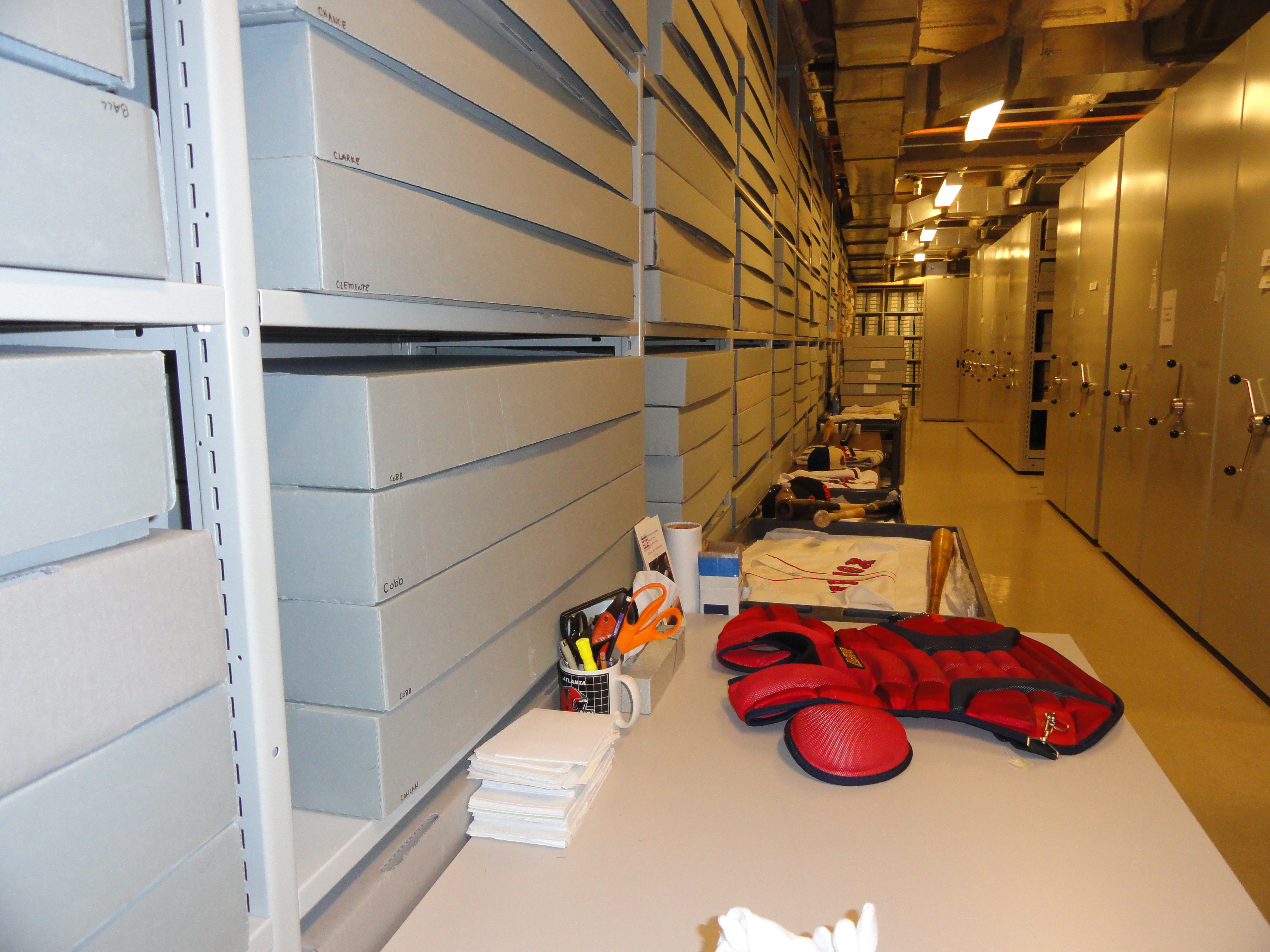
There were boxes all the way down the left-hand aisle, so I got a little closer to read the writing that was written on the boxes.
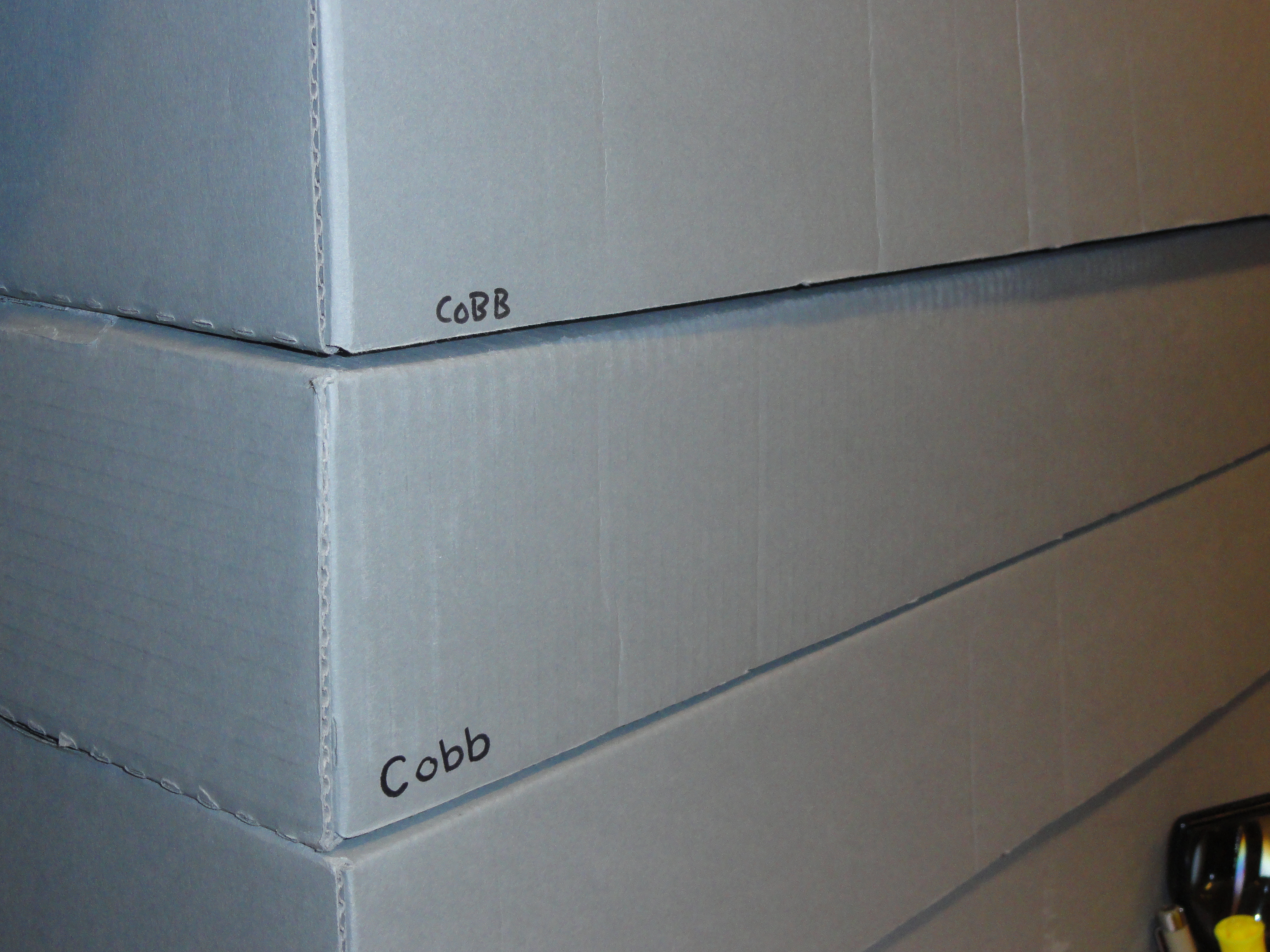
We opened up one of these “Cobb boxes” at the end of our visit. First we focused our attention to the table in front of us.
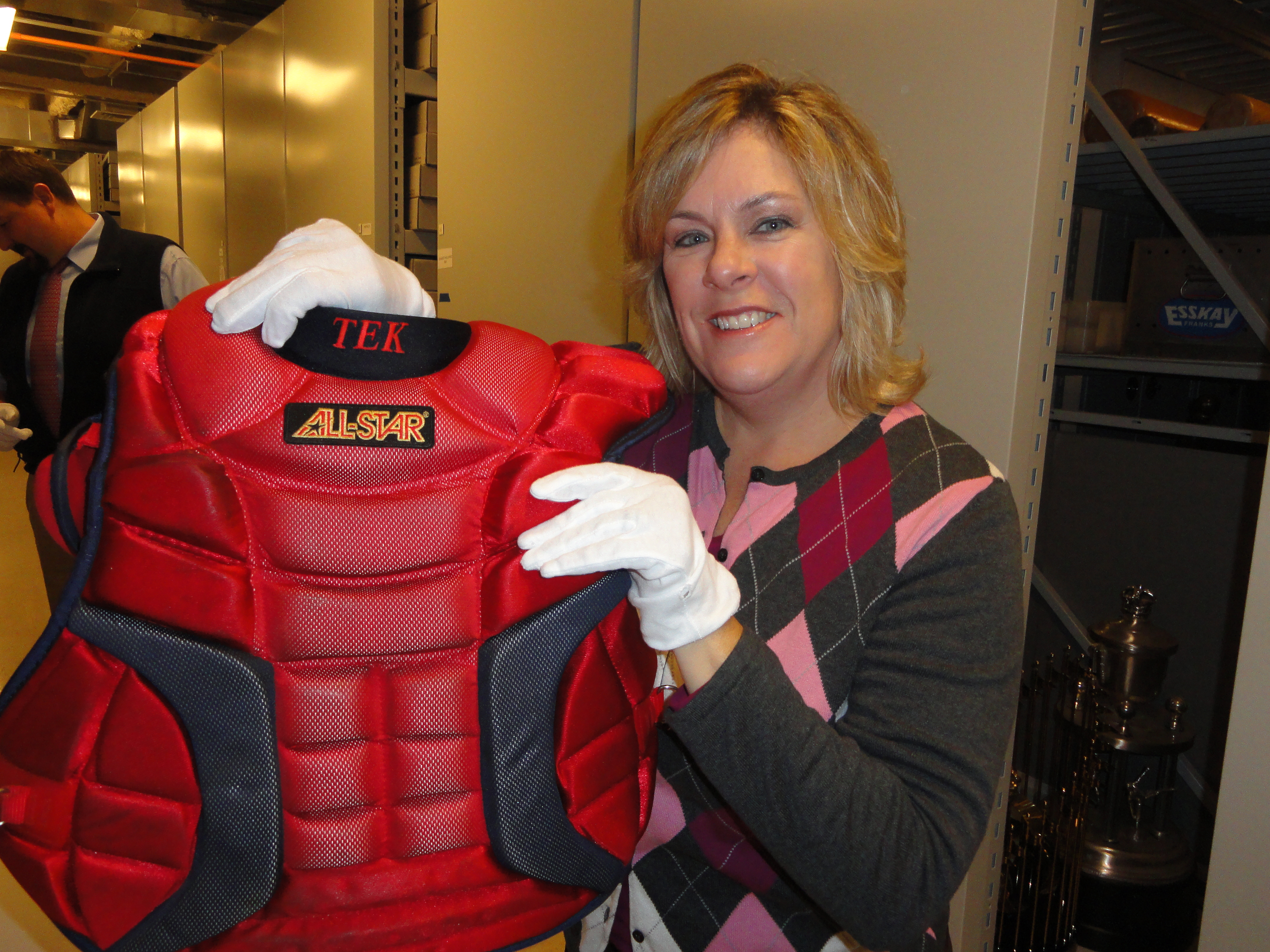
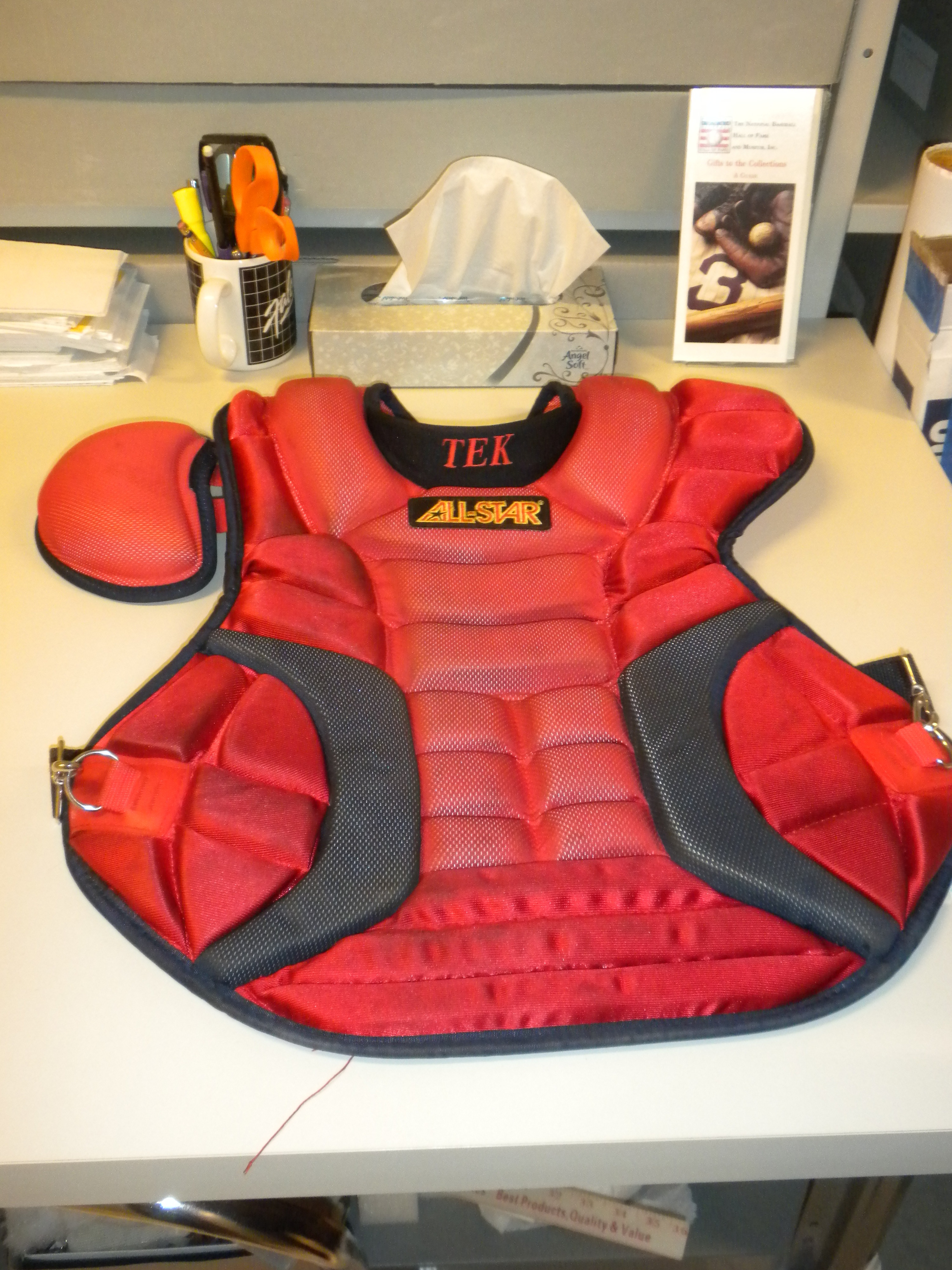 In 1975 my two favorite teams were the Boston Red Sox and the Cincinatti Reds (I grew up near Boston, my Mom is from the Cincinnati area). The catchers for those two teams, Carlton Fisk and Johnny Bench, were legendary. I was at Fenway on the day that Carlton Fisk was honored (early 2000s). There was not a dry eye in the house. He was beloved like no other catcher. But perhaps, over time, he will be eclipsed by Jason Varitek. With two World Series rings, and four no-hitters caught, Red Sox nation loves Varitek. And there on the table in front of us was the chest protector he used to catch his fourth no-hitter. We were able to pick it up and hold it!
We moved to the next table and that’s when Ken handed me Ted William’s bat. As we looked closely at the surface you could see the stiches of the baseball on those areas of the bat where he had really hit the ball square. Ken and I spoke about how important it would be to display that level of detail over the internet. As I thought about the bat I remembered that my father lived 1/4 mile from Fenway on the day that Teddy Ballgame played his last game. There were plenty of empty seats in the bleachers that day and my Dad always regretted that he couldn’t make it!
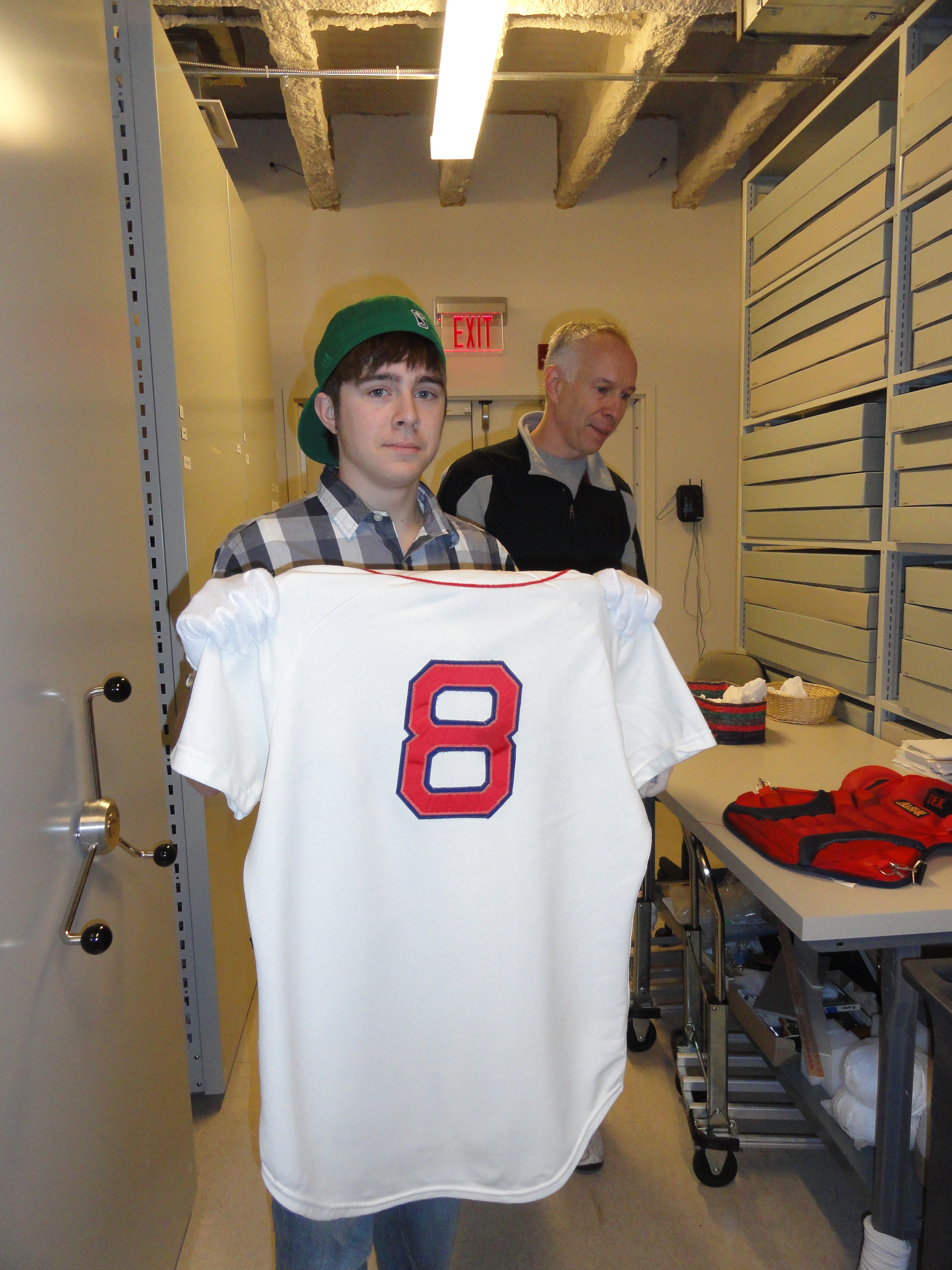
Right next to the bat was the jersey that Carl Yastrzemski wore when he collected hit number 3000!
Next to Yaz’s jersey was a whole cart filled with San Francisco Giant’s gear. We got to see Tim Lincecum’s 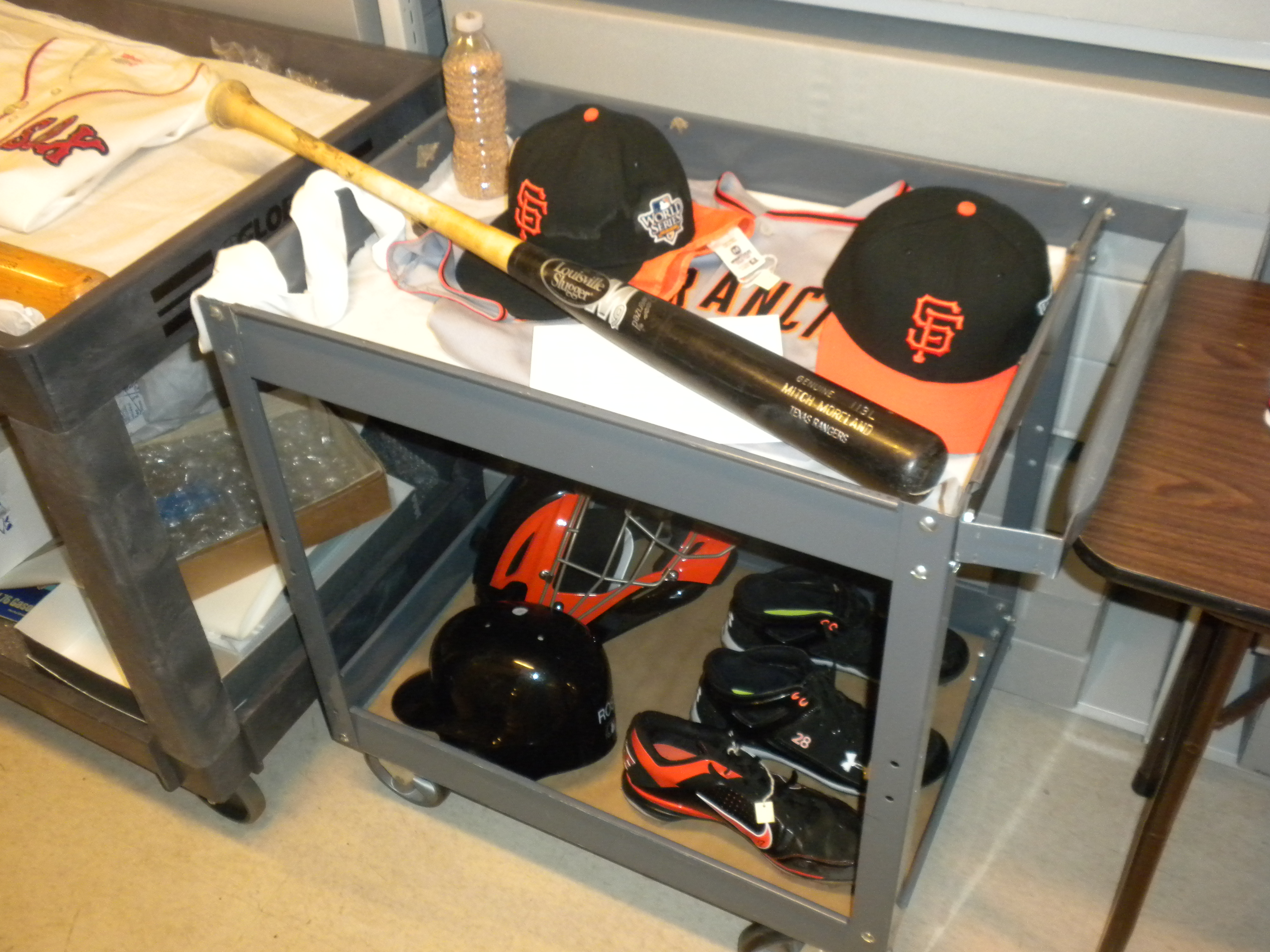 jersey, one of Aubrey Huff’s cleats, and Buster Posey’s catchers mask.
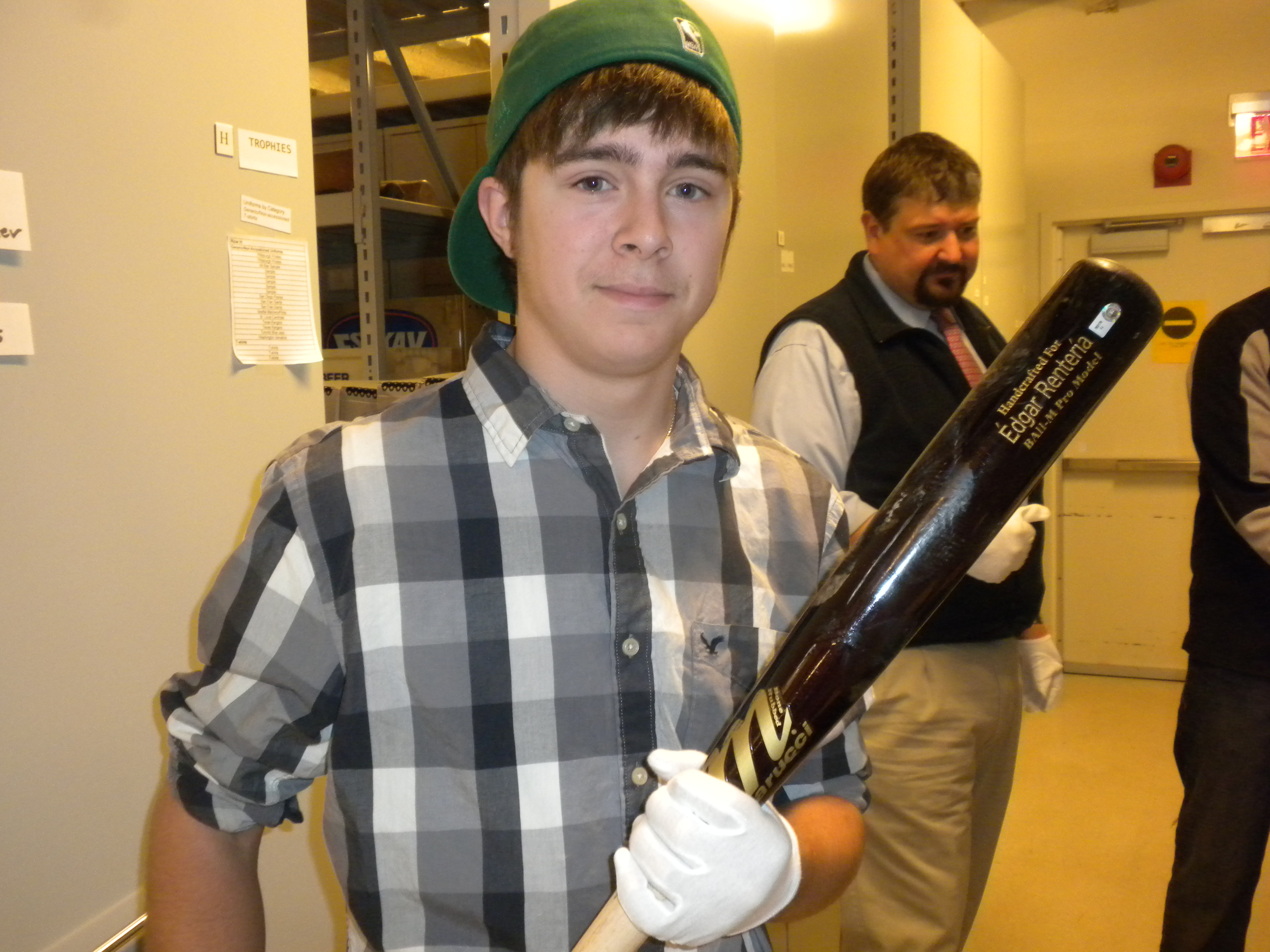
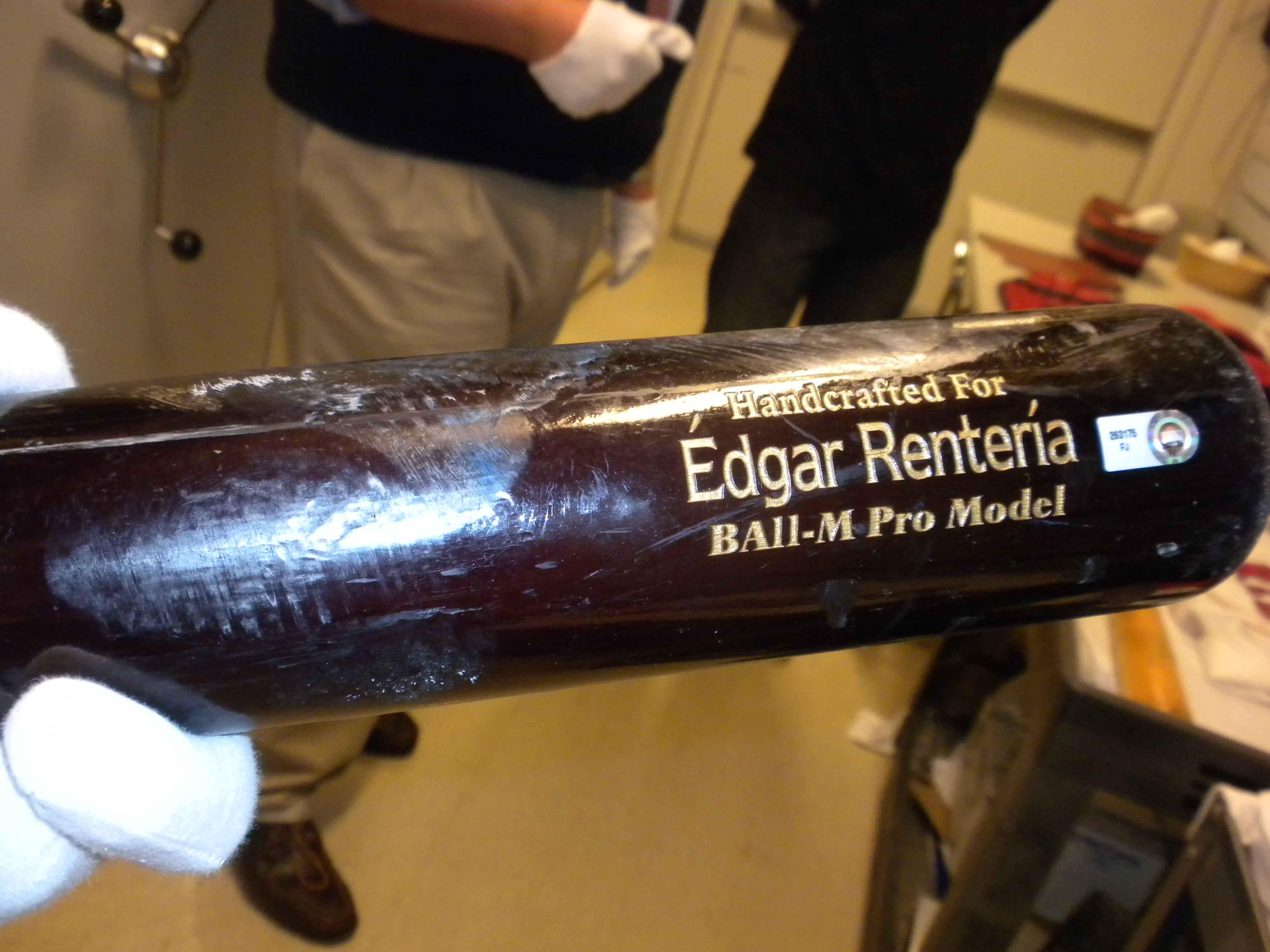 But perhaps the coolest item that we got to hold was the bat that Edgar Renteria used to club a three-run homer in Game 5 of the World Series. And we were holding it just a few weeks after Renteria had accomplished the feat!
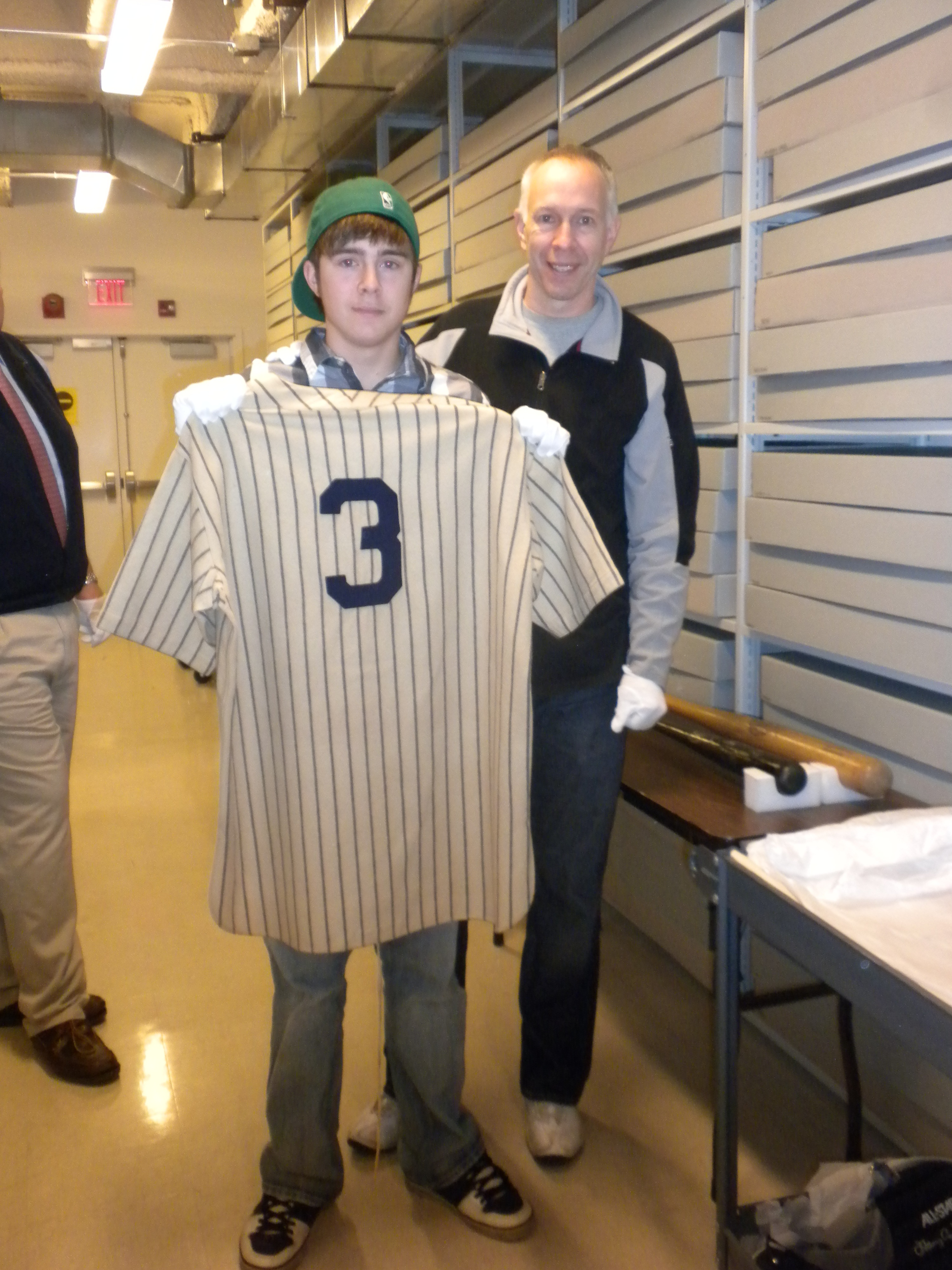
There was one more shirt that we got to see. #3 of the New York Yankees. Matthew held up Babe Ruth’s shirt:
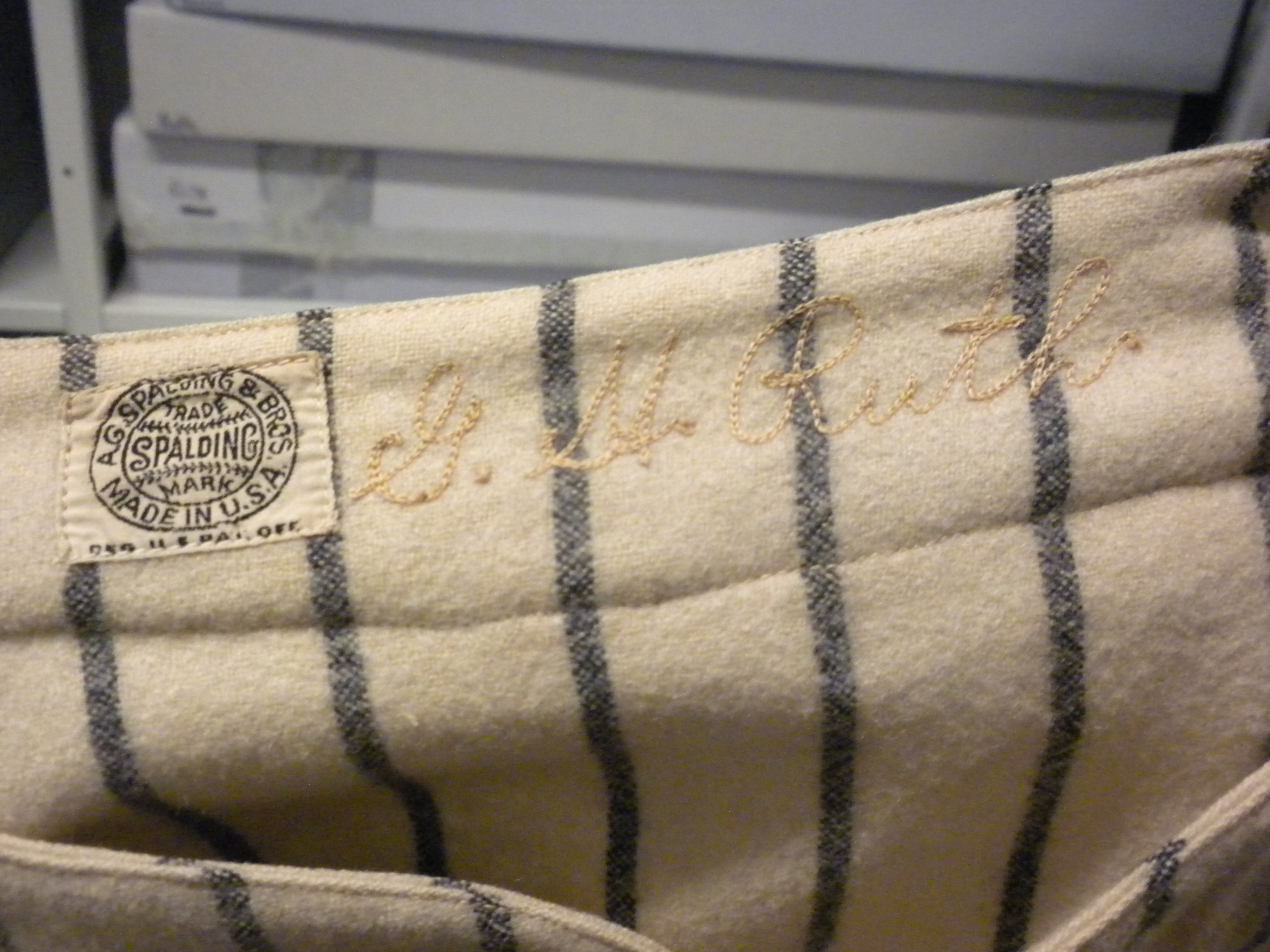
Katy zoomed in on the label inside the Babe’s jersey:
Ken brought us down the aisle to check out some of the gloves. He showed us a shelf filled with gloves that traced the evolution of a device that padded the hand, to a set of fingers that padded the hand, to a post-WW-2 style of lacing the fingers of the glove, all the way up to the introduction of “the hinge”, a glove-making method that allowed one-handed grabs (to the consternation of Little-League coaches everywhere, according to Ken!).
He gave us a catcher’s mitt, and then told us it belonged to Bill Haselman (former Red Sox catcher). “Why Bill Haselman?”, I asked. Because he used that mitt to catch one of Roger Clemens’ 20-strikeout games.
He pulled down another box and let Matthew hold one of Johnny Damon’s gloves as well!
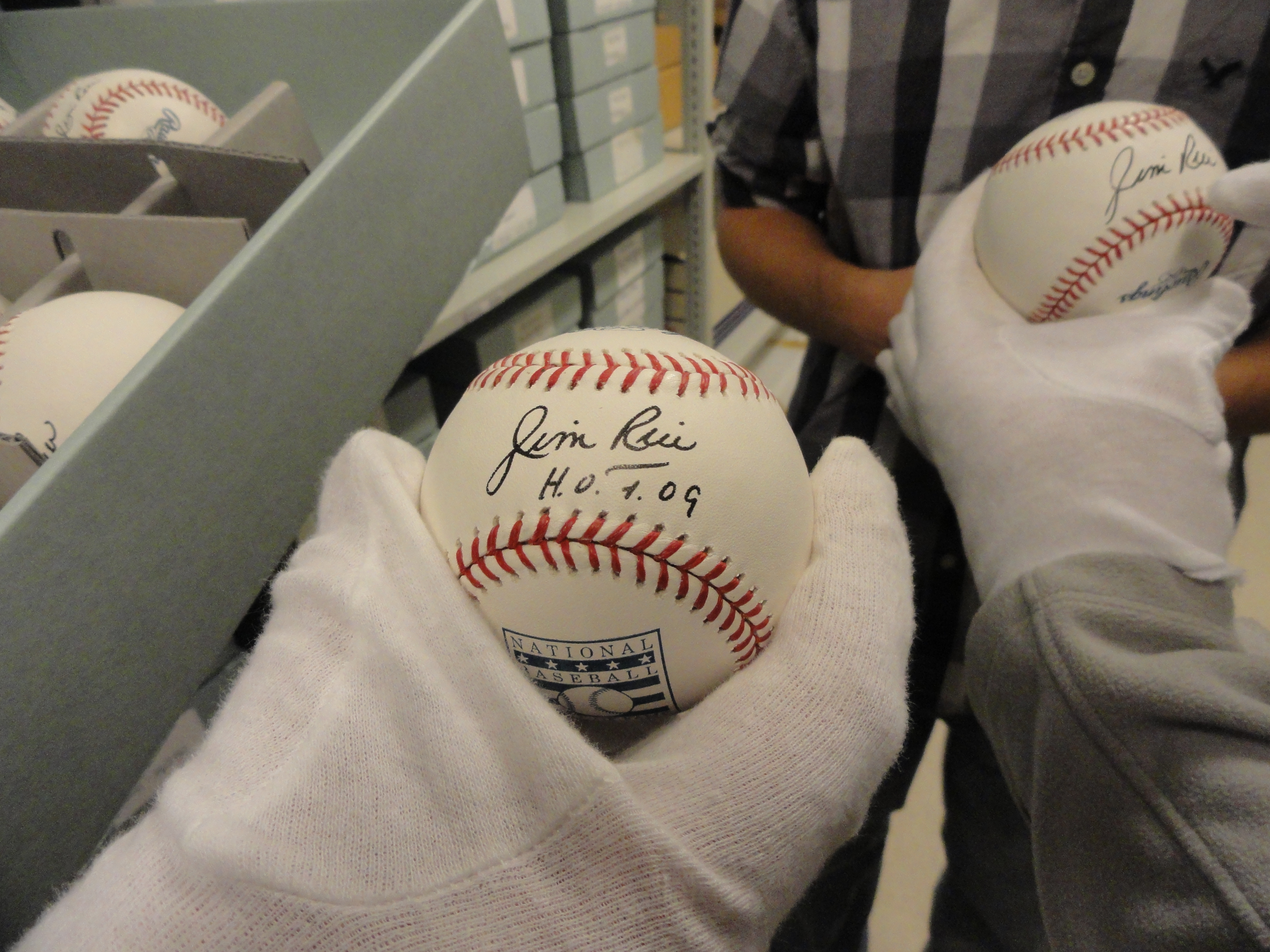
We left the glove area and went down to the end of the aisle, and Ken showed us a display of signed baseballs. It has become a tradition to have every Hall-of-Famer sign a couple of dozen balls. So he pulled down a box and opened it up so we could take a look. Here’s what we saw:
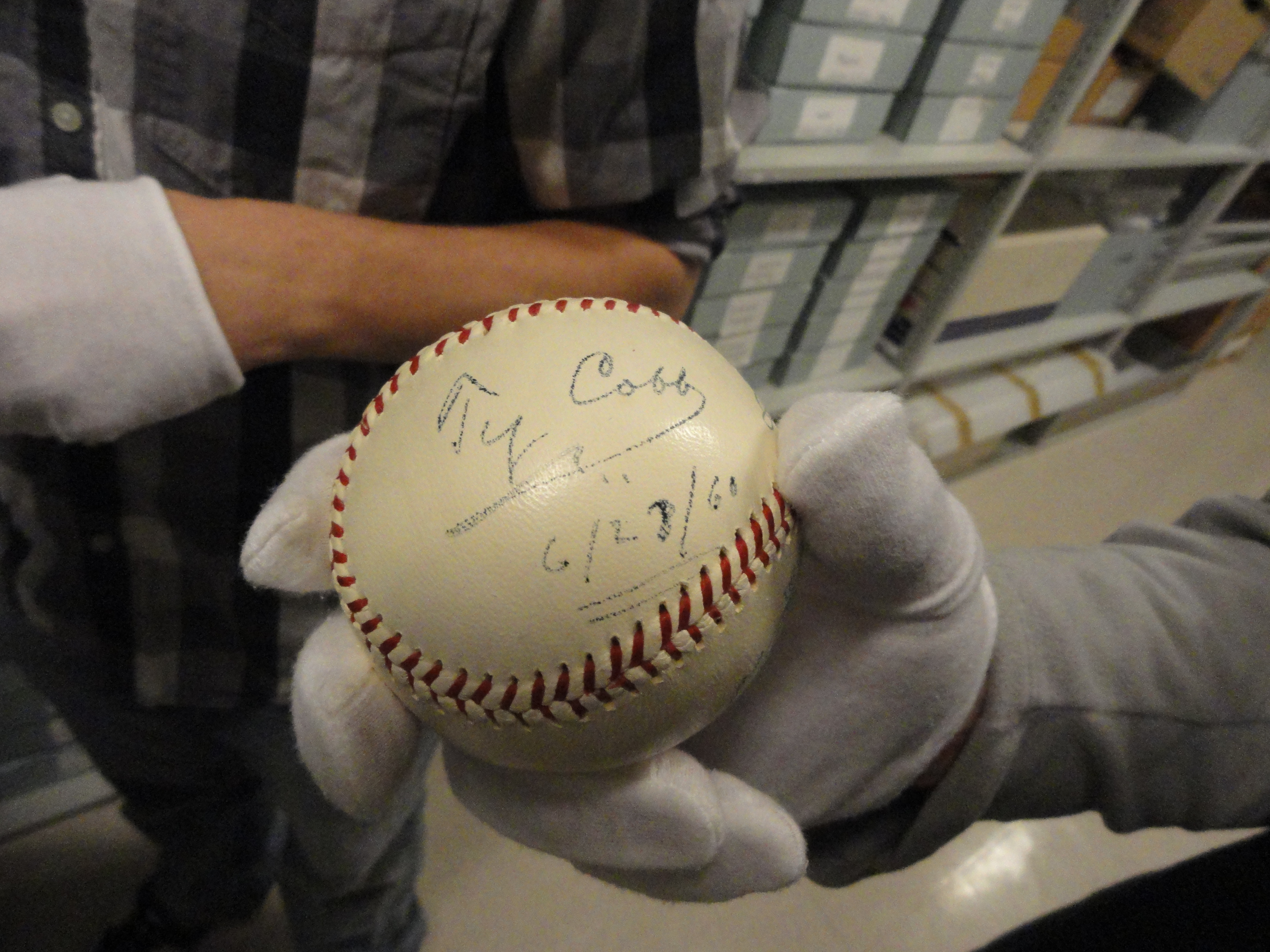
When Ty Cobb was first inducted they hadn’t got into the practice of signing balls, so on June 28th of 1960 he came back to the Hall and obliged them by following the tradition and signing a set of balls. I asked Ken if we could see the baseballs from my all-time favorite player when I was a kid, so he pulled out a box from 2009:
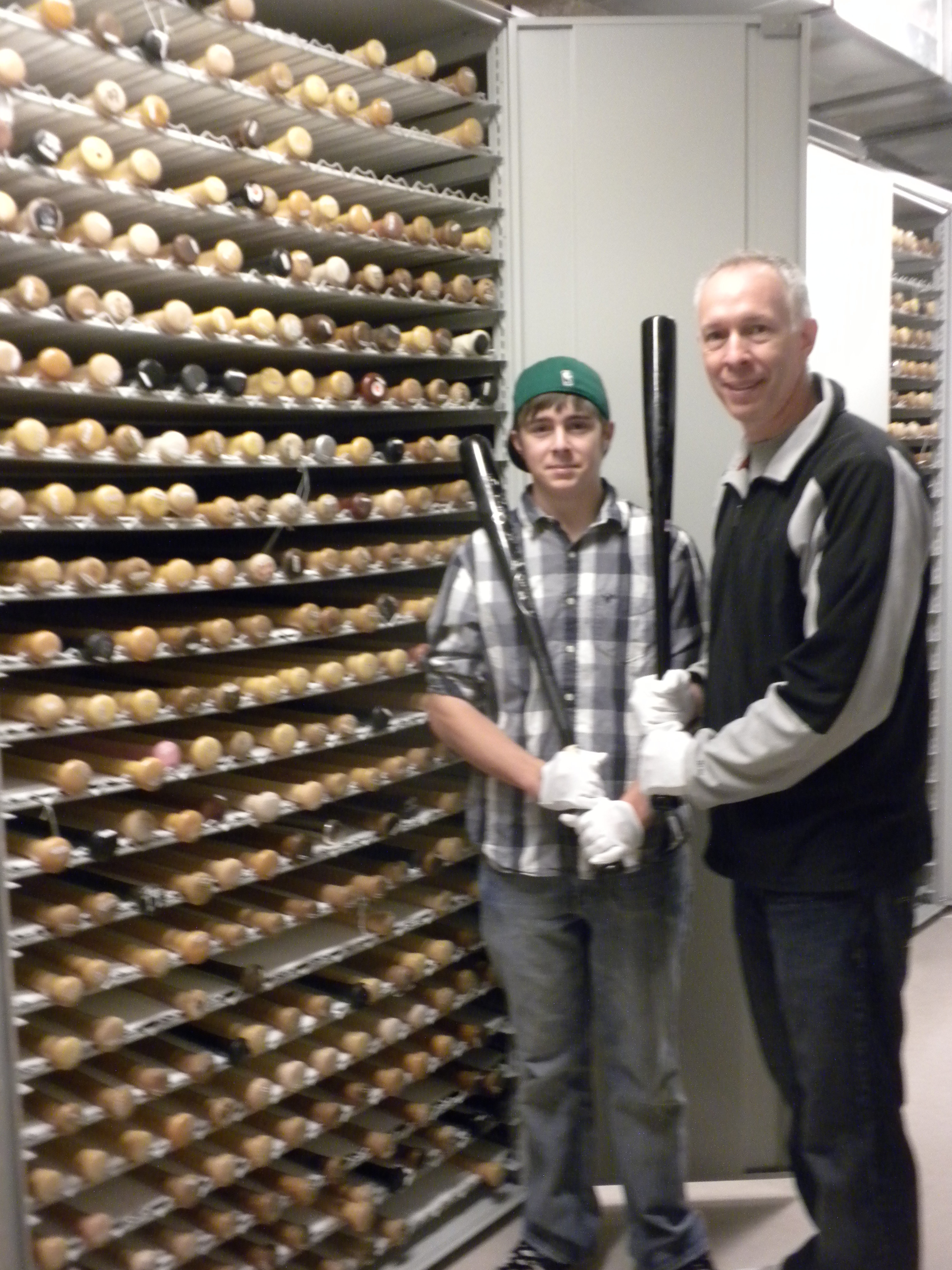
After checking out the autographed balls, we went off to the bat rack section. There were bats from all different eras, used by all different players. Ken gave us a couple of bats to show the different weight distibutions, and then Matthew and I posed in front of the bat rack. He was holding a Barry Bonds’ bat, and I was holding the bat of probably my favorite current MLB player: Ichiro Suzuki.
Along with the bats of major leaguers, Ken showed us a very unique bat that was carved out of a tree branch. Matthew showed it off:
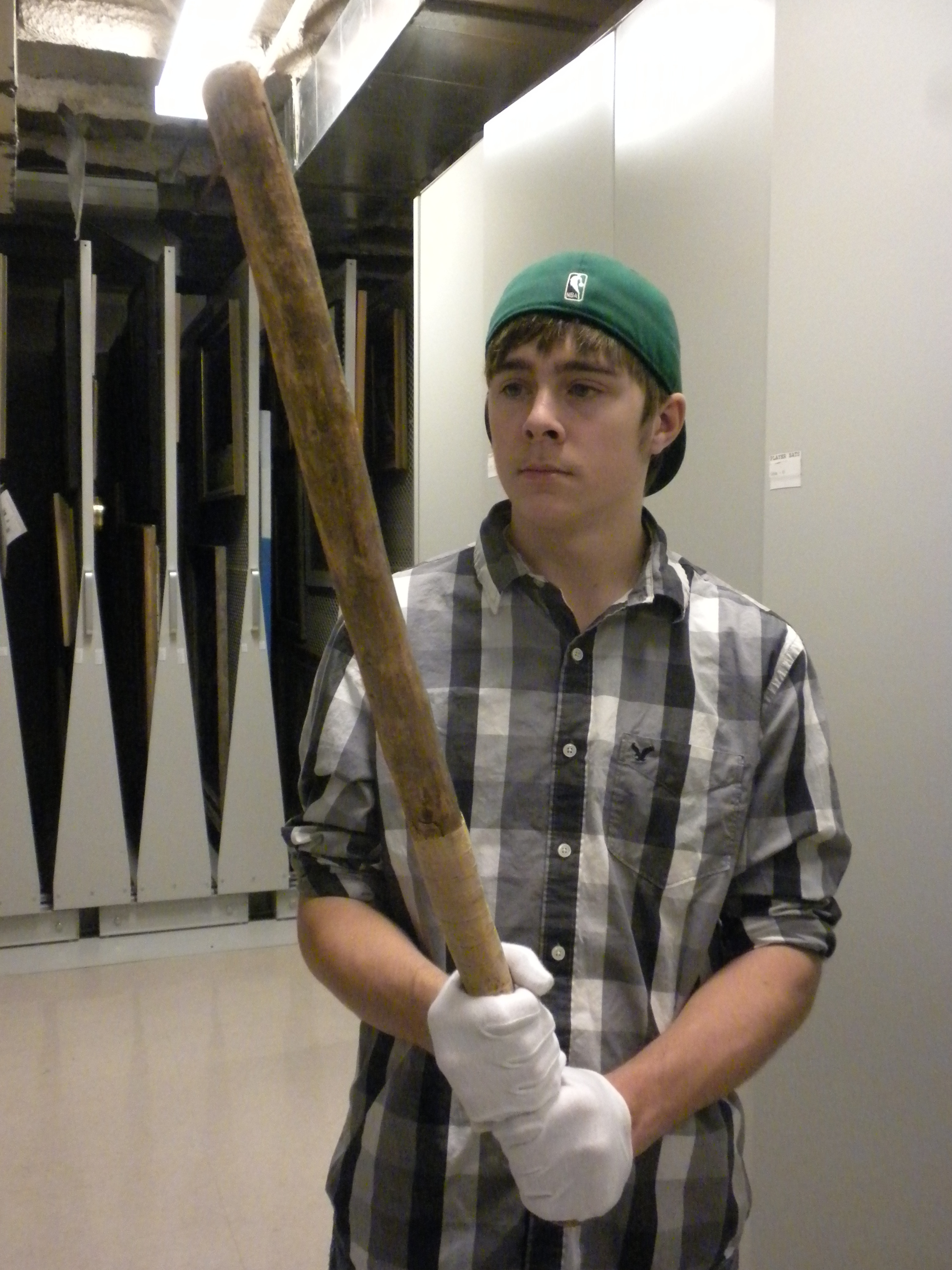
According to Ken, when WW II started in Germany, the entire staff of the United States embassy was captured and brought to a makeshift prison. The ambassadors passed some of the time by playing baseball, and when they were eventually evacuated back to the States, one of them brought the bat back to his house and put it in his garage for decades. Eventually somebody convinced him to tell the Baseball Hall of Fame and Museum, because the core mission of the institution is to view American History through the lens of baseball. The story about the makeshift bat, more than any other we heard that day, was a great example of Americans who used their love of baseball to survive and cope during the second world war.
The museum also holds a collection of baseball-related art, and Ken showed us a picture of Abner Doubleday and explained how he DID NOT invent baseball! In fact, Ken mentioned that nearly 50 years earlier, the “broken-window bylaw” contained the word “baseball” in Pittsfield, MA!
On our way out, we had a look inside one of those “Cobb boxes” I mentioned earlier, and we pulled out Ty Cobb’s woolen warm-up jacket, complete with the “D” of the Detroit Tigers!
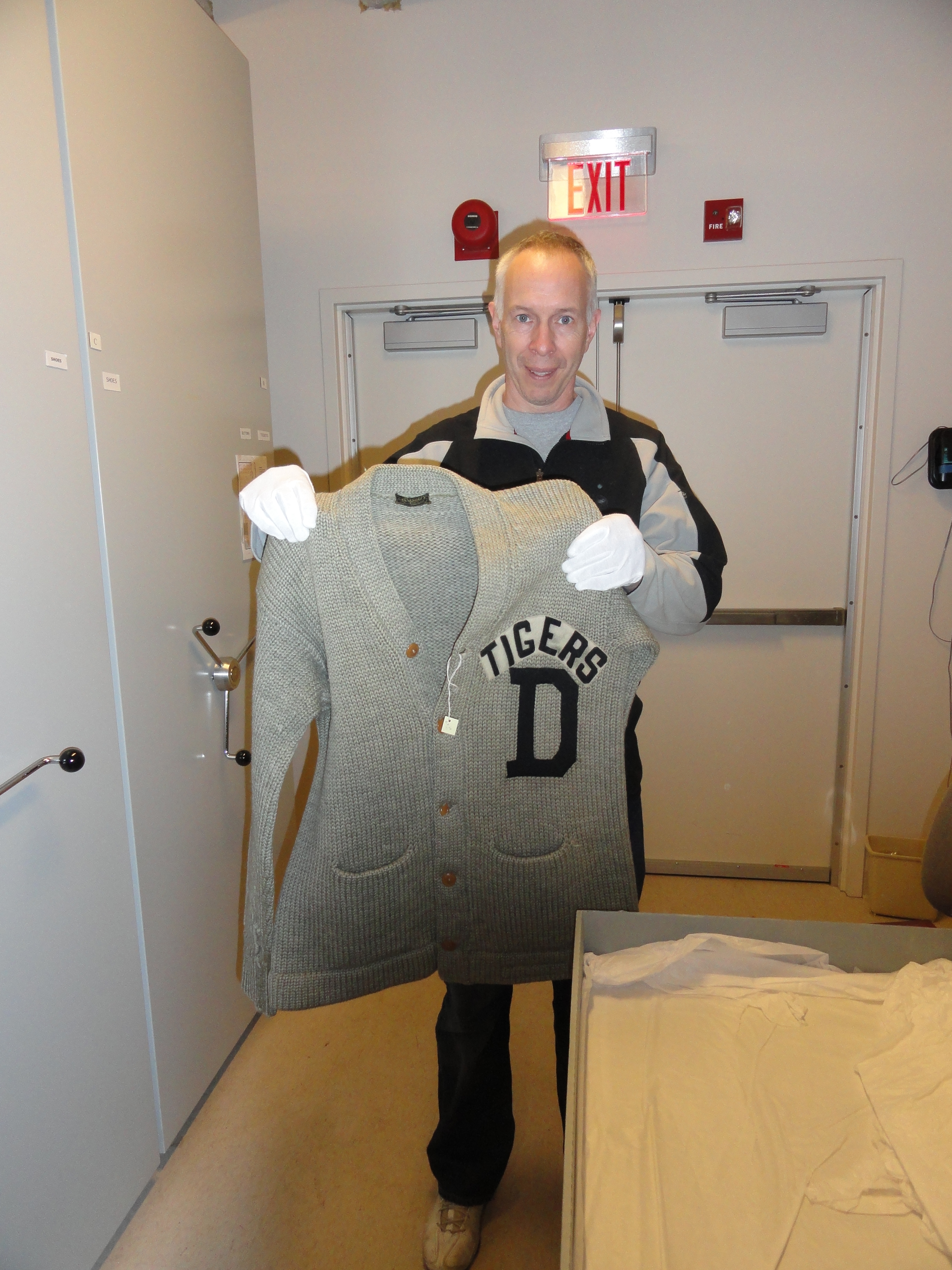
And after holding that incredible piece of history, we left the room, and continued on with the rest of our tour. At the end of the day, as we walked down the streets of Cooperstown, ate lunch, and then started our drive home, we were absolutely impressed with the great job that the museum does preserving not only our nation’s pasttime and our history as well!