
As I continue learning about Adaptivity’s capability to place an application and data on the best-fit infrastructure, I’ve stumbled upon the diagram below:
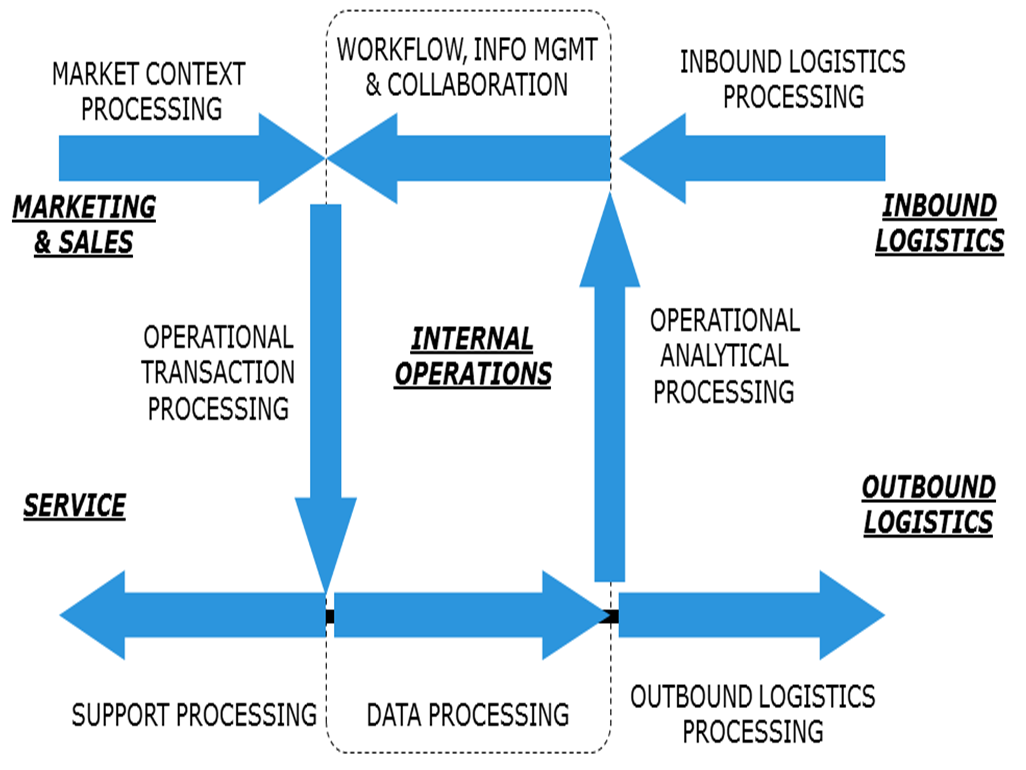
This diagram shows the five areas of the business value chain (marketing & sales, service, internal operations, inbound logistics, and outbound logistics), and associates each of them with a specific category of processing (e.g. Market Context Processing is a class of processing associated with the marketing & sales element of the BVC).
In my last post I explained that any business will inevitably overlay applications on top of this diagram.
In this post I’d like to look at two specific applications and drill down into their mapping onto the correct IT infrastructure. The diagram below highlights two applications: a customer relationship management app (CRM) and a Market Data app.
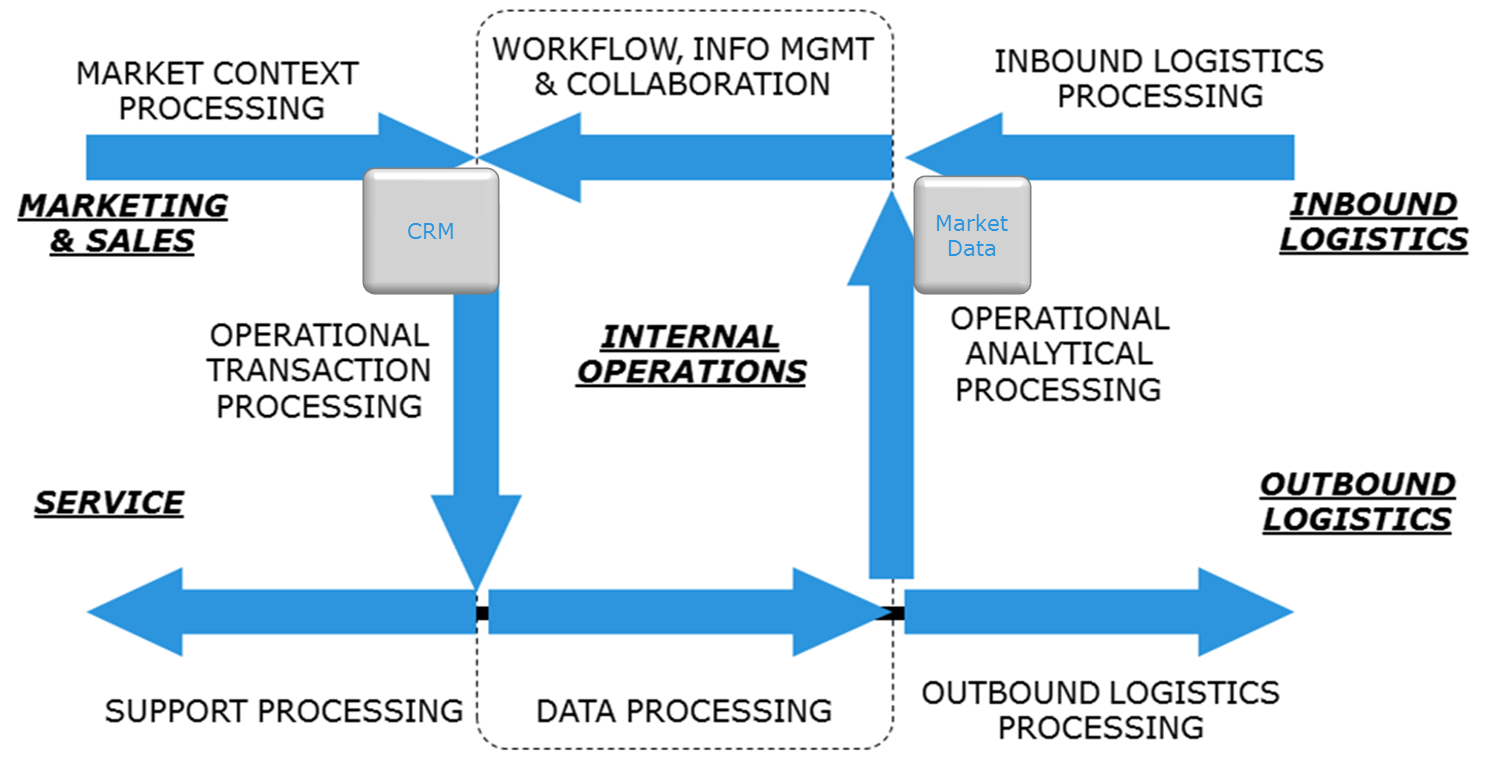
How do we begin to understand the workload demands on these two applications?
The first place to start is by understanding three types of pattens that map applications onto infrastructure:
- Functional patterns characterize the processing aspects of the application
- Deployment patterns characterize the networking aspects of the application
- Data usage patterns characterize the storage aspects of the application
Both of the internal applications listed above are connecting to EXTERNAL entities. Therefore it is highly likely that both applications will have a functional component known as a message gateway:
A Message Gateway is a connection point between applications inside the company firewall and EXTERNAL applications (e.g. Markets, Clients). The main task of a message gateway is to mediate protocols that require handshaking with strict rules around response times, response sequences, reactions to failures and the translation formats and semantics. Sometimes these gateways are used internally to support STP (spanning tree protocol) efforts, with little user intervention.
If Message Gateways are a well-known functional pattern, then it should be fairly straightforward to classify the demands that a message gateway places on an underlying infrastructure:

This type of mapping is a key aspect of tying the business relevance of any given application to application demand, which can then be used to map on top of specific IT capabilities.
For example, the CRM and Market Data applications are likely to have a high network I/O impact. What does that mean? How does it affect their deployment?
In my next post I will dive more deeply into the table above.
Steve
Twitter: @SteveTodd
EMC Fellow