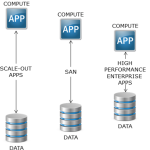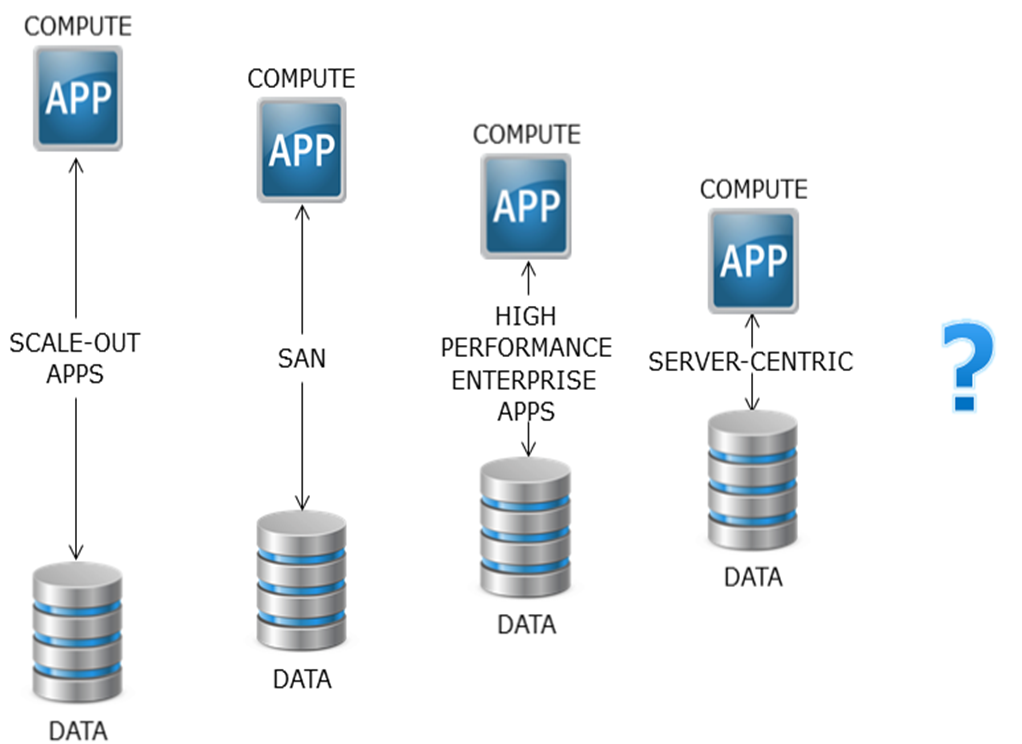

In a previous post I highlighted that certain application workloads (public cloud, web-scale, etc.) were pulling applications and data increasingly closer together. Is it possible for them to get any closer?
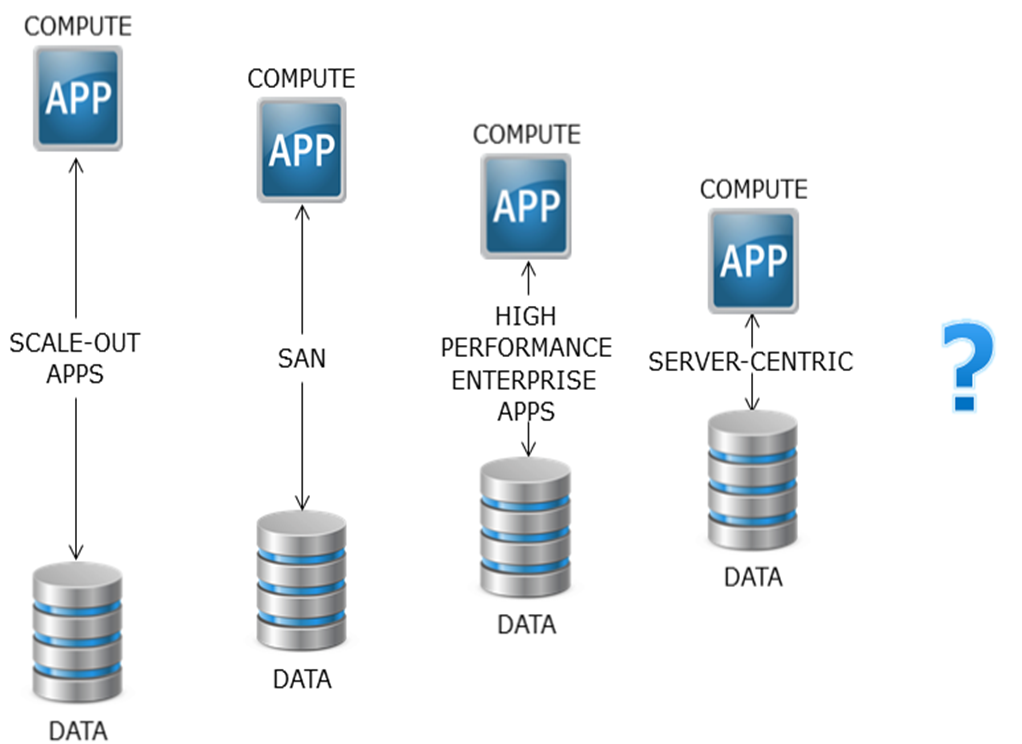
The answer is yes. There are emerging use cases where vast amounts of application data need to be stored in memory to achieve high-performance and low-latency. There are a few problems to be solved:
- No matter how many servers you try and gang together, the application data capacity requirements for this new class of applications far exceed the aggregate capacity of the largest of server-centric storage configurations.
- These new applications want one (and only one) way of accessing the data: memory-based APIs. Application developers would rather not combine memory-based access method with a separate storage-based access method.
- Moving data to traditional storage systems incurs translation penalties (e.g. buffer-to-SCSI and back again) that exceed the latency requirements of these applications.
Adding this final use case to the spectrum of application distance use cases results in the following diagram:
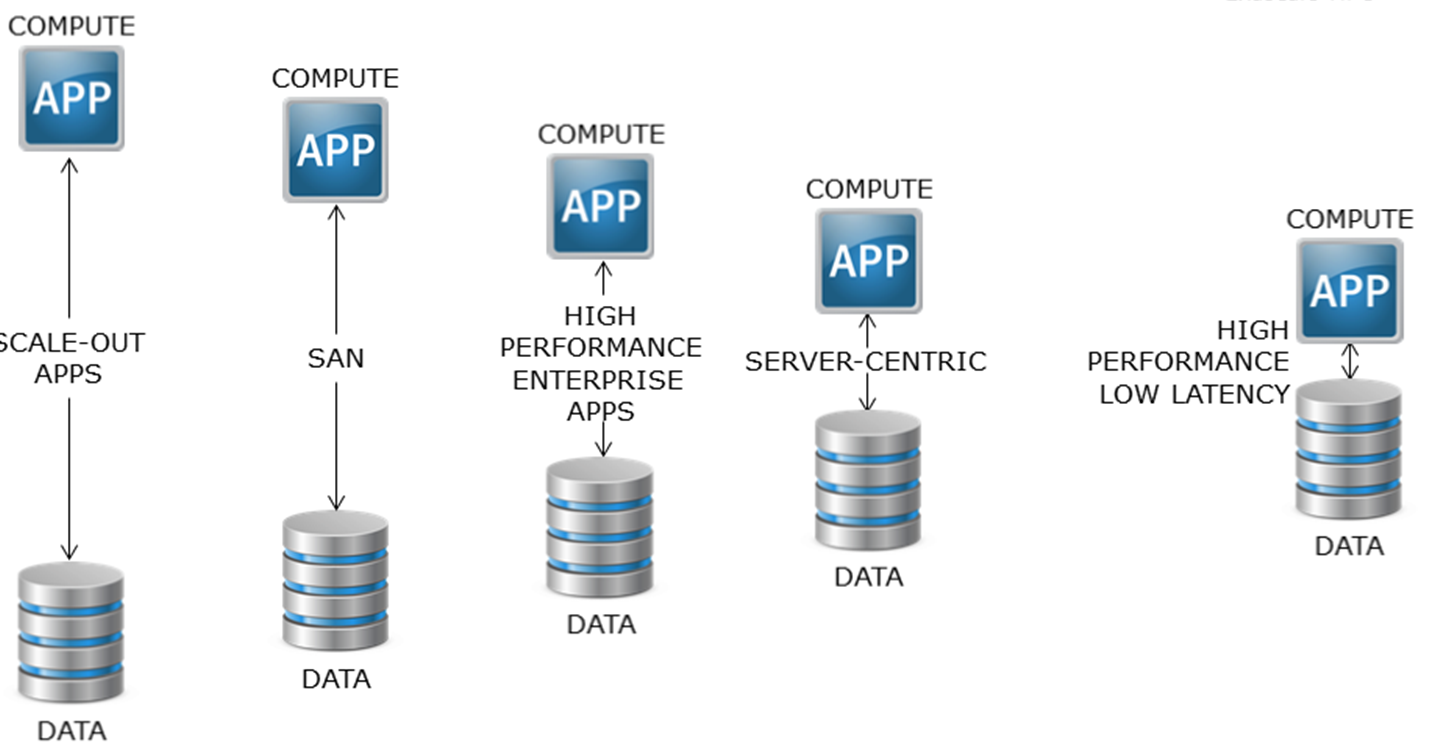
What are some of the applications that are driving this nearness? The list below is an introduction to some of them:
- RTI
- HEC
- HANA
- Hekaton
- MongoDB
- Exascale HPC
The acquisition of DSSD is moving the industry towards a solution for the “high-performance/low-latency” use case. The DSSD architecture will forego the traditional buffer-to-SCSI protocol conversion and create an API that allows the DSSD storage system to appear as a massive extension to server-based memory. How this is implemented will certainly be discussed as the technology nears release.
In the meantime, however, this post is the last in a series of posts on the current spectrum of application distance and nearness. It begs the question: how can a data center architect create a system that satisfies the disparate distance requirements of such a variety of workloads?
The answer lies in some of the newer industry trends in the converged infrastructure realm. I will begin discussing these trends in future posts.
Steve
EMC Fellow