
In a recent post I highlighted five recommendations that enable a corporation to transition their business into an environment where the economic value of data is monitored systematically.
These recommendations have emerged from the Architecting for Value research being conducted by Dr. Jim Short of the San Diego Supercomputer Center.
One of the key recommendations by Dr. Short is to make data valuation part of your business strategy, and he proposes developing expertise in several areas:
- Formally evaluate (or build) and deploy tools that support data valuation
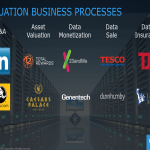
- Create new valuation business processes
- Design new products where data is the core product or service
- Offer data services
- Acquire new data assets
- Combine new with existing data assets
- Monetize and sell data assets
How does one get started? I would recommend contacting Dr. Short for a deep dive in industry best practices. His research is focused in two areas:
- A survey of industry practices that includes the collection of public use cases where valuation activities are mentioned.
- Business and IT interviews with individuals and companies practicing valuation.
One of the more interesting public use cases discovered by Dr. Short involves the sale of data assets.
In January of this year it was reported that Tesco was eyeing the sale of its data marketing and analysis division, dunnhumby. Dunnhumby refers to themselves as a “customer science” company. In regards to Dr. Short’s advice to “make data valuation part of your business strategy”, this article makes it apparent that Tesco was doing just that:
Financially troubled British grocer Tesco confirmed rumors it intends to offload its data marketing and analysis division, dunnhumby.
In documents released Thursday, Tesco said it has appointed Goldman Sachs as its adviser to explore “strategic options” for the US$756 million business as it embarks on a complete overhaul of its assets.
It’s hard to bucket dunnhumby. Some call it an agency. Others, a data platform.
In its 2014 annual report and financial statement, Tesco said it “uses our unique insights from dunnhumby to track how British consumers feel about the economy in general, as well as their own individual situations.”
This use case highlights a financially struggling company’s strategic decision to unlock some amount of financial value from the dunnhumby data set, which at the time reportedly contained information about the buying habits of some 770 million shoppers.
Less than four months later the deal was complete:
Kroger Acquires Dunnhumby Data Assets From Tesco
British grocer Tesco’s customer data science and loyalty division dunnhumby, reportedly on the market for several months now as its parent company explored “strategic options,” will transfer many of its employees and data assets to Tesco’s US-based joint venture partner Kroger.
The agreement is evidence that Tesco has a business process for the sale of data assets. Gaining insight into the specific business processes used during transactions like this is a goal of the research.
It is important to point out that the sale of data assets is only one form of valuation. In previous weeks I have pointed out other forms of valuation that have been observed in the industry:
- Valuation of M&A assets during LinkedIn’s acquisition of Lynda.com’s video library.
- Valuation of data assets during bankruptcy proceedings, such as Caesar’s Palace Total Rewards Customer Loyalty database.
- Monetization of data assets such as 23andMe’s data transaction with Genentech.
In an upcoming post I will focus on another interesting valuation use case: data insurance.
Steve
EMC Fellow