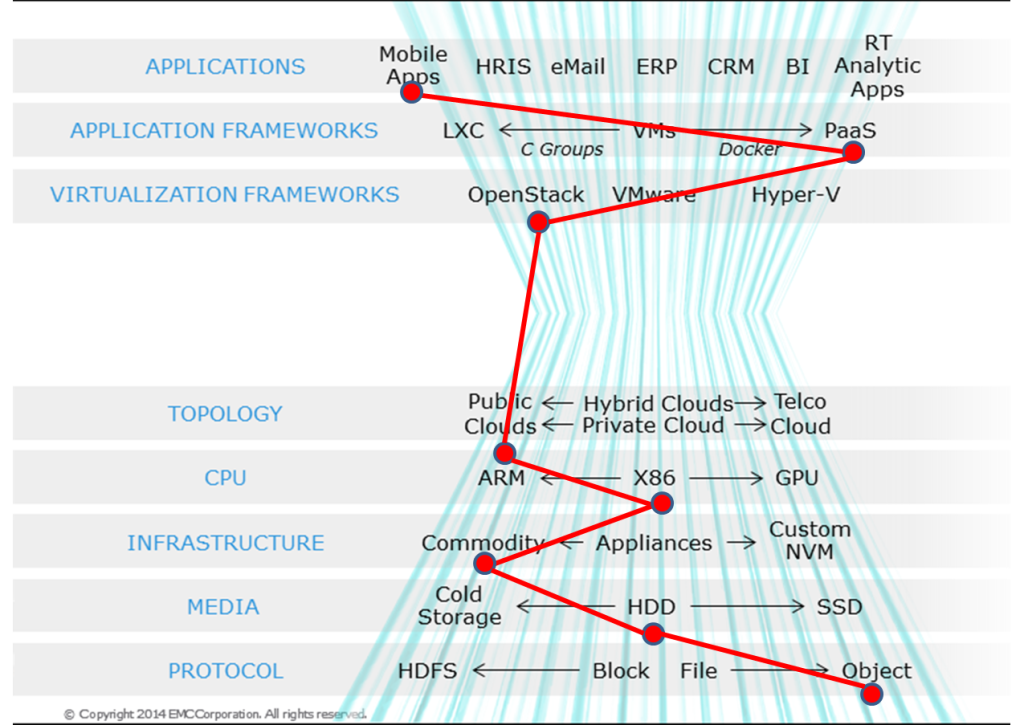

In my last two posts I mentioned that application fan-out and infrastructure fan-out result in an M-layer stack with a number of possible choices (a0-aN) within each layer. Creating a top-to-bottom connection for a new application and its data source is complex:
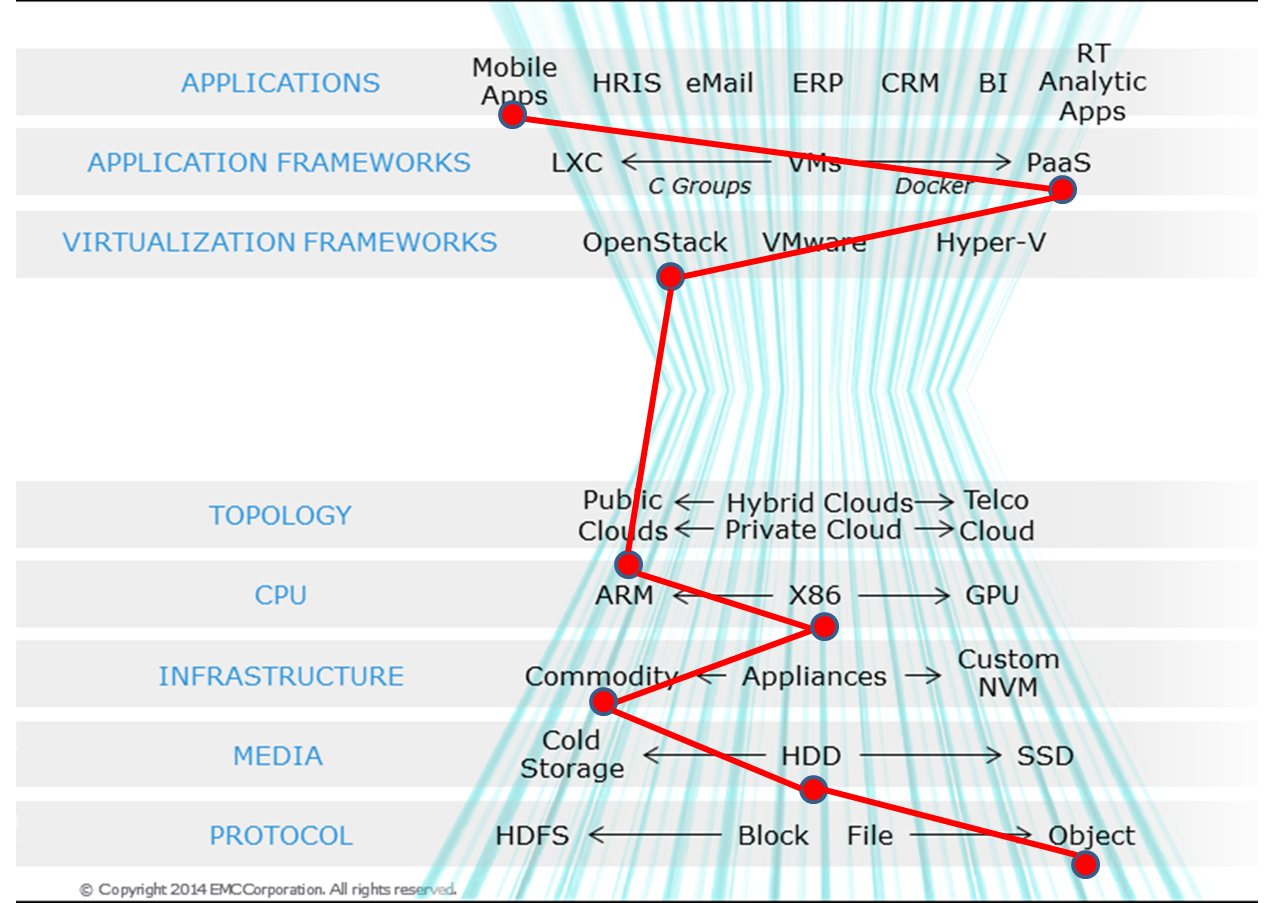
If you consider what it would take for one person (or an IT team) to manually create this connection for every application in a data center, you’ve stumbled upon one of the key reasons for automating everything using a pure software-designed data center approach:
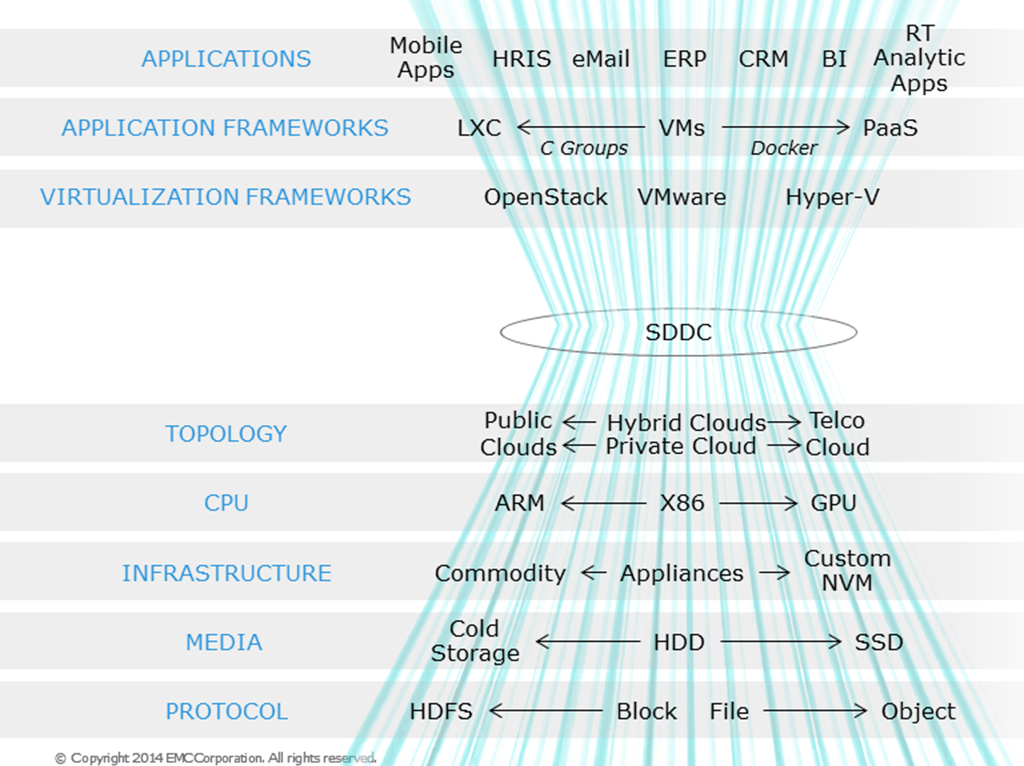
SDDC is essentially the “pinch point” that removes the complexity involved with manually provisioning and connecting multiple layers of an application-to-data stack. Certainly it is possible to orchestrate this plumbing by handing an “application manifest” to this pinch point and making the appropriate calls to the application and infrastructure layers:
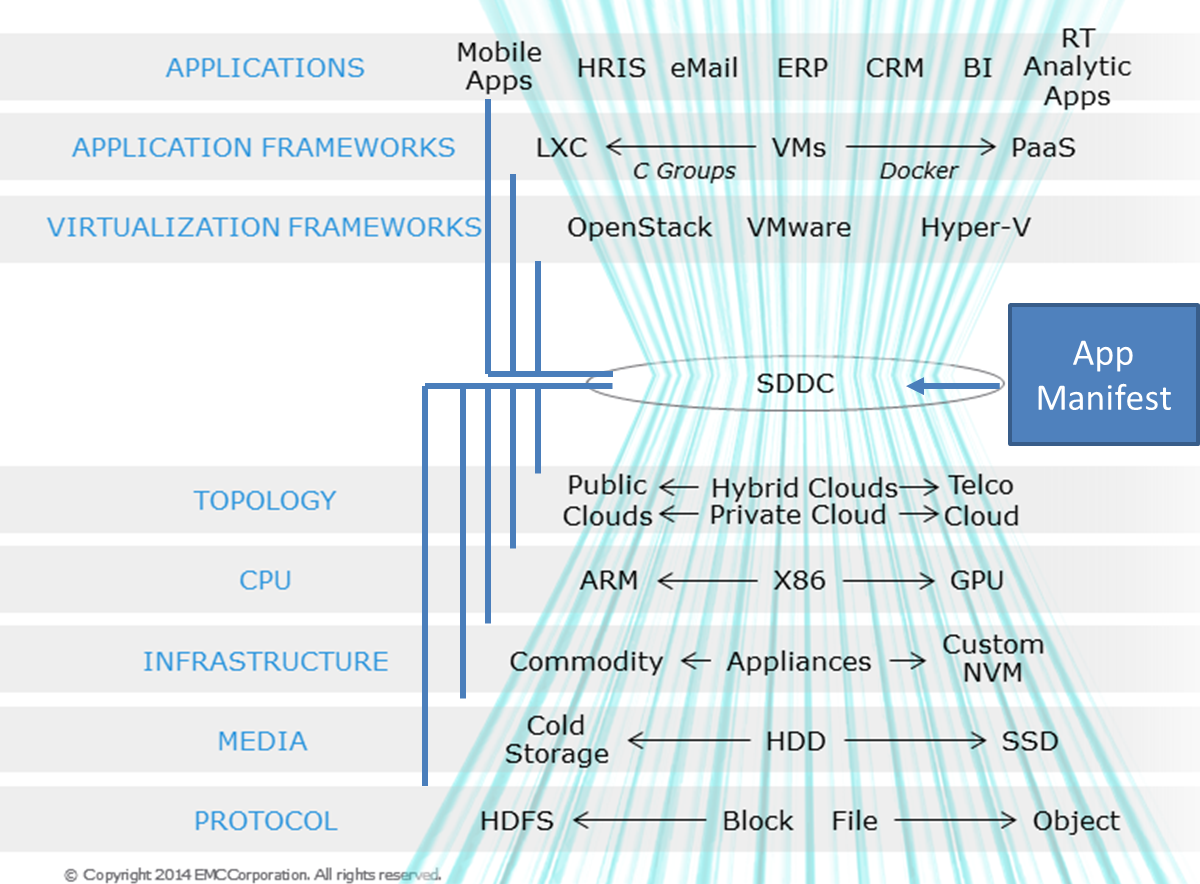
The problem then becomes: who creates the application manifest? Is it manually generated?
I’ve written several articles about Adaptivity technology and its ability to map applications onto the best-fit IT infrastructure. This technology can be leveraged to automatically generate an application manifest. In a previous post I highlighted that a decent mapping can be made simply by understanding where the application sits in the business value chain.
However, it can also be based on an understanding of the underlying software patterns that exist in modern applications.
In the next post I will discuss how an understanding of these patterns can generate a more accurate manifest.
Steve
Twitter: @SteveTodd
EMC Fellow