
Service Providers around the world would do well to visit EMC’s Data Center in Durham, North Carolina. Several years ago EMC decided to build a state-of-the-art data center using EMC, RSA, and VMware products. For service providers wondering what it would look like to build a data center from scratch, the Durham Center of Excellence (CoE) is a great example.
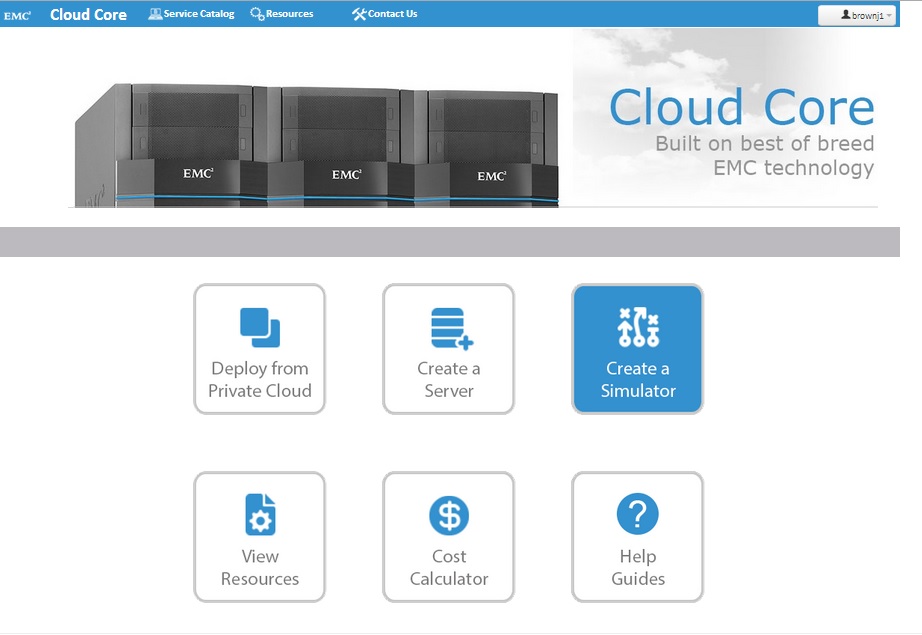
I have regular calls with my colleagues in Durham to stay abreast of what they are up to. I recently received a briefing about a project known as “Cloud Core” (screen shot shown above). It was one of the first instances in the industry where I had seen a real-world example of a storage catalogue.
I first wrote about storage catalogues several months ago:
“Storage services become separate software entities and are placed in a catalogue. In response to a storage-provisioning request the assets can then be deployed (as software) on top of the right mix of server and HDD technology. The diagram below highlights this approach (underneath the ViPR API).”
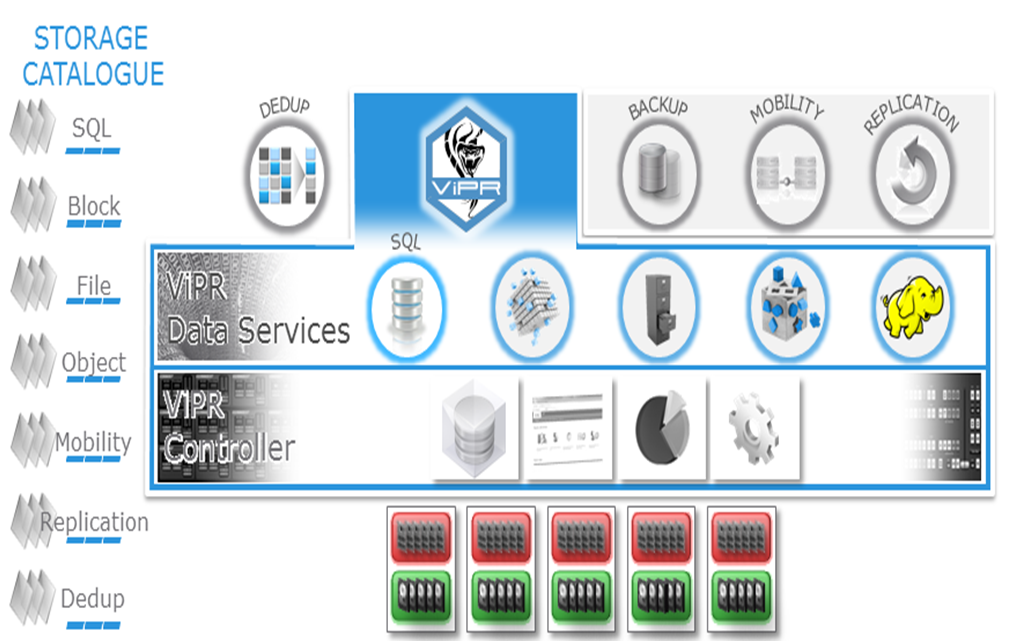
Cloud Core has implemented a similar architecture for a different reason. The purpose of creating Cloud Core was to create sandbox environments for testing…
- the integration of ViPR ( or other SRM capabilities) with EMC storage technology
- migration use cases
- a fully functional storage array in the cloud for professional services.
The Cloud Core approach of “Click and Deploy Lab Infrastructure” has precedent for compute but not for storage. It builds on top of the current usage of virtual storage arrays in product groups (such as VNX) and extends the concept to a generic catalog item available for usage across all product groups within EMC for Sandbox environments.
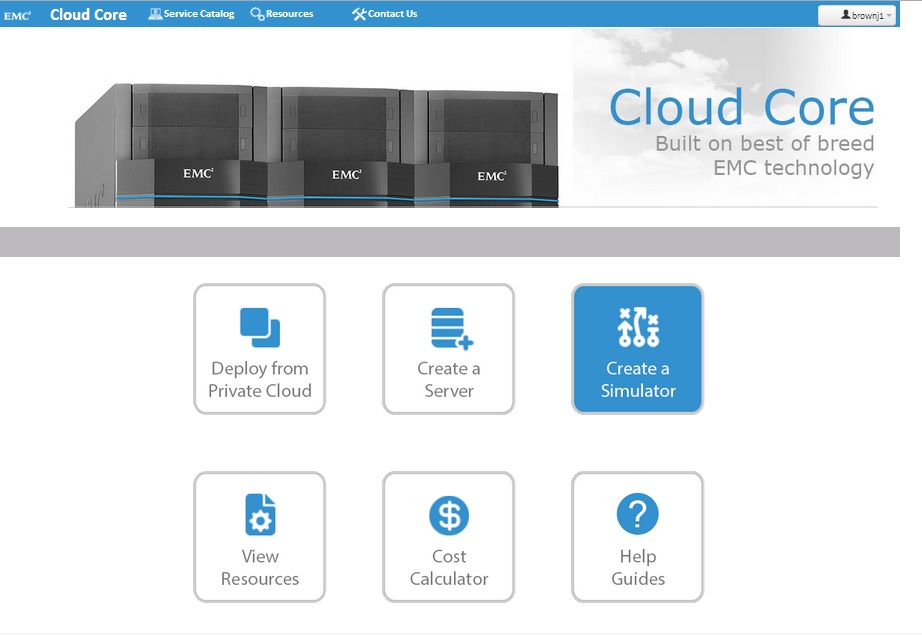
As an example, an engineer working across EMC products may want to explore integration of ViPR technology with EMC storage arrays. Instead of waiting for a physical EMC array, they can perform a complete integration in the cloud. They deploy a virtual application running ViPR, a virtual storage array such as VNX, and then the engineer can connect the virtual application to the VNX storage array and complete the functional testing. The screenshot below depicts the process of selecting a VNX simulator.
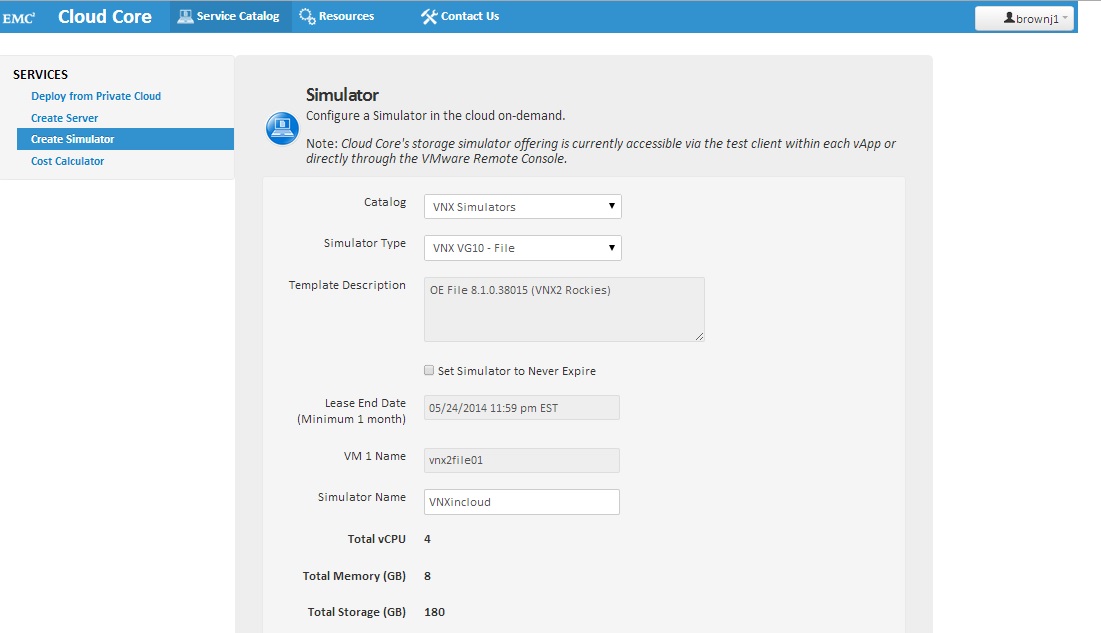
The Cloud Core team in Durham is moving towards an architecture where every EMC hardware asset listed below could be captured in a software catalogue and deployed on demand:
- Greenplum (for SQL access)
- VMAX, VNX, ScaleIO (for block access)
- Isilon (for file and/or HDFS access)
- Atmos (for object access)
- Data Domain (for deduplication functionality)
- VPLEX (for mobility functionality)
- RecoverPoint (for replication functionality)
Cloud Core is a great proof point that storage catalogues are on the horizon. VMware is of course leading in the deployment of this architecture. The important question in my mind is whether or not the functionality will make it down into the software-defined storage layer. The odds, in my opinion, are good, especially for those use cases where a data center operator is balancing VMware, OpenStack, and Microsoft on top of a shared storage infrastructure.
Steve
Twitter: @SteveTodd
EMC Fellow