
One of the key activities to stay sharp on the innovation front is learning. Given EMC’s acquisition pace, it is tough to keep up with the software architectures that are part of the portfolio. Ever since ‘Zilla wrote this piece about GemFire (a VMware/SpringSource acquisition) I’ve been curious to learn more about what it is and how it works.
When I noticed this tweet about a GemFire webinar yesterday I decided to sign up. It was given by David Brown and I highly recommend it (available upon registration).
The following slide gives a pretty good depiction of GemFire’s value: a fast, geographically distributed software database that can be accessed as though it’s a traditional DB (e.g. SQL, J/ODBC interfaces).
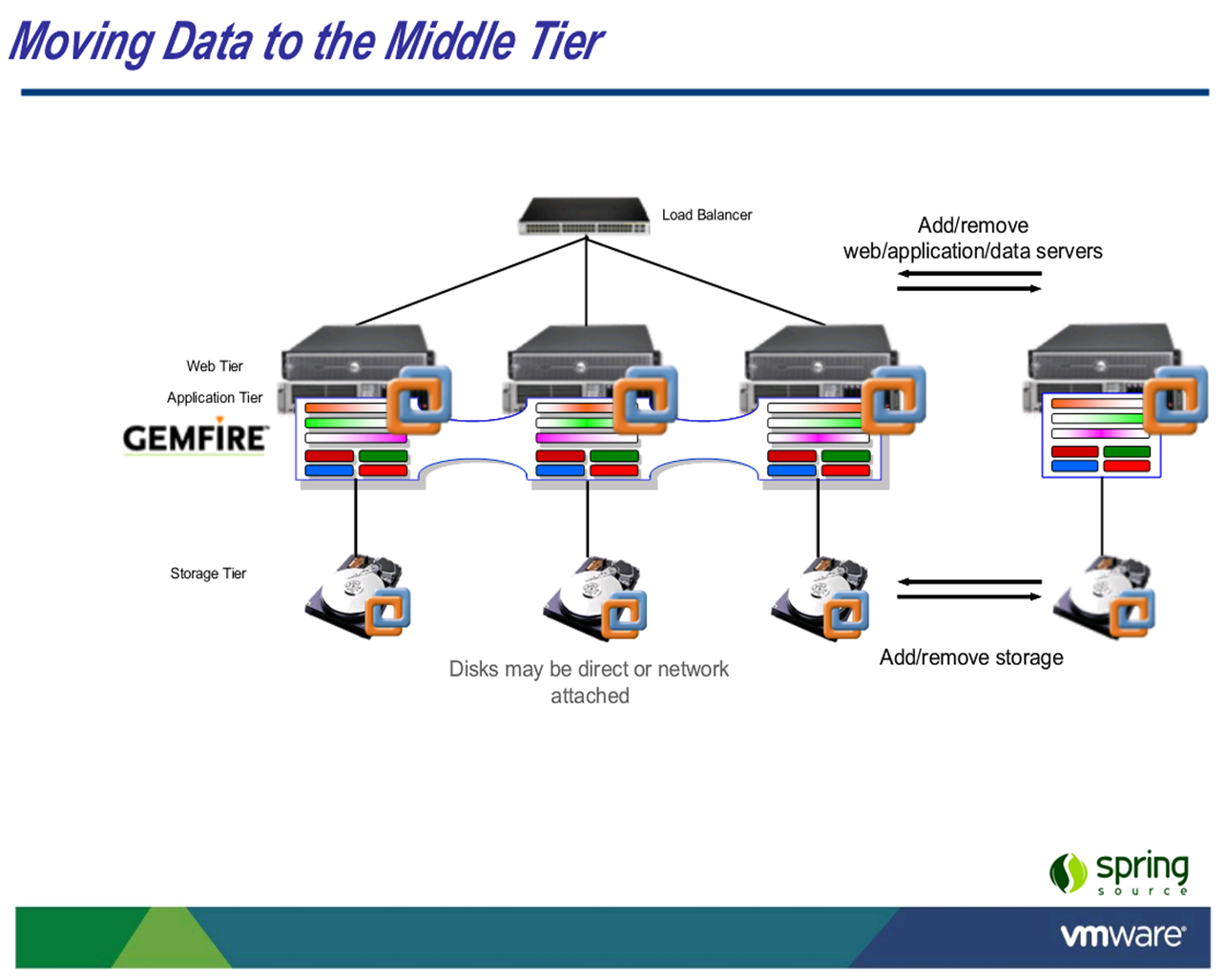
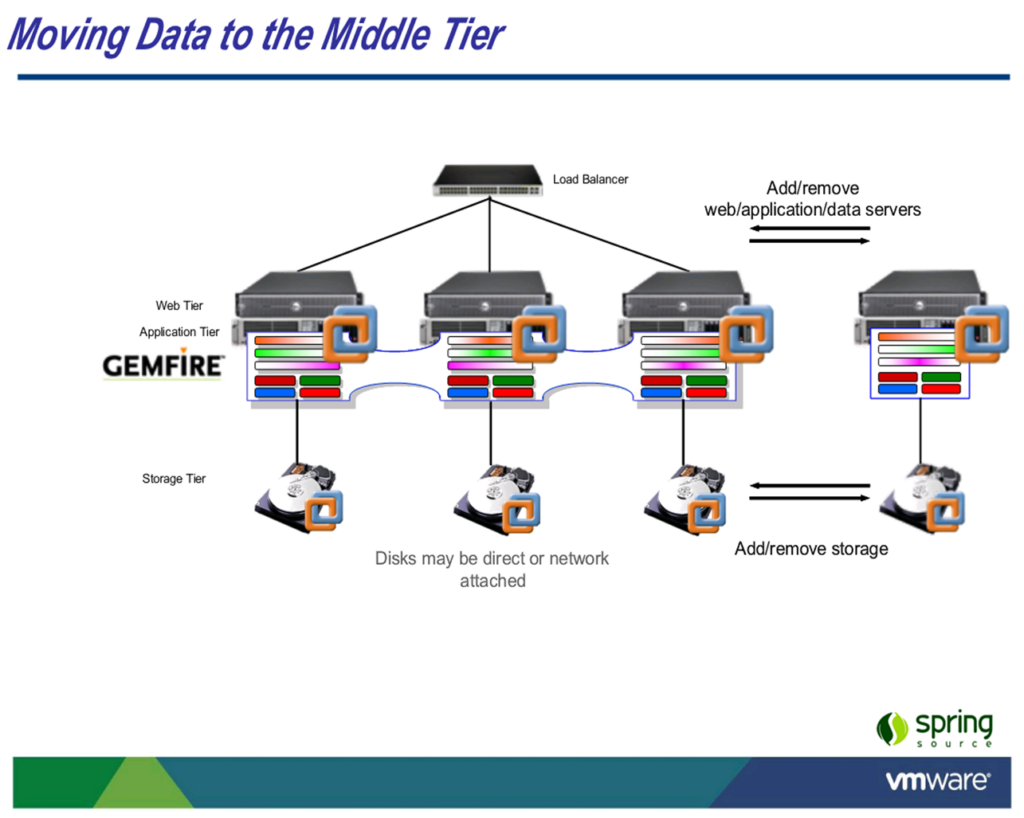
The GemFire DB runs in the application tier (as opposed to, for example, a separate SAN). Apparently there is distributed, mirrored caching going on because DB operations can be satisfied in-memory (lightning-fast). One of the use cases discussed in the presentation was a banking industry example. Stock trades were being inserted into a GemFire DB in London and accessible in NYC. The scale of the underlying storage is completely transparent to the applications. The architecture is in use by banking, governmental, and military applications. It’s hardened.
I was struck by a strange sense of deja vu as I listened to the presentation, and realized that a large percentage of my product investigations of late have a theme of “global scale”.
For example, Atmos is global data distribution (based on policy). Data stored in NYC can be dynamically forwarded by Atmos software to remote sites (e.g. Shanghai, London).
Likewise, when VPLEX was announced, a key use case was “VMotion over geographic distance”. In fact, ZDNet reported the VPLEX launch as teleporting bytes globally.
This all points to a fluidity of information flow between countries and continents that goes way beyond FTP. Instead of static one-time file movement we now have technology that enables information to circle the globe on a daily basis, or data centers to change geographic locations on a moment’s notice.
A great area of research here will be “digital information passports” (imagine information getting turned away at the border, or “stamped” upon entry). It would be an interesting experiment to have Archer play a role in the building of a digital passport solution.
Throw another idea on the list. Another opportunity to experience global idea flow.
Steve
http://stevetodd.typepad.com
Twitter: @SteveTodd